King Charles Shock: Lip Reader Reveals Monarch's Stern Private Etiquette Orders To Princess Charlotte, Prince Louis
A single cue to wave revealed how closely even royal childhood is choreographed in public.
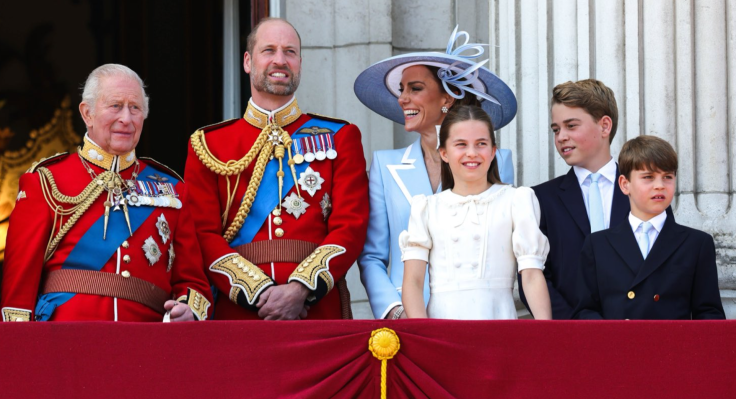
King Charles is said to have given firm etiquette instructions to Princess Charlotte and Prince Louis on the Buckingham Palace balcony during Trooping the Colour in London on 13 June, with a professional lip reader claiming the monarch quietly told the young royals when to wave to the crowds.
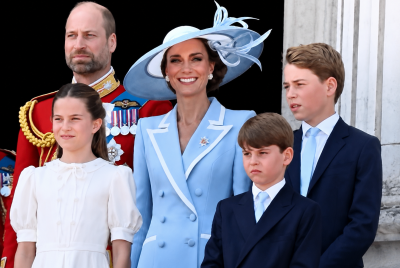
The moment unfolded at the end of Trooping the Colour, the annual military parade that marks the Sovereign's official birthday and draws large crowds to central London. Senior royals including Queen Camilla, the Prince and Princess of Wales, Prince George, Princess Charlotte, Prince Louis and Princess Anne joined King Charles on the balcony to watch the RAF flypast over Buckingham Palace, a carefully framed snapshot of the slimmed-down monarchy the Palace wants the world to see.
Lip Reader Details King Charles, Princess Charlotte, Prince Louis Exchange
The news came after lip reader Jeremy Freeman studied footage of the balcony as the Red Arrows flew overhead to close the ceremony. Speaking to the Mirror, Freeman claimed Princess Charlotte, seemingly unsure when to begin the traditional wave, turned to her grandfather and asked: 'Time to wave?'
According to his account, King Charles then replied: 'Very good. Now we give a wave.' Freeman said the King appeared to address the younger royals as a group, adding: 'Wave to everyone. Cheerio. That's right, thank you very much.'
Louis, six, was then seen turning to his father, Prince William. Freeman claimed he asked: 'Is there more?' William, the second in line to the throne, is said to have answered: 'No, that's it. Go on wave, that's it.'
Buckingham Palace has not commented on the lip‑reading, which remains a single expert's interpretation of a brief, silent exchange on camera, and the claims have not been independently verified.
Freeman also suggested he picked up other snippets during the event, including a separate moment between Louis and the Princess of Wales which, in his view, showed the youngest Wales child taking cues from Prince George. He did not provide the exact wording of that exchange, but the broader takeaway was that the Wales children are learning their royal roles in real time, in front of a global audience.
King Charles Balcony Moment Sits Within A Divided-Looking Royal Line-Up
Meanwhile, body language analyst Judi James told the publication that the balcony line-up itself spoke volumes about how King Charles wants the monarchy to be seen during what is still a fragile phase of his reign.
James argued that the scene effectively split into two clusters. On one side, she said, stood 'the solid, dependable and unproblematic royal "rocks" in the shape of Edward, Sophie, Tim and Anne.' On the other side were 'the tightly-choreographed, immaculately stylish and elegant Wales's.'
With Princess Beatrice and Princess Eugenie absent from the balcony, James suggested the public face of the Firm appeared 'emphatic and undiluted,' reflecting Charles's oft-discussed desire for a pared-back, working Royal Family. The presence of the Duke of Kent, still an active royal in his nineties, was highlighted as a visual link to an older generation and its particular brand of stoicism.
Again, this is interpretation rather than official line. The Palace almost never comments on body-language analysis, however widely it circulates online. But it is hard to miss the symbolism when shots of a smaller royal cast are beamed around the world and dissected frame by frame.
Absent Royals, Street Protests And A Tough Crowd For King Charles
One senior royal who was, as expected, nowhere near the balcony was Prince Andrew. The disgraced Duke has stepped back from public life since his links to Jeffrey Epstein and subsequent legal settlement, and his exclusion from Trooping underlines King Charles's determination to keep him out of the official frame.
Andrew was photographed shortly before the event with a visible bruise on his face, a small detail that generated its own burst of online speculation. His daughters, Princess Beatrice and Princess Eugenie, were also absent, in line with the King's push to streamline the working Royal Family.
Outside the Palace railings, the mood was far less controlled. Anti-monarchist protesters lined parts of the route and, as the carriage carrying Princess Kate and the three Wales children went past, chants of 'Not my King!' could be clearly heard.
The children's smiles faded as the booing grew louder, with Prince George looking particularly uncomfortable. Kate appeared to hold her composure but her expression hardened as the heckling continued, a reminder that not everyone had turned out to wave and cheer.
Taken together with the lip reader's claims and the body‑language analysis, those scenes suggest a monarchy operating under careful choreography and close public scrutiny. On the balcony, King Charles is reportedly guiding Charlotte and Louis through the small rituals of royal life, while outside the frame critics question the institution itself and analysts dissect every movement.
For viewers, it is easy to overlook that behind the titles and tradition there are children on that balcony asking straightforward questions like 'Is there more?' and looking for cues from the adults around them. Where that guidance ultimately comes from, the King, their parents or the institution's long‑standing protocol, will keep royal watchers busy; for now, the youngest royals are simply expected to follow the script and give the wave.
© Copyright IBTimes 2026. All rights reserved.
- Recommended For You