

Nearly 19 Million Eggs Recalled Over Salmonella as Trump's Withdrawal on Poultry Safety Draws Scrutiny
Midwest Poultry Services recalls millions of eggs, reigniting debate on federal food safety oversight.
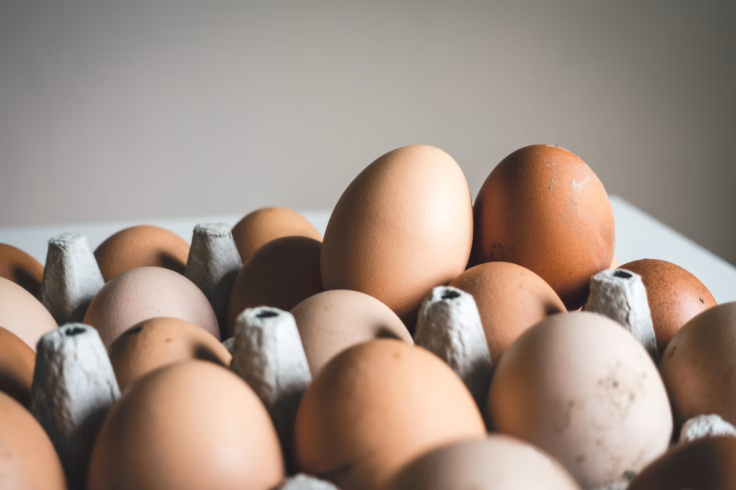
More than 19 million eggs have been recalled across three states over potential salmonella contamination, reigniting a fight over how far the federal government should go to keep contaminated food out of the supply chain.
Midwest Poultry Services is voluntarily recalling 1,589,577 dozen white and brown cage-free shell eggs, produced on two Texas farms, because they may be contaminated with Salmonella Enteritidis.
The scale of the recall has drawn fresh attention to the Trump administration's decision last year to scrap a separate proposed crackdown on Salmonella in poultry, a move that food safety advocates say reflects a broader shift in the administration's regulatory approach, even though the withdrawn rule did not apply to shell eggs.
The Scope of the Midwest Poultry Services Recall
The recall covers eggs produced and distributed between 6 June and 3 July 2026, carrying sell-by or best-by dates from 20 July to 17 August, according to the company announcement posted by the FDA. The affected cartons carry the plant code P-1950 or 0840962 with a Julian date between 157 and 184 printed on the side.
The eggs reached foodservice and retail customers in Texas, Oklahoma and Louisiana, and were sold to consumers at Kroger stores in Texas and Louisiana, Brookshire Grocery stores across several southern states, and other smaller outlets under brand names including Simple Truth, Country Morning, Sunups and Brookshire's.
The company said it identified the problem on its two Texas farms through environmental monitoring and root-cause analysis, and has stopped distributing fresh eggs from those farms.
Midwest Poultry Services said it is not aware of any illnesses linked to the eggs, and urged customers to return affected cartons for a refund. Salmonella can cause serious and occasionally fatal infections in young children, the elderly and people with weakened immune systems, and the Centres for Disease Control and Prevention estimates the bacteria cause roughly 1.35 million infections in the United States each year.
The Poultry Rule the Administration Walked Away From
The recall has revived scrutiny of a decision the Agriculture Department took in April 2025.
The USDA's Food Safety and Inspection Service withdrew a proposed 'Salmonella Framework for Raw Poultry Products', a Biden-era measure that would have set enforceable limits on salmonella in raw chicken and turkey and treated products exceeding them as adulterated and barred from sale.
The department said the proposal 'would have imposed significant financial and operational burdens on American businesses and consumers' and did not address the pathogen effectively, adding that it would keep assessing its approach in ways that 'protect consumers, not just impose regulatory burdens'.
The Meat Institute had urged President Donald Trump to pull the rule, and the National Chicken Council praised the withdrawal, arguing the proposal would have raised costs with no meaningful public-health benefit.
Critics saw a warning sign. Sandra Eskin, a former USDA official who worked on the proposal and now leads the advocacy group Stop Foodborne Illness, called the retreat a mistake. 'The bottom line is that thousands of people every year get salmonella infections from poultry products, some life-threatening or worse,' she said. 'My concern is that we will not see a reduction of illnesses from salmonella soon enough.'
A Salmonella Debate Playing Out Across the Food System
The dispute lands amid a run of foodborne-illness scares that has kept federal food safety in the spotlight, from a multi-state cyclospora outbreak the FDA is still investigating to earlier egg recalls tied to salmonella. Salmonella Enteritidis in particular has a long association with shell eggs, which is why the 2009 rule was written specifically to target it.
For consumers, the immediate guidance is narrow and practical: check the plant code and Julian date on the carton, and return anything matching the recall rather than eating it.
For the wider debate over food safety regulation, the recall is likely to feature in arguments on both sides. Industry groups point to the company's monitoring systems detecting the issue, while critics argue the incident underscores the need for strong federal oversight.
Nineteen million eggs can be traced, coded and pulled from shelves in a matter of days; the question the recall leaves behind is whether the rules governing the next batch will be stronger or weaker than the last.
© Copyright IBTimes 2026. All rights reserved.