Bizarre Deep-Sea Discovery: 31 New 'Nightmare' Species Found in Mysterious Ocean Zone Off Brazil
Exploring the South Atlantic's midwater zone reveals a treasure trove of new species and insights into Earth's largest habitat.
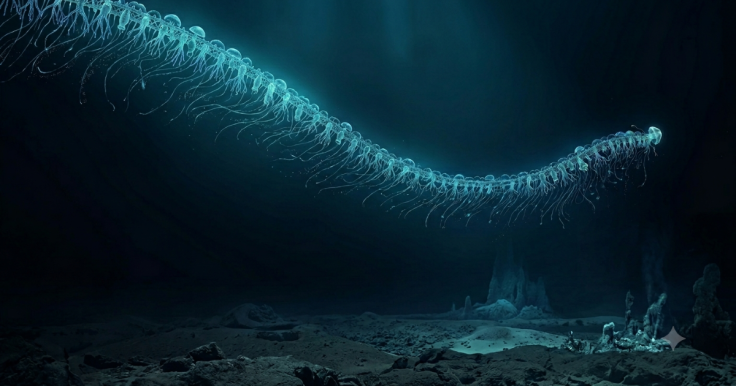
Scientists exploring the South Atlantic off the coast of Brazil have identified 31 previously unknown deep-sea species, revealing what researchers describe as one of the most biologically mysterious regions on Earth.
The discoveries were made during an expedition using advanced imaging systems aboard the Schmidt Ocean Institute's research vessel Falkor (too), which focused on the ocean's midwater zone, which is a vast, dimly lit region between the surface and the seafloor that remains one of the least explored habitats on the planet.
Rather than dredging or trawling, researchers used high-resolution cameras and environmental DNA tools to observe fragile organisms in their natural environment, allowing for the identification of species that would otherwise be destroyed before being properly studied.
The result was an unusually large biological snapshot of life in motion, including jellyfish, siphonophores, larvaceans, crustaceans, and other gelatinous organisms rarely observed alive.
'The ocean never let up with surprises in every pocket of water that we explored,' said Bigelow Laboratory Senior Research Scientist John Burns, one of the expedition's lead scientists.
Building on this, expedition chief scientist Karen Osborn of the Smithsonian National Museum of Natural History highlighted the scale and significance of the environment under study:
'The largest habitat on Earth, the midwater, is filled with incredible animals we are only just starting to understand.'
Why The Midwater Zone Matters More Than We Realise
The midwater, also known as the mesopelagic and bathypelagic zones, stretches thousands of metres below the ocean surface and accounts for the largest living space on Earth.
Despite this, Scientists estimate that up to 90% of all marine species remain undiscovered, with midwater (or twilight zone) ecosystems remaining among the least understood and least explored habitats on the planet, largely because traditional sampling methods crush or distort soft-bodied organisms during retrieval.
Recent expeditions suggest this zone is not an empty water column but a densely populated biological corridor, filled with drifting, glowing, and transparent life forms adapted to extreme pressure and near-total darkness.
Researchers say the Brazilian sector is particularly important because it sits at the intersection of ocean currents that may act as migration highways for midwater species.
What Scientists Actually Found: Not Just 'New Species'
The 31 discoveries are not a single ecosystem, but a mix of highly specialised organisms, including:
- gelatinous predators such as siphonophores
- transparent larvaceans that build mucus 'homes'
- bioluminescent jellyfish drifting in vertical migration cycles
- previously undocumented crustaceans adapted to pressure extremes
Some species were identified not through physical capture, but through 3D imaging of living organisms in motion, a technique that preserves fragile body structures and behavioural patterns that would otherwise be lost.
In some cases, scientists were able to observe organisms interacting for the first time, including behaviours such as feeding, drifting, and responding to light emitted by submersible equipment.
A Rare Look At Life That Almost Never Surfaces
One of the most striking aspects of the expedition was the number of organisms that had never been observed alive in their natural state before.
Many deep-sea creatures are only known from damaged specimens caught in nets or trawls, meaning scientists often have no idea how they behave in the wild.
During this expedition, however, researchers observed:
- gelatinous predators consuming prey midwater
- delicate planktonic organisms forming vertical chains
- near-transparent species using camouflage-like visibility control
These observations are crucial because behaviour is often the missing piece in identifying evolutionary relationships.
Scientists Say The Deep Ocean Is Still A Biological Frontier
Despite covering more than two-thirds of Earth's surface, the deep ocean remains one of the least mapped environments on the planet.
A growing body of research suggests that the ocean's midwater region alone may contain more biomass than all global fisheries combined, although much of it remains invisible due to its depth and translucency.
A recent scientific overview of deep-sea exploration noted that the ocean is not just a habitat but also a biological archive, preserving biological history in isolated ecosystems that may have existed through deep geological time.
This helps explain why expeditions like the Brazilian survey frequently uncover entirely new branches of life in a matter of days.
Why These Discoveries Are Happening Now
The sudden increase in deep-sea species discoveries is not because life is 'new', but because technology has finally caught up with the environment.
Key advancements include:
- ultra-high-definition deep-sea cameras
- remotely operated vehicles capable of long-duration dives
- environmental DNA sampling from water columns
- AI-assisted species identification models
These tools allow scientists to identify subtle biological differences that would previously have gone unnoticed.
In past decades, it could take years to confirm a single new species. In modern expeditions, dozens can be confirmed in a single voyage.
Real Scientists, Real Conditions: Life Aboard The Expedition
Researchers involved in similar Schmidt Ocean Institute expeditions describe a mixture of excitement and frustration: excitement at the constant discovery, and frustration at how little of the ocean is actually known.
Because deep-sea exploration is limited by time, funding, and equipment capacity, scientists often have only short windows to document vast areas.
Each dive can reveal:
- entirely unknown organisms
- unexpected ecosystems
- complex vertical migration patterns
Yet only a fraction of what is observed can be fully analysed during the expedition itself, meaning much of the scientific work happens months or even years later in laboratories.
The Bigger Scientific Implication: Earth's 'Second Biosphere'
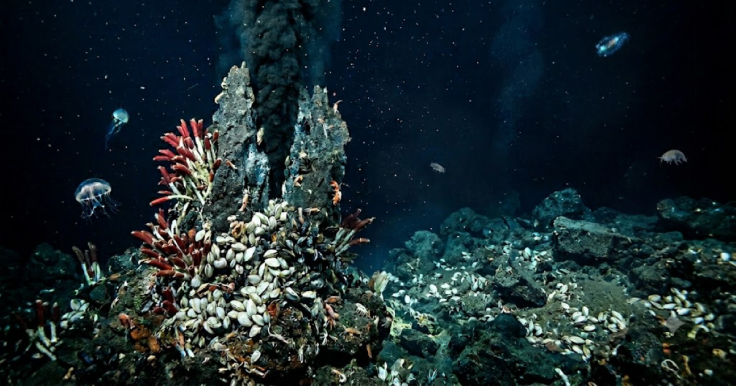
One emerging idea among marine biologists is that the midwater ocean should be considered a second biosphere, separate from surface ecosystems.
Unlike shallow marine environments influenced by sunlight and temperature fluctuations, midwater ecosystems are governed by:
- pressure gradients
- chemical energy cycles
- vertical carbon transport (marine snow)
Understanding this system could help scientists model:
- how carbon is stored in oceans
- how ecosystems respond to climate change
- how life might exist in extreme environments on other planets
Final Takeaway
The discovery of 31 new deep-sea species off Brazil is not just an expansion of biological records; it is evidence that Earth still contains vast, functioning ecosystems that remain largely invisible to science.
What once looked like an empty, dark expanse beneath the ocean surface is now being redefined as a living, structured, and highly diverse environment, one that may hold answers to some of the biggest questions in marine science and planetary biology.
© Copyright IBTimes 2026. All rights reserved.
- Recommended For You