Nolan Wells' Independent Autopsy Finds Red Skull Mark That Expert Says Could Be Blunt Force Injury
The examination was unable to establish a cause of death due to key limitations

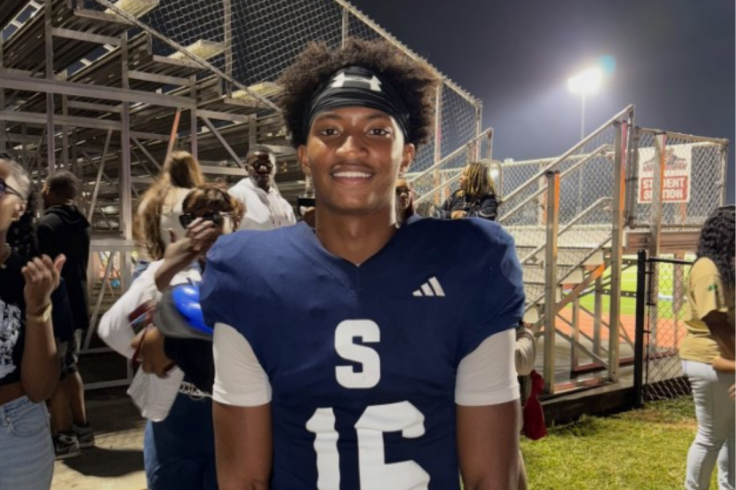
Discovering an 18-year-old floating face-down near an island off the Mississippi coast weeks ago sparked urgent questions. Yet a private examination ordered by his family has brought no real closure.
A preliminary post-mortem conducted by a private specialist has left the circumstances surrounding Nolan Wells' death unexplained after the teenager was discovered dead along the shoreline of Horn Island on 6 July.
Public outrage flared across the country following Nolan Wells' death, with many questioning whether racial motives were involved against the backdrop of Mississippi's history. Pictures from the gathering showed the Black teenager socialising with predominantly White acquaintances, although he was accompanied by at least one other Black friend.
Independent Autopsy Still Leaves Critical Questions
This privately financed investigation is being conducted entirely separately from the state's formal autopsy, which was performed on 7 July. Results of that official inquiry are currently being withheld by the Mississippi State Medical Examiner's Office while routine toxicology tests are processed.
Conducting the secondary examination, forensic pathologist Dr Roger A. Mitchell Jr outlined key hurdles in his initial report, explaining that he 'identified several limitations ... that create barriers to establishing a definitive cause and manner of death for Nolan Xavier Wells.'
Elaborating on those limitations, Mitchell noted: 'The most significant of the limitations was the inability to directly observe the airway and lungs for water and directly observe the stomach for gastric contents. In addition, the original toxicology results had not been received at the time of this report.'
Missing Evidence Prevented Definitive Findings
Access to the teenager's remains was also restricted following the initial state post-mortem, with key internal neck tissue missing. However, Mitchell pointed out that it is a 'common forensic pathology practice' to retain 'anterior neck structures during an initial autopsy'.
'Therefore, this pathologist cannot rule out injury to the neck as a contributor or cause of death,' the report states.
No obvious cuts, broken bones or deep tissue damage were detected across the teenager's body during the procedure. Nevertheless, Mitchell highlighted in his findings that advanced decomposition 'can obscure the presence or absence of bruising on the skin surface, especially during a second autopsy examination.'
Red Mark Raises Another Unanswered Question
What the examination did reveal was 'red discoloration in the soft tissue of the back of the head', according to the post-mortem. However, the origin of this marking, and whether it contributed to the teenager's death, remains unresolved.
Mississippi teen Nolan Wells had a missing neck, and possible injury to back of his head at time of independent autopsy 🕊️ LL & JUSTICE FOR NOLAN WELLS 🙏🏾 pic.twitter.com/hJBnkDMGEV
— Raphousetv (RHTV) (@raphousetv2) July 22, 2026
Weighing in on the finding, Tarrant County Chief Medical Examiner Dr Kendall Von Crowns — who played no part in the investigation — explained that the red mark 'could represent decompositional changes of the musculature, or it could be from blunt force injury to the back of the head and neck.'
Investigation Continues as Family Seeks the Truth
Local authorities, alongside the FBI, continue interviewing witnesses, with Jackson County's district attorney confirming the case remains a top priority before a grand jury decides whether to bring charges. Meanwhile, high-profile figures including Al Sharpton, Tyler Perry and Terrell Owens have offered a $125,000 (£93,370) reward for critical information.
Addressing reporters, Wells' grieving father highlighted the unbearable daily toll on their family, saying his son ought to be at football practice rather than buried.
'Every day is a is a challenge,' Elmore Wonsley shared. 'We're gonna miss our son. And like my wife said, we just want honesty. We want to know what happened to our son.'
© Copyright IBTimes 2026. All rights reserved.
- Recommended For You