Pakistan Seeks $10 Billion US 'Brokerage Fee' After Playing Mediator in US-Iran Conflict
Islamabad requests a massive financial package from Washington following its diplomatic intervention, sparking intense debate among economists and regional rivals.
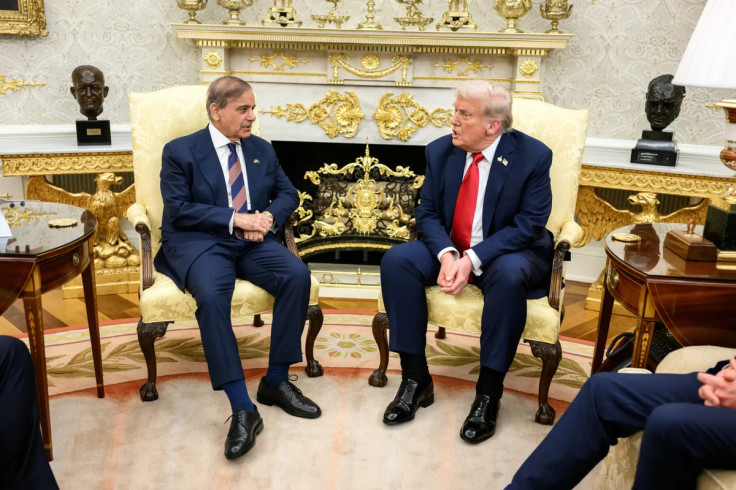
Pakistan has officially requested a massive Pakistan $10 billion (£7.4 billion) US exchange stabilisation fund and trade finance facility following its high-profile diplomatic intervention in the recent US-Iran conflict.
Negotiated during Finance Minister Muhammad Aurangzeb's Washington visit, the unprecedented financial proposal aims to bolster dwindling foreign reserves and reduce heavy reliance on traditional international bailouts.
As Washington weighs the proposal against severe regional objections and lingering debt concerns, the unfolding financial gamble highlights the fragile reality of Pakistan's broader economic recovery.
Alongside the stabilisation fund, Pakistan also proposed a separate trade finance facility with the US EXIM Bank aimed at supporting the rupee and reducing dependence on the International Monetary Fund (IMF), China and Saudi Arabia.
US Officials Not Clear About the Proposals
While a few experts believe the proposals could strengthen Pakistan's foreign exchange reserves and benefit US commercial interests, a majority argue that more funding without lasting reforms would only provide temporary relief. US officials have acknowledged Pakistan's reform efforts but have not confirmed whether the reported request for financial assistance is being considered.
As Pakistan seeks the reported US exchange stabilisation facility, it does so against the backdrop of India's objections to international financial assistance for Islamabad.
At the International Monetary Fund's Executive Board meeting on 9 May 2025, India abstained from voting on fresh IMF assistance for Pakistan, warning of the 'possibility of misuse of debt financing funds for state-sponsored cross-border terrorism'. In its official explanation of vote, New Delhi also said that 'rewarding continued sponsorship of cross-border terrorism sends a dangerous message to the global community'.
However, India has not yet commented on this fresh request by Pakistan for US financial assistance. New Delhi has so far remained silent on Islamabad's bid for a $10 billion (£7.4 billion) stabilisation fund and a separate trade finance facility with the US EXIM Bank.
Pakistan's Economy Under Stress
Pakistan's efforts to turn improved relations with the Trump administration into economic assistance have been met with caution from economists, who argue that fresh funding alone would not resolve the structural issues the country has struggled to address.
According to Reuters, citing sources familiar with the discussions, Pakistan sought a $10 billion (£7.4 billion) US exchange stabilisation fund during Aurangzeb's visit to Washington. The proposal was reportedly made alongside a request for a trade finance facility through the US EXIM Bank.
The proposed stabilisation fund is intended to strengthen Pakistan's foreign exchange reserves and reduce reliance on financing from the IMF, China and Saudi Arabia. The trade finance facility would also allow delayed payments for US exporters while helping support the Pakistani rupee.
Pakistan's economic position has remained under pressure despite its diplomatic involvement in helping broker a US-Iran ceasefire. After repaying $3.5 billion (£2.6 billion) to the United Arab Emirates, Islamabad relied on a $3 billion (£2.2 billion) Saudi support package to help maintain its reserves.
Analysts believe US financial backing could also expand Washington's involvement in Pakistan's critical minerals sector. However, critics argue that the proposal appears more like a reward for Pakistan's geopolitical role than a lasting answer to its economic problems.
The country has recently shown some progress under IMF-backed reforms. S&P Global Ratings upgraded Pakistan to 'B' from 'B-', pointing to improvements in fiscal and institutional conditions. Even so, the ongoing $7 billion (£5.2 billion) IMF programme remains politically difficult because of tax increases and spending reductions.
Economists say a US stabilisation fund could provide an important reserve cushion and reduce dependence on other lenders. However, they also warn that new financing will not solve Pakistan's long-term economic challenges unless reforms continue.
US Support to Pakistan Remain Undefined
Questions remain over how any US support would be structured, with experts suggesting that the proposal would likely take the form of a credit line rather than a direct cash transfer. They say such an arrangement could potentially be backed by the US Treasury's Exchange Stabilisation Fund.
Even so, the proposal has reportedly faced resistance from some US officials. Critics argue that Pakistan has relied on IMF support for many years while failing to implement enough structural reforms to reduce the need for repeated financial assistance.
Some economists have also questioned the size of the reported $10 billion (£7.4 billion) request. They argue that extending support on that scale carries considerable risks given Pakistan's debt burden of roughly $138 billion (£102.2 billion).
Analysts do not expect China to oppose potential US financial support. According to experts, Beijing wants Pakistan to remain financially stable but does not want to continue acting as its only major financial backer.
Despite discussion of a possible US stabilisation fund, analysts believe it would not replace the IMF. Instead, they say the IMF would remain an important part of Pakistan's financial framework and a key source of American influence. Any US support would likely come with conditions requiring Pakistan to stay within an IMF programme.
Experts also caution that larger foreign exchange reserves alone are unlikely to provide a lasting solution. They argue that without reforms to taxation, the energy sector and state-owned enterprises, Pakistan could continue returning to the IMF for financial support.
© Copyright IBTimes 2026. All rights reserved.
- Recommended For You