Prince William's £500m Duchy Gamble: Royal Land Sell-Off to Build and Power Homes and Save Nature
Prince William aims to reshape the Duchy of Cornwall with a focus on social impact and sustainability
Prince William is preparing for one of the biggest shake-ups in the history of the Duchy of Cornwall, with plans to sell off 20% of the vast royal estate over the next decade in a bold bid to fund housing and environmental projects across Britain.
The Duchy of Cornwall, a billion-pound property empire spanning 128,000 acres across 19 counties, provides the Prince of Wales with a private annual income of nearly £23 million (approximately $30.7 million).
Now, William wants to transform parts of the historic estate into what aides describe as a force for 'social impact, with £500 million earmarked for affordable homes, renewable energy and conservation schemes.'
The move marks a dramatic shift for the centuries-old duchy, which has traditionally operated as a powerful source of wealth for the heir to the throne. William, however, insists he wants the estate to become more than simply a lucrative royal portfolio.
A Royal Estate With a New Mission
The Duchy of Cornwall was established in 1337 and automatically passes to the heir to the throne. William inherited the estate after his father became King Charles III.
'We're not the traditional landowner... we want to be more than that. There is so much good we can do. I'm trying to make sure I'm prioritising stuff that's going to make people's lives, living in those areas, better.' – Prince William, Duke of Cornwall
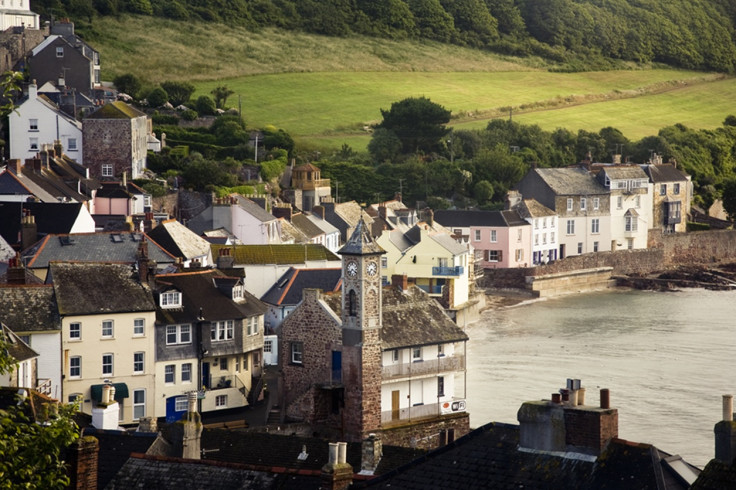
Under the prince's new strategy, the duchy will focus heavily on five 'heartlands' — Cornwall, Dartmoor, the Isles of Scilly, Bath and Kennington in south London. Officials say the aim is to concentrate resources where the estate can have the greatest local impact.
Plans include building an additional 12,000 homes by 2040, with roughly one-third expected to be classed as affordable housing. Around £161 million (around $215 million) is set to be invested in residential developments alone.
The duchy also plans to pump £123 million (approximately $165 million) into rural jobs, workspaces and renewable energy projects. One major initiative will involve expanding rooftop solar panels across the south west of England, generating enough electricity to power an estimated 40,000 homes.
Environmental projects will also receive a boost, with £20 million (around $27 million) allocated to restoring peatlands, improving biodiversity and cutting carbon emissions across duchy land.
Chief executive Will Bax said the prince had made it clear the estate 'shouldn't just exist to own land.'
'It should first and foremost exist to have a positive impact on the world,' Mr Bax explained.
Critics Say the Duchy Remains a 'Royal Jackpot'
Despite the ambitious plans, critics argue the changes do little to alter the privileged financial position enjoyed by the monarchy.
Former Home Office minister Norman Baker dismissed the duchy as a 'royal fruit machine,' claiming William would continue to profit handsomely from expanding housing developments.
'More houses, more tenants, more income,' Mr Baker argued.
Questions over royal transparency have intensified in recent years, particularly following renewed scrutiny of royal finances and the fallout surrounding Prince Andrew. Author Andrew Lownie, whose updated biography Entitled revisits allegations linked to the Duke of York, said pressure was mounting for the monarchy to become more open about its wealth.
Lownie welcomed William's reforms but suggested they were only a first step.
'I am delighted by this first step,' he said, adding that recent criticism had likely pushed the royals towards greater transparency.
Tensions Over Land Sales
The duchy's transformation has not been entirely smooth. Earlier this year, tenants on the Bradninch estate in Devon said they were left deeply anxious after learning land could be sold.
Some farming families feared for their futures after generations on duchy-owned land.
However, officials insist discussions are ongoing, with several tenants now exploring opportunities to purchase their farms directly.
The changes also come as the Royal Household faces financial pressure. The Sovereign Grant — public funding used to support official royal duties and Buckingham Palace repairs — is currently under review and could be reduced next year for the first time since 2012.
For Prince William, the duchy overhaul appears designed to send a message that the future monarchy must be seen as useful, modern and socially responsible — even if critics remain unconvinced.
© Copyright IBTimes 2026. All rights reserved.
- Recommended For You