'Trump Lied To Us All': GOP Donor Who Gave $60K Turns On MAGA, Says 'Only Die-Hard Loyalists Remain'
Bruce Fenton's Critique Highlights Growing Dissent Within GOP
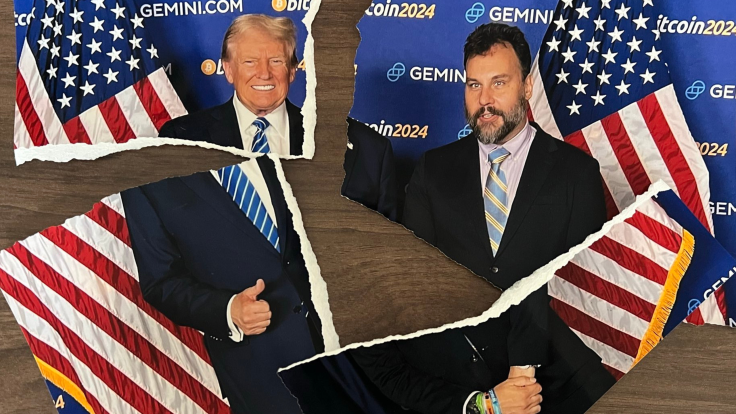
A prominent Republican donor has publicly broken with Donald Trump and the MAGA movement, alleging betrayal after years of financial and political support. His decision, aired not in a backroom meeting but on a global social media platform, has sharpened questions about what, exactly, Trump now represents to parts of his own base.
The criticism emerged in a widely circulated social media post by investor and former Trump supporter Bruce Fenton, who claimed he donated $60,000 (£47,000) to Trump's campaign and now feels misled. His remarks reflect a broader strain of dissent among segments of the Republican base following Trump's continued dominance over party politics. The post has since ignited debate over loyalty, ideology and the future direction of the GOP.
Donor Breaks Ranks With Trump And MAGA
Bruce Fenton, a longtime Republican donor and former US Senate candidate in New Hampshire, published a strongly worded statement on X (formerly Twitter) on 30 March 2026. In the post, he declared: 'Trump lied. He rugpulled us all,' adding that he had supported Trump politically and financially over several election cycles.
Fenton stated that he had contributed approximately $60,000 (£47,000) to Trump's campaign and described himself as part of a 'broad coalition' of conservatives who once backed the former president. He asserted that this coalition has since been 'torched', arguing that Trump's political direction no longer reflects the principles that initially drew support.
The donor also rejected anticipated criticism, writing: 'If you say I have 'TDS' or am a 'liberal' you need a new argument.' He maintained that many conservatives share his concerns but have not spoken out publicly.
I’m a Republican. I supported Trump. I raised money for him, I voted for him. I donated $60,000 to his campaign.
— Bruce Fenton (@brucefenton) March 30, 2026
Trump lied. He rugpulled us all. I didn’t vote for Lindsey Graham / America Second policies.
You can disagree with me if you want. It’s your right to be fooled.… pic.twitter.com/DkgdziCc1N
Allegations Of Ideological Shift And 'America Second' Policies
Central to Fenton's critique is the claim that Trump has deviated from what he described as 'America First' principles, instead embracing what he termed 'America Second policies'. While Fenton did not specify particular policies in his post, his remarks echo ongoing debates within conservative circles about trade, foreign policy and federal authority.
Trump's political platform has evolved since his first presidential campaign in 2016. During that campaign, he emphasised economic nationalism, border security and scepticism of foreign military engagements. Subsequent policy decisions and campaign messaging have, at times, drawn criticism from both traditional conservatives and libertarian-leaning Republicans.
Public records from the Federal Election Commission (FEC) confirm that Trump's campaign and affiliated committees have received substantial donations from a wide network of individual contributors and political action committees. However, individual donor-level contributions such as those cited by Fenton are typically dispersed across multiple committees, including leadership PACs and joint fundraising entities.
Fenton's assertion of a 'rugpull', a term often used in financial contexts to describe a sudden withdrawal of support or value, suggests a perception among some donors that campaign promises have not translated into policy outcomes.
“I went with Trump’s delegation to Riyadh.
— Bruce Fenton (@brucefenton) March 8, 2026
I was there with Elon, David Sacks and others.
When Trump said he’s finally end neocon policies of war, I wanted to believe him.
I cheered louder than anyone in that room.
It was my proudest moment as an American.
It was all a lie.” pic.twitter.com/quocJgidq3
Fractures Within The Republican Coalition
Fenton's comments come amid broader signs of ideological fragmentation within the Republican Party. While Trump continues to command strong support among core MAGA voters, polling data and public commentary indicate divisions between traditional conservatives, libertarians and populist factions.
In recent election cycles, Trump-backed candidates have achieved mixed results, prompting internal debates about electability and long-term strategy. Statements from Republican officials and donors have occasionally reflected unease about the party's direction, though public dissent from major financial contributors remains relatively rare.
The concept of a 'broad coalition' referenced by Fenton aligns with Trump's 2016 electoral strategy, which combined working-class voters, traditional Republicans and political outsiders. Political analysts have noted that maintaining such a coalition requires balancing competing priorities, including economic policy, foreign relations and social issues.
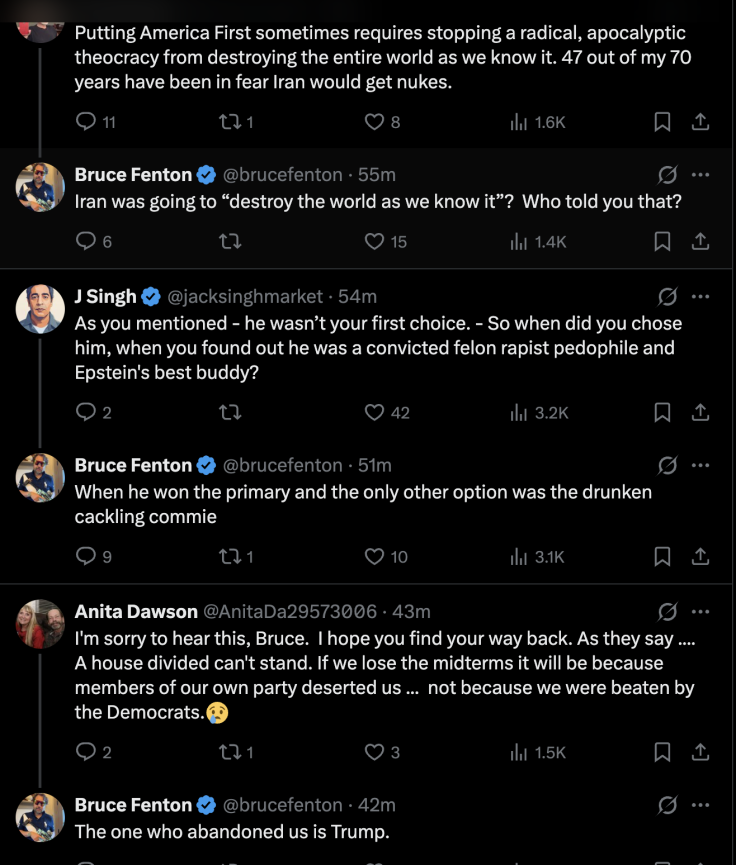
Fenton's claim that 'the only ones left supporting him are MAGA always Trumpers who place the man above the policies and our country' underscores concerns among critics that personal loyalty to Trump has become a defining feature of the movement.
The Role Of Social Media In Amplifying Intra-Party Conflict
The platform X has increasingly become a venue for high-profile political disputes, allowing donors, candidates and activists to communicate directly with large audiences. Fenton's post quickly gained traction, drawing responses from both supporters and critics.
Social media posts, while influential, represent personal viewpoints rather than formal policy statements. Nevertheless, they can shape public discourse and signal emerging trends within political movements. In this instance, Fenton's remarks have been cited by commentators as evidence of growing dissatisfaction among a subset of Republican donors.
Trump himself has frequently used social media to communicate with supporters and critics alike, often bypassing traditional media channels. This approach has contributed to a highly personalised political environment, in which individual statements can carry significant weight.
Trump's Continued Influence And Response
As of 31 March 2026, Trump has not publicly responded to Fenton's specific allegations. However, the former president has consistently defended his record and policy positions in speeches, interviews and campaign materials.
Official statements from Trump's campaign have emphasised achievements such as tax reform, judicial appointments and regulatory changes during his presidency. These claims are documented in White House archives and policy summaries.
Trump's influence within the Republican Party remains substantial. Polling data from multiple research organisations continues to show strong support among Republican voters, particularly those who identify with the MAGA movement.
At the same time, dissenting voices like Fenton's highlight ongoing tensions over the party's identity and future trajectory. Whether such criticisms will translate into broader shifts among donors or voters remains uncertain.
Fenton's public break with Trump underscores a growing, if still limited, fracture within Republican donor ranks as debates over loyalty, policy and the future of MAGA intensify.
© Copyright IBTimes 2026. All rights reserved.
- MOST POPULAR IN World