

Real-Time Stalker Location Tracking: South Korean App Lets Victims Keep Tabs on Stalkers, Raising Questions About Safety
Innovative app provides real-time location tracking of offenders to improve safety for stalking victims.
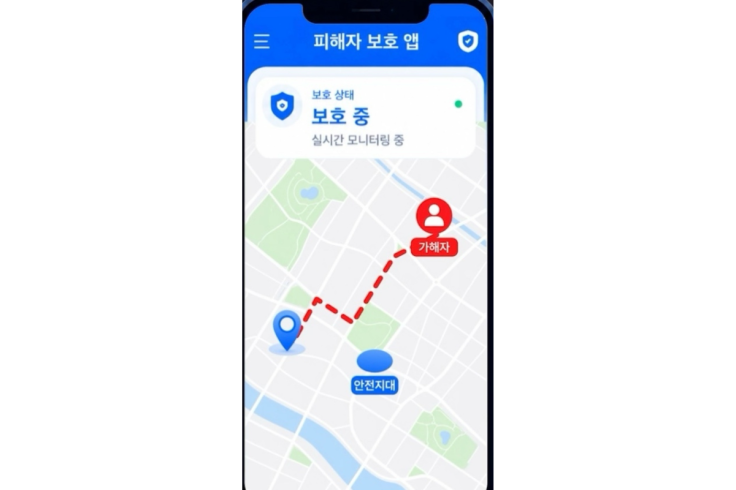
South Korea has launched a government app that lets stalking victims see the real-time location of offenders wearing electronic ankle monitors, as officials respond to a sharp rise in stalking reports and concern over violence against women.
The system is designed to give victims a clearer route to safety by showing exactly where a stalker is, not just how close they are, with authorities saying alerts can also be sent if the offender moves within a specified distance.
The rollout follows years of pressure over cases in which stalking escalated into serious harm, including the case of Yuri, whose sister was stalked by her ex-boyfriend before he later killed her. That is the backdrop to a system that the Justice Ministry says will go beyond earlier warnings, because victims can now see the offender's movement on a map and get a clearer sense of what is happening in real time.
Officials say the app is part of a broader effort to strengthen protection for stalking victims, not a standalone fix, with plans to link location monitoring more closely to faster emergency responses when offenders move near a victim's location.
Real-Time Tracking And A Focus On Location
For starters, the app draws on data from ankle monitors worn by certain offenders and shows their real-time locations, movement path and direction.
If the offender comes within a specified vicinity, the victim receives an alert, while the screen also displays nearby roads and buildings that could help them reach safety.
That design matters because previous systems were far less precise.
Victims were warned when a stalker was nearby, but the alert did not always tell them which way the person was moving or how quickly they might arrive, which left many in a stressful and potentially risky guessing game. Officials say the new app is intended to close that gap.
Why South Korea Is Moving Now
The move follows a sharp rise in stalking reports in South Korea since 2021, with official data showing the problem has more than doubled in recent years. Courts and law enforcement have faced criticism from victims and campaigners who argue that protective measures have often arrived too late, or have not gone far enough to stop repeat harassment.
The Ministry of Justice says the app is part of a wider effort to strengthen protection for stalking victims, not a standalone fix. That wider effort includes linking the monitoring system more closely with emergency response channels so police can react faster when an offender is flagged near a victim's location.
South Korea is rolling out an app to help stalking victims track their stalkers. Officials say it aids safety and evidence collection, but experts warn it could raise privacy risks and potential misuse. https://t.co/dryA1QTGIh pic.twitter.com/ooND1Fvstf
— Drew Grimaldi (@Grimillionaire) July 9, 2026
Privacy, Surveillance And Safety Concerns
The app has also raised privacy and surveillance concerns, because real-time tracking of offenders brings questions about how far the state should go in monitoring people, even those under court orders.
Officials have sought to frame the change as a victim-safety measure, but critics say South Korea's stalking crisis is tied to a wider pattern of violence against women that technology alone cannot address.
An app can help someone see possible danger sooner, but it cannot by itself resolve weak enforcement, gaps in protection, or the fear that many victims carry long after a report is filed. As one official line of thinking puts it, the aim is stronger protection, though the deeper problem remains more complex.
Could Other Countries Copy South Korea's Model
The South Korean app also raises a broader question for other countries where crime against women remains a serious concern, especially where stalking laws exist on paper but enforcement is uneven in practice.
Could similar tools be adopted elsewhere, or would they run into the same privacy concerns, legal limits and inconsistent police response that often limit these measures?
For countries facing high rates of harassment, the potential appeal is clear. Real-time location data could give victims a better chance of avoiding danger, and could give police a faster way to intervene.
Yet the South Korean case also underlines a wider issue behind the technology, because if the system is not backed by consistent enforcement, the app risks becoming only one more well-intended measure in a long and unfinished effort.
© Copyright IBTimes 2026. All rights reserved.