'He Is Not Strong in the Sciences': Elon Musk Blasts Bill Gates After Humiliating Tesla Gigafactory Feud
Elon Musk's claim that Bill Gates is 'not strong in the sciences' after a Tesla Semi showdown in Austin has reignited a bitter feud over the future of electric lorries.

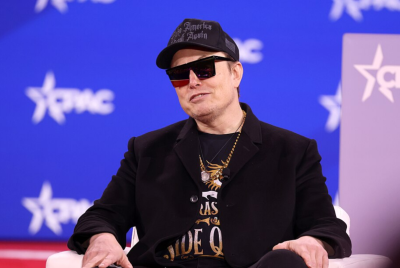
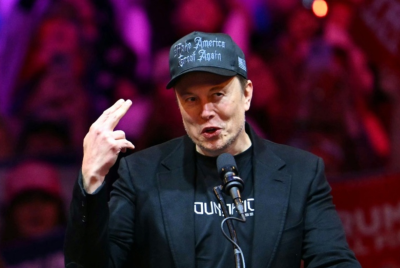
Elon Musk has claimed that Bill Gates 'is not strong in the sciences' after a tense meeting at Tesla's Gigafactory in Austin, Texas, where the Microsoft co-founder allegedly told him in person that a long‑range Tesla Semi truck was impossible, despite the vehicles already being in commercial use.
For context, Musk and Gates have been sparring in public for years over clean‑energy strategy, electric vehicles and philanthropy. Gates has questioned the practicality of battery‑powered heavy trucks in his writing, while Musk has framed Tesla as the living rebuttal to that scepticism.
The feud escalated in 2022 when Musk accused Gates of holding a short position against Tesla shares even as he approached Musk for climate‑related donations.
Musk's latest salvo came during an appearance on the All‑In podcast, where he recounted Gates visiting the Tesla Gigafactory in Austin. According to Musk, the conversation quickly turned awkward when Gates dismissed the basic premise of the Tesla Semi.
'He came to visit me at the Tesla Gigafactory in Austin and was telling me that it's impossible to have a long‑range semi‑truck,' Musk said, recalling the encounter. 'And I was like, 'Well, but we literally have them. And you can drive them. And Pepsi is literally using them right now.'
Tesla Semi Gigafactory Feud Puts Data Against Doubt
The news came after years of very public doubt from Gates about battery trucks. In an August 2020 blog post on his website, Gates argued that 'even with big breakthroughs in battery technology, electric vehicles will probably never be a practical solution for things like 18‑wheelers' and suggested batteries made more sense for shorter‑range trips.
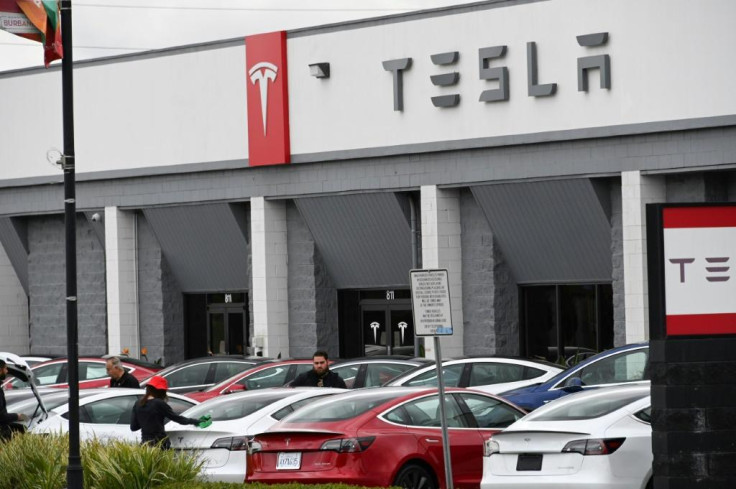
By the time he allegedly made the 'impossible' remark at the Gigafactory, Tesla's Semi was no longer a concept on a slide deck. Initial deliveries to PepsiCo began in December 2022, with the company publicly sharing performance figures from its Sacramento operation. PepsiCo reported covering 1,076 miles in 24 hours across multiple shifts and reaching single‑charge ranges of up to 410 miles from its Tesla Semi trucks.
Musk told the podcast that he pressed Gates to identify what, precisely, he thought could not work.
'I was like, 'Well, so it must be that you disagree with the watt‑hours per kilogram of the battery pack, so that you must think that perhaps we can't achieve the energy density of the battery pack, or that the watt‑hours per mile of the truck is too high,' Musk said. 'Because when you combine those two numbers, the range is low. And so which one of those numbers do you think we have wrong, and what numbers do you think are correct?'
According to Musk's account, Gates 'didn't know any of the numbers,' prompting Musk to question how Gates could be so certain the concept would fail. 'Doesn't it seem that it's perhaps premature to conclude that a long‑range semi cannot work if you do not know the energy density of the battery pack or the energy efficiency of the truck chassis?' he added.
Third‑party testing has since put more numbers on the table. Logistics firm NFI has reported an efficiency of 1.64 kWh per mile for the Tesla Semi, while DHL recorded 1.72 kWh per mile while hauling 75,000 pounds gross combined weight over 388 miles on a single charge. Those figures, which are publicly available, suggest real‑world performance roughly in line with Tesla's claims.
Musk Uses Tesla Semi To Undercut Gates' Climate Credentials
For starters, the clash is not just about engineering pride. It cuts into how each billionaire presents himself as a climate problem‑solver.
Gates has invested in and championed technologies like sustainable aviation fuels, hydrogen and nuclear, arguing that heavy transport may need alternatives to batteries. Musk, by contrast, has framed battery electrification as the central answer and has taken personal offence at bets against Tesla.
In 2022, Musk said he discovered that Gates had taken a short position against Tesla shares, effectively profiting if the stock fell, while simultaneously approaching him seeking support for climate philanthropy. Musk described that sequence as 'uniquely irritating' and shared text messages suggesting he rebuffed the request. Gates did not deny the short when asked in other interviews, saying only that his investments were separate from his philanthropy.
The Tesla Semi has become a kind of rolling exhibit in Musk's argument that the old assumptions are now out of date. The truck uses three electric motors and, according to Musk, produces roughly three times the power of a typical diesel semi while using under two kilowatt‑hours of energy per mile.
Range variants of 325 miles and 500 miles are now on offer, with early units in the hands of operators rather than locked away in a lab.
Volume production of the Semi began on 29 April 2026 at a dedicated facility in Nevada that Tesla plans to scale up to 50,000 units per year. For Musk, the timing is symbolic. The vehicle that Gates said would 'probably never' be practical is now rolling off a production line in industrial quantities.
Gates has not publicly responded to Musk's latest criticism over the Gigafactory meeting, and there has been no detailed counter‑argument from his team challenging the reported efficiency or range data. Nothing is confirmed yet so everything should be taken with a grain of salt, since the only description of that private conversation is coming from Musk himself.
© Copyright IBTimes 2026. All rights reserved.
- Recommended For You