

UFO Expert Says UAP Whistleblowers Are Just 'Conspiracy People', Alien Talks Are 'Getting Very Redundant'
The scientist suggests revealing the alien will end all speculations
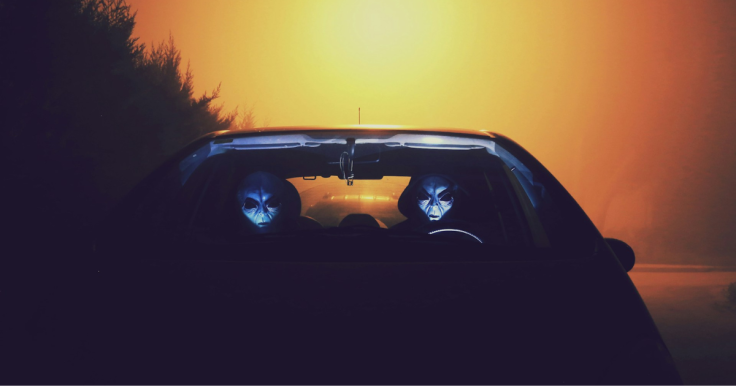
Astrophysicist and UFO expert Neil deGrasse Tyson has once again challenged claims that unidentified aerial phenomena (UAPs) are evidence of extraterrestrial visitors. He argued that unexplained sightings should not automatically be linked to alien life.
Speaking during a recent appearance on Dr Mayim Bialik's YouTube channel, Tyson weighed in on the growing public fascination with UAPs. He stressed the importance of separating mystery from speculation. The scientist argued that an inability to identify an object does not make it evidence of extraterrestrial life or activity.
'Let me draw a line between seeing something you don't know and understand and calling it a UAP, which is rebranded: Unidentified Anomalous Phenomena. And who are they kidding? They're talking about UFOs,' Tyson said. 'If you don't understand what it is, then you don't know what it is,' he said. 'Just because you can't identify what you're looking at does not mean it's an alien. It just means you don't know what you're looking at and let's investigate it further.'
Criticism of Whistleblowers and Conspiracy Claims
Tyson's remarks come as public interest in UFOs and UAPs continues to grow following a series of US government reports and congressional hearings. In recent years, military pilots have reported encounters with unusual objects displaying flight characteristics that remain unexplained.
With that in mind, Tyson took aim at prominent UFO whistleblowers whose claims have fuelled speculation about secret government programmes and alleged recovered alien technology.
The astrophysicist described them as 'conspiracy people,' ultimately questioning the reliance on testimony rather than physical evidence.
'They're only saying it's probably there, but it's not coming out. That has nothing to do with credential,' he pointed out. 'That's just you want to fill a gap between somebody else's testimony and what you think is going on.'
Tyson was referring to the claims made by several former military and intelligence officials who have alleged that governments possess non-human craft and have concealed information from the public. While such allegations have generated headlines and political scrutiny, no publicly verified evidence has emerged confirming the existence of extraterrestrial spacecraft or alien bodies.
Tyson dismissed the argument that senior rank or security credentials should be enough to validate extraordinary claims. 'That has nothing to do with how high-ranking you are,' he said. 'Just so we're clear... I would say bring out the alien.'
UFO Debate 'Getting Redundant'
The debate over UFOs has intensified since the Pentagon established formal mechanisms to investigate unexplained aerial incidents. Several cases remain unresolved, keeping public interest high and prompting calls for greater transparency. Yet Tyson believes the conversation has become repetitive.
'That's my analysis,' he said. 'I'm saying, I don't know how much more we can or should be listening to these testimonies because they're getting very redundant very quickly.'
Tyson's bold takes reflect a broader scientific consensus that extraordinary claims require extraordinary evidence. As governments continue to investigate unexplained sightings, Tyson's message remains unchanged: uncertainty is not evidence of alien visitation. Until tangible proof emerges, he argues, unidentified objects should remain exactly that — unidentified.
© Copyright IBTimes 2026. All rights reserved.
- Recommended For You


