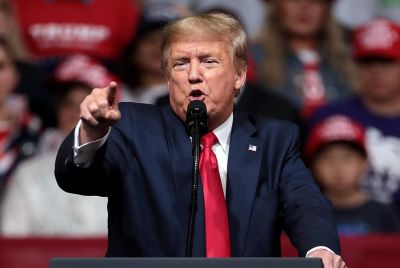
'More Powerful Than Hitler and Genghis Khan': Inside Trump's Bizarre Document Comparing Himself to History's Dictators
New book reveals Trump's interest in historical rulers, sparking debate on leadership and power.
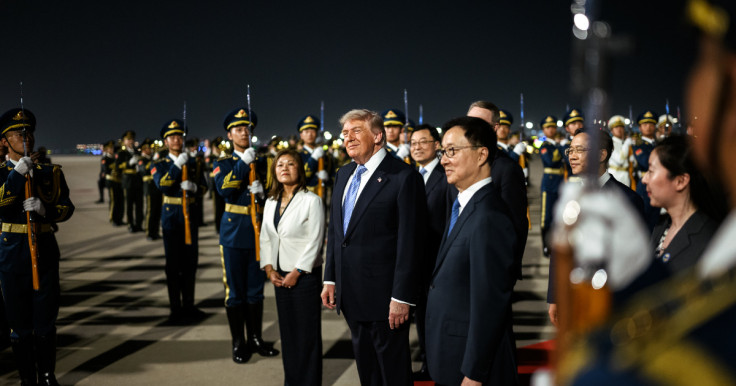
President Donald Trump is facing fresh scrutiny after a forthcoming book revealed that he reportedly reviewed a document comparing his power to some of history's most influential rulers and dictators, including Adolf Hitler, Genghis Khan, Napoleon Bonaparte and Alexander the Great.
A new book by NYT reporters reveals Trump: "I am more powerful than Stalin, Mao, and Hitler." The book details his White House tenure and strict focus on media optics. pic.twitter.com/LAQ2Fj4HsI
— World Vibe (@world_vibe_en) June 19, 2026
The account, detailed in a new book by journalists Maggie Haberman and Jonathan Swan, has attracted particular attention because it coincides with Trump's recent remarks about the limits of presidential power following a new agreement between the United States and Iran.
The two episodes are unrelated on their face. Yet together they have reignited debate over Trump's long-running fascination with strength, authority and the exercise of power.
The Document at the Centre of the Controversy
The most striking revelation in Haberman and Swan's book concerns a document that reportedly ranked historical leaders according to the power they wielded.
According to the authors, the list included figures such as Alexander the Great, Genghis Khan, Napoleon, Julius Caesar, Mao Zedong, Joseph Stalin and Hitler. Trump reportedly remarked that many of history's great rulers lacked the advantages of modern technology, noting that they did not have aircraft that allowed leaders to travel rapidly and project influence across vast territories.
The authors also wrote that Trump appeared to take 'evident pleasure' in being grouped alongside leaders known for exercising extraordinary authority.
The episode has drawn attention because it offers a glimpse into how Trump reportedly viewed power and historical legacy. Critics argue that comparisons involving democratic leaders and authoritarian rulers inevitably raise questions about what qualities are being admired and why.
Trump's 'No Limits' Remark Draws Fresh Attention
The book's publication comes as Trump is already attracting attention for comments he made about the recent Iran agreement.
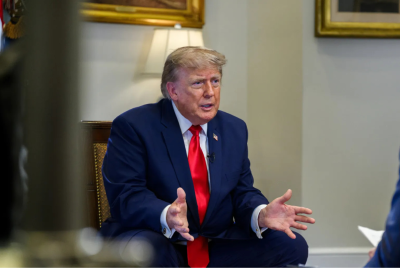
During an interview with Axios journalist Marc Caputo, Trump was asked whether the conflict had taught him that there were limits to presidential power.
'I haven't learned that lesson yet,' Trump replied. 'I know there are, but there are no limits. We defeated them totally militarily.'
The remarks generated headlines because they contrasted with the agreement itself.
While Trump initially demanded Iran's unconditional surrender, the arrangement that emerged has largely been described as a framework designed to halt hostilities, reopen the Strait of Hormuz and create space for further negotiations.
The Iran Framework Remains Incomplete
Much of the debate surrounding the agreement has focused on what it actually commits both sides to do.
One of the most controversial elements is a proposed $300 billion reconstruction fund linked to Iran. Politiko reported that the proposal has already triggered criticism from some Iran hawks, while administration officials have stressed that any funding would be conditional rather than immediately available.
Supporters argue the framework reduces the risk of renewed conflict while preserving leverage over Tehran. Critics contend that the administration is celebrating a diplomatic victory before the final terms have been negotiated.
NPR reported that major issues remain unsettled, while mediators have characterised the arrangement as a roadmap towards a broader settlement rather than a completed peace agreement.
As a result, the success of the initiative is likely to depend on what emerges during the next phase of negotiations rather than on the initial announcement itself.
A Consistent Theme Throughout Trump's Career
The historical comparison document and Trump's recent Iran comments have become linked largely because both touch on a theme that has followed him throughout his political career.
Trump has frequently framed politics in terms of strength and weakness, winners and losers, decisive action and perceived indecision. Supporters view that approach as evidence of confidence and leadership. Critics see it as an unusually personal view of political power.
That context helps explain why the book's revelations have attracted attention beyond the immediate controversy surrounding the document itself.
The figures reportedly included in the ranking are remembered for the scale of their influence and their ability to shape events far beyond their own lifetimes. The comparison therefore raises broader questions about how Trump sees leadership and historical significance.
Power, Legacy and Political Reality
For any president, there is often a gap between political rhetoric and governing reality.
The Iran framework remains unfinished. The reconstruction proposal remains contested. Negotiations continue, and officials involved in the process have repeatedly stressed that key details have yet to be resolved.
Trump, however, has portrayed the agreement as further evidence of American strength and his own ability to shape outcomes.
That is one reason the account described by Haberman and Swan has generated such sustained interest. More than a colourful anecdote, it appears to echo a recurring theme that has defined much of Trump's public life: an enduring focus on power, influence and the place a leader ultimately occupies in history.
© Copyright IBTimes 2026. All rights reserved.
- Recommended For You