Did Trump Fail to Woo China in Ordering 500 Boeing Planes? Investors in Panic After China Only Wants to Buy 200
Trump says China agreed to buy 200 Boeing jets, below the expected 500, disappointing market expectations
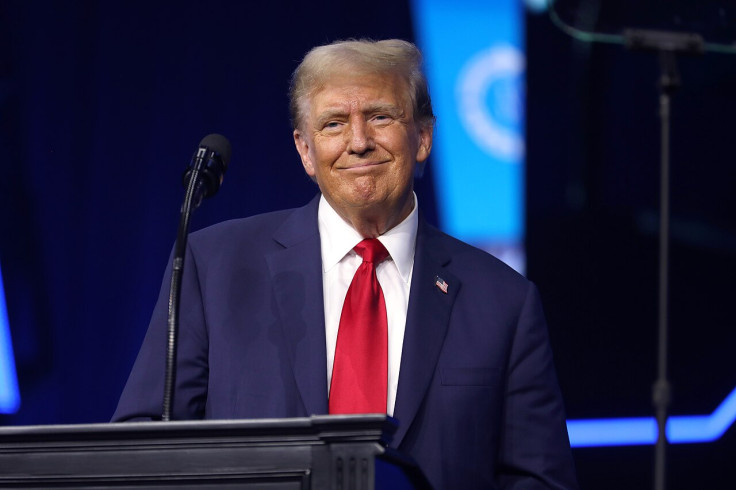
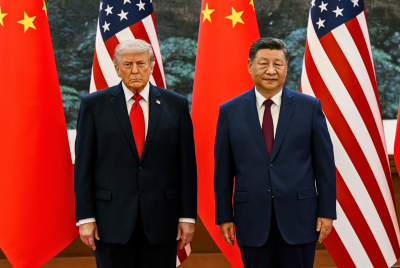
Investors reacted cautiously after US President Donald Trump announced that China had agreed to purchase 200 Boeing aircraft following high-level talks with Chinese President Xi Jinping in Beijing, a figure significantly lower than earlier market expectations of a 500-plane deal.
The announcement, made during Trump's visit to China, was framed by the President as a major breakthrough in US-China trade relations, particularly for American exports and the aerospace sector.
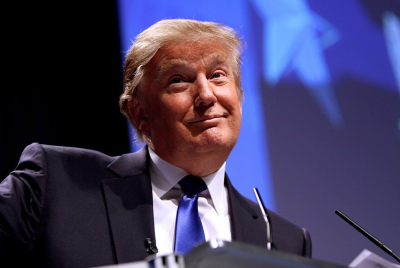
Trump told Fox News that China had committed to ordering 200 Boeing jets, describing it as '200 big ones' and suggesting it represented a meaningful step in rebuilding commercial ties between the two economies.
However, the deal immediately raised questions in financial markets because its size fell well short of earlier projections.
Expectations Versus Reality In Boeing Negotiations
Prior to the summit, analysts and industry sources had anticipated a substantially larger agreement, with expectations ranging closer to 500 aircraft.
The discrepancy between speculation and the final figure triggered a negative reaction on Wall Street, with Boeing shares dropping more than 4 per cent during trading following Trump's remarks.
Reuters reported that while details of the agreement remain limited, including delivery timelines and aircraft types, the deal is being viewed as the first major Chinese purchase of US-made commercial jets in nearly a decade.
The lack of clarity has further contributed to investor uncertainty, particularly given Boeing's recent efforts to stabilise its international order pipeline.
Trump Frames Deal As Trade Breakthrough
Speaking during the visit, Trump characterised the agreement as part of a broader effort to rebalance trade flows between the United States and China. He suggested that additional commercial and agricultural purchases could follow as part of ongoing negotiations.
US officials travelling with the delegation, including Treasury Secretary Scott Bessent, had earlier signalled expectations of a significant Boeing announcement, reinforcing market anticipation ahead of the summit.
According to Besset, the US is focused on balancing trade flows. 'That's the goal here, and that can be done one of two ways - either the US receives fewer imports from China, or we sell more to China, and we're trying to balance that out,' he said.
Trump also described the order as a 'commitment' that would support American manufacturing jobs, presenting it as evidence of improving economic cooperation between Washington and Beijing.
Investor Reaction Highlights Market Sensitivity
The immediate market response reflected disappointment that the order did not match pre-summit expectations. Boeing shares fell sharply, extending concerns about the company's ability to secure large-scale international deals amid ongoing geopolitical uncertainty.
Analysts noted that aircraft orders from China are often influenced by broader diplomatic relations rather than purely commercial considerations, making them inherently unpredictable.
Reuters reported that Boeing's stock decline followed concerns that the final agreement represented a scaled-back outcome compared with earlier expectations of a 500-aircraft package.
Despite the drop, Boeing remains one of the world's largest aerospace manufacturers, with a substantial backlog of unfilled orders globally.
Strategic Importance Of The China Market
China remains a critical long-term market for aircraft manufacturers, with forecasts suggesting demand for thousands of new planes over the coming decades as its aviation sector expands.
However, geopolitical tensions between Washington and Beijing have repeatedly disrupted Boeing's commercial prospects in the region, leading to prolonged gaps in major order announcements.
The latest agreement, while smaller than anticipated, is still being interpreted as a potential reopening of channels for US aerospace exports after years of constrained activity.
A Symbolic But Limited Breakthrough
While the 200-aircraft figure represents a notable development in trade relations, analysts caution against viewing it as a transformative shift in US-China economic ties.
The lack of detailed breakdowns of aircraft types, delivery schedules, and financing arrangements creates significant uncertainty about the deal's commercial impact.
For now, the announcement is being seen less as a definitive turning point and more as a symbolic step in ongoing negotiations between the two economic powers.
As markets digest the outcome, attention is likely to shift to whether further orders materialise in the months ahead and whether Boeing can convert diplomatic momentum into a sustained commercial recovery.
© Copyright IBTimes 2026. All rights reserved.
- Recommended For You