

Diddy Could Face Charges Over Tupac Murder as Keffe D Trial Puts Alleged $1M Hit Claim Under Spotlight
Duane 'Keffe D' Davis's Las Vegas murder trial has revived a decades-old claim that Sean 'Diddy' Combs was involved in Tupac Shakur's murder
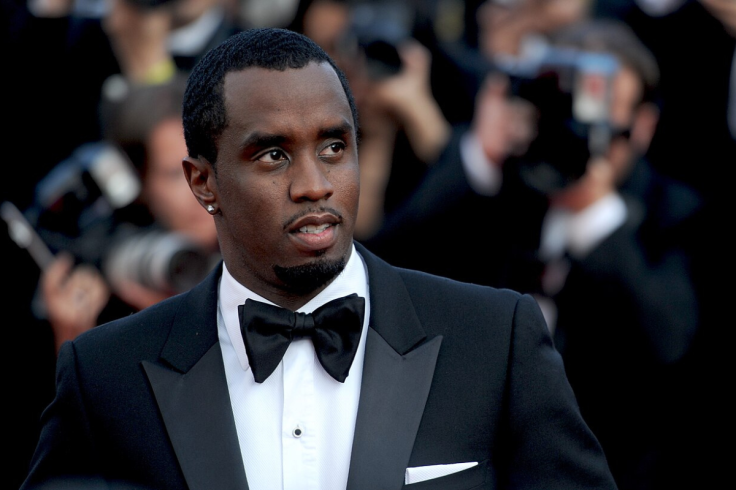
Nearly 30 years after Tupac Shakur was gunned down on the Las Vegas Strip, the trial of the man accused of orchestrating his killing has reopened hip-hop's darkest mystery and dragged Sean 'Diddy' Combs into the frame. Duane 'Keffe D' Davis, 63, is standing trial for murder, and evidence in court includes a claim that could see the disgraced mogul face charges of his own.
At the centre of it is a decades-old allegation, first made by Davis in a covert 2008 police recording and repeated in his memoir: that Combs paid £750,000 ($1 million) to have Shakur killed. Prosecutors say a guilty verdict could open the door to an investigation into Combs.
How a Secret 2008 Recording Ties Diddy to the Tupac Murder Allegations
The case against Davis rests heavily on his own words. Prosecutors say he told police, documentary crews and readers of his memoir that he tracked down Shakur after his nephew was attacked amid a rival gang dispute, and that he was riding in the white Cadillac from which the fatal shot was fired, later passing the gun to the man in the back seat.
The clearest evidence of Combs's alleged role comes from a covert recording made by detectives in 2008. In it, Davis reportedly described how he and fellow South Side Compton Crips members hunted down and shot Shakur, and claimed Combs had offered him £750,000 ($1 million) to carry out the hit.
That recording has since been entered into evidence. A person familiar with the district attorney's deliberations, who spoke on condition of anonymity, said a conviction 'gives a green light to take action against Diddy'.
Combs, currently serving just over four years on federal prostitution-related charges, has dismissed the allegations as 'pure fiction and completely ridiculous'. Davis insists the claims were embellished for fame and are not true. Prosecutors counter that his consistent, repeated admissions amount to a confession.
The lead prosecutor in the murder case against Duane "Keffe D" Davis told a jury this morning that Davis was associated with Sean "Diddy" Combs when he took part in Tupac Shakur's 1996 f*tal sh**ting in Las Vegas.🕊️ pic.twitter.com/UBBMsRra5d
— Raphousetv (RHTV) (@raphousetv2) August 18, 2026
The Bad Boy vs Death Row Feud That Defined 90s Hip-Hop
The alleged plot did not emerge from nowhere. By the mid-1990s, Combs's Bad Boy Records and Shakur's label, Death Row Records, were locked in a feud that had come to define rap music.
Shakur, who blamed Combs and his artist Christopher Wallace, better known as the Notorious B.I.G., for a 1994 shooting that left him injured, hit back with pointed diss tracks. The animosity was mirrored on the streets, with the South Side Compton Crips aligned to Bad Boy Records and Mob Piru protecting Death Row.
What Really Happened the Night Tupac Shakur Was Shot
Both gangs clashed before and after Shakur's death. The chain of events began at the MGM Grand on 7 September 1996, hours after Shakur's entourage watched Mike Tyson knock out Bruce Seldon.
In the lobby, the group assaulted Orlando Anderson, Davis's nephew, suspected of an earlier robbery. Later that night, Shakur was travelling in the passenger seat of a black BMW driven by his companion, Death Row co-founder Marion 'Suge' Knight, when the pair stopped at a red light near the Strip.
A white Cadillac pulled alongside and gunfire erupted, striking Shakur multiple times. Knight escaped with minor injuries. Prosecutors allege Anderson fired the fatal shots after Davis handed him the gun, in revenge for the earlier beating.
Shakur died in hospital six days later, aged 25. Anderson was never charged and was killed in an unrelated gang shooting in 1998.
The trial, expected to last around a month, is unlikely to reveal who pulled the trigger. Prosecutors instead hope to prove Davis was the shot caller who supplied the weapon.
Combs's lawyer did not respond to requests for comment, and the rapper has never been officially named a suspect, despite appearing dozens of times in court filings.
© Copyright IBTimes 2026. All rights reserved.