DOJ Wants To Block Illinois City's Program That Gives $25,000 Payments to Black Residents Only
The DOJ says Evanston's $25,000 (£18,400) reparations payments programme to Black residents and descendants may violate federal civil rights protections.
The US Department of Justice has moved to intervene in a legal challenge against Evanston, Illinois' reparations programme, which provides up to $25,000 (£18,400) in financial assistance to eligible Black residents and descendants of former Black residents.
The DOJ argues the programme violates federal civil rights protections, while Evanston officials have defended the initiative as an effort to address the impact of historic discrimination.
For context, Evanston's reparations plan was created to respond to the city's own history of racial inequality and is designed for residents who meet specific eligibility requirements. According to the programme's criteria, applicants must be Black or African American with origins in Black racial and ethnic groups of Africa and must have lived in Evanston between 1919 and 1969, or be descendants of people who did.
DOJ Challenges Illinois City's $25,000 Payments to Black People
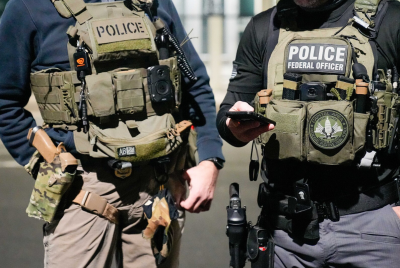
The Justice Department filed a motion to join a civil rights lawsuit brought against Evanston by Judicial Watch, a conservative legal organisation that has challenged the programme.
According to the DOJ's proposed complaint, the department alleges that Evanston's policy violates the Equal Protection Clause of the Fourteenth Amendment and the Fair Housing Act. The department is seeking to intervene under Section 902 of the Civil Rights Act of 1964, which allows the attorney general to participate in cases involving alleged denial of equal protection based on race when a matter is considered to have public importance.
Feds joining war against city's $25,000 payments to 'blacks only'
— WorldNetDaily (@worldnetdaily) June 17, 2026
'It is race discrimination, pure and simple. And it is illegal'https://t.co/JOAqvMf8Cg
The federal government's intervention comes after Evanston continued operating the programme despite previous criticism from opponents who argued that benefits based on race could face constitutional challenges.
Assistant Attorney General Harmeet Dhillon of the DOJ's Civil Rights Division criticised the initiative in a statement.
'Under the pretext of paying reparations for events more than 100 years ago, the city of Evanston has chosen to distribute millions of dollars in cash and housing benefits to people because of the colour of their skin or the colour of the skin of their parents, grandparents, or great grandparents,' Dhillon said.
She added that cities could address historic discrimination through other methods, arguing that distributing money based on race was 'not the answer.'
Judicial Watch President Tom Fitton welcomed the DOJ's involvement, claiming the programme was unconstitutional and describing the legal action as an important challenge to Evanston's policy.
The city has not been reported as changing its position on the programme following the federal government's move.
Why Block the 'Reparations'?
According to the legal challenge, Evanston has already distributed millions of dollars through the initiative. The city had provided $3.525 million (£2.61 million) through the programme to at least 141 Black residents.
Supporters of reparations programmes say communities that suffered from past discrimination need specific help to deal with problems that still exist today. Critics of Evanston's plan argue that giving money only to people of a certain race goes against laws that require everyone to be treated equally.
Evanston created the programme as part of a US effort to provide compensation for the effects of slavery and past racial discrimination. The city says the plan is linked to its own history, including claims that Black residents faced unfair treatment in housing and other areas during the 20th century.
Supporters say the programme is not based on race alone but is designed for people connected to specific historical experiences in Evanston. However, the DOJ and Judicial Watch argue that the rules still unfairly favour one racial group and break federal law.
The court's decision could affect how other US cities create similar programmes in the future. The DOJ joining the case does not mean the programme has been ruled illegal, but it means federal officials will now argue against it in court.
The main question is whether Evanston's effort to address past discrimination through payments only available to certain residents can legally continue.
© Copyright IBTimes 2026. All rights reserved.
- Recommended For You