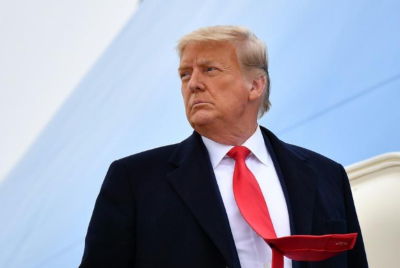
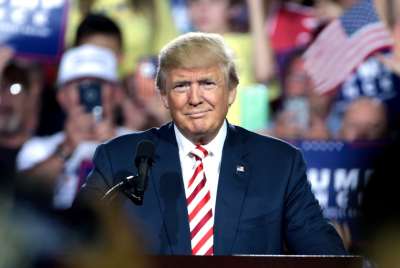
Donald Trump Mental Decline: 79-Year-Old POTUS Allegedly Repeating Same Stories Every 10 Minutes
Journalist Michael Wolff's latest account depicts an ageing, exhausted Donald Trump on a 'mortality watch', fuelling unease over his health.

Donald Trump's mental decline is facing fresh scrutiny in Washington after journalist Michael Wolff claimed on a podcast on Wednesday, 27 May, that the 79-year-old President is 'exhausted by the job,' repeating the same stories every ten minutes and prompting what he called a quiet 'mortality watch' in the West Wing.
Concerns about Trump's health have simmered for years, but they have sharpened since his latest physical examination and a series of unexplained trips to Walter Reed National Military Medical Centre.
The White House has repeatedly insisted these visits are routine. Wolff and his co-host on Inside Trump's Head, Joanna Coles, are distinctly unconvinced, arguing that the official reassurance sounds very much like the language deployed when something is anything but routine.
'Mortality Watch' And Fears Of A 'Failing Presidency'
On the Daily Beast podcast, Wolff painted a portrait of a president worn down not just by age but by the cumulative strain of his own governing style. Trump, he said, is nearly 80, overweight, sleep-deprived and 'manic,' a combination that appears to be catching up with him in real time.
'What is striking now is not simply Trump's age, but how much suddenly depends on a man who looks exhausted by the job itself,' Wolff argued, warning that the margin of error for the presidency has narrowed uncomfortably around a visibly diminished leader.
In his view, the physical questions cannot be separated from the political ones. A President who lives on adrenaline, late nights, and fast food will, at some point, meet the limits of his own body.
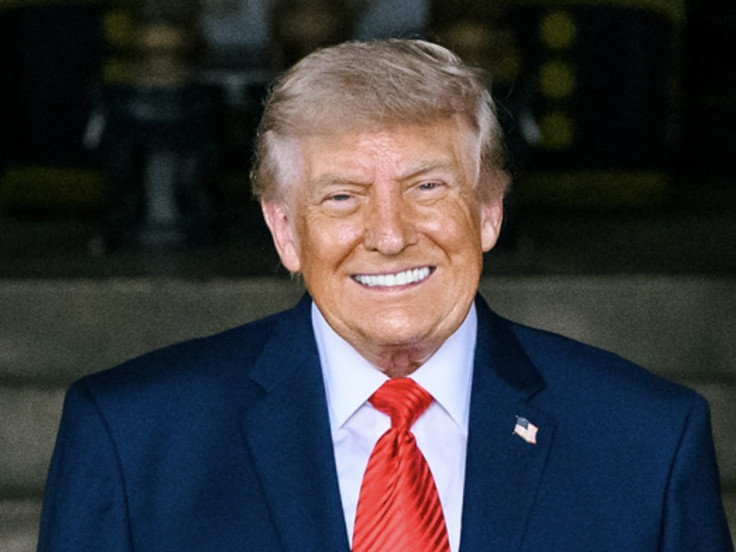
Wolff went further than most commentators are willing to go in public. He suggested 'a very decent likelihood, higher than in most modern presidencies, that he does not physically survive the term.'
It is a stark claim, and one that rests on his reporting rather than any disclosed medical diagnosis. He described a president 'increasingly unable to carry the weight of things going wrong around him, a man whose body finally seems to be catching up with his chaos.'
Pressed by Coles on what that might look like, Wolff replied: 'There's a very good chance that it just ends all of a sudden ... no warning, no preparation. He falls.'
There is no medical evidence offered to back that prediction; it is, as he effectively admits, an extrapolation from behaviour and atmosphere rather than from charts and scans.
Donald Trump's Mental Decline And Repeated Stories
The question of Donald Trump's mental decline is hardly new, and much of Wolff's diagnosis leans on material he has published before. In his book Fire and Fury, he wrote that Trump's aides were 'painfully aware of the increasing pace of his repetitions.'
What had once been a thirty-minute loop of familiar anecdotes had, by Wolff's account, compressed to ten minutes, with the president allegedly repeating 'word-for-word and expression-for-expression, the same three stories.'
On the podcast, this detail resurfaced as shorthand for cognitive drift. Trump has frequently bristled at such suggestions, making a show of his performance on cognitive tests and using rallies to insist that he is mentally sharp and fully in command.
Wolff and Coles interpret those public boasts rather differently, as defensive flares sent up by a leader who senses the whispers around him.
They describe an inner circle living in what amounts to permanent crisis mode. According to their telling, the Trump White House is defined less by ideological coherence than by 'quiet panic, shrinking loyalties and growing instability,' with senior aides and the president himself preoccupied by how to escape the next scandal without carrying the blame.

Geopolitics, MAGA Futures And A President Running On Momentum
Wolff also links Trump's physical and mental condition to his handling of foreign policy, particularly Iran. He contends that Trump assumed Tehran would eventually 'do what everyone in Trump's imagination always does, capitulate.'
Instead, he argues, the 'Iranians have manoeuvred him into an untenable position where he now appears to need a deal more than they do.'
In this reading, the President's habit of 'announcing peace, announcing breakthroughs, insisting things are under control' is less strategy than reflex, a pattern from his business and political life in which he talks as if a problem has been solved long before he has worked out how to solve it.
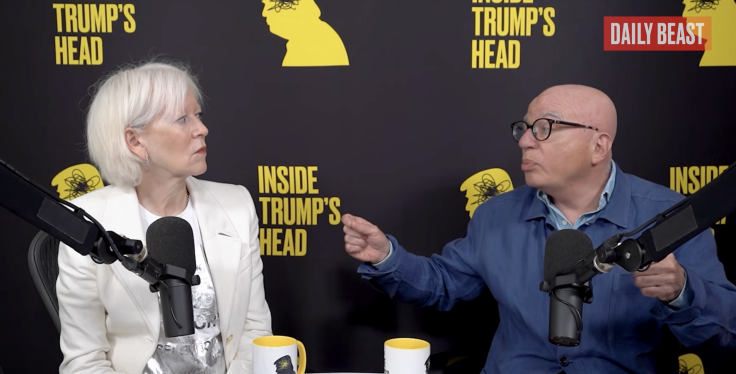
Wolff calls Trump's political career 'a series of predicaments, many of his own making, that he cannot quite deal with,' suggesting Iran is simply the latest and perhaps most dangerous iteration.
Coles and Wolff widen the lens to the future of the MAGA movement and the role of Vice-President JD Vance. They say Trump's apparent decline is fuelling manoeuvring behind the scenes, as Republicans contemplate what happens if the figure who has dominated their politics for so long can no longer do the job in the same way.
None of that plotting is on the record, but it has the ring of a party staring down its own succession problem.
'Second terms are always psychologically brutal,' Wolff said, 'but for Trump, the effect seems especially acute because there is no longer another campaign to run toward.' Instead, he spoke of a 'narrowing corridor of time,' midterm elections looming and the familiar loneliness that settles around every president at this stage.
Trump, he conceded, 'still has the force of personality, perhaps even the force of evil personality, that propels him forward.' Increasingly, though, Wolff sees a man moving on momentum alone, a leader whose body, mind and movement are all straining to outpace the clock.
© Copyright IBTimes 2026. All rights reserved.
- Recommended For You