Wyndham Clark Controversy: Golfer's Psychologist Forced to Flee Course From Brutal U.S. Open Fan Abuse
Clark's mental resilience shines through as he claims victory despite crowd hostility at Shinnecock Hills.
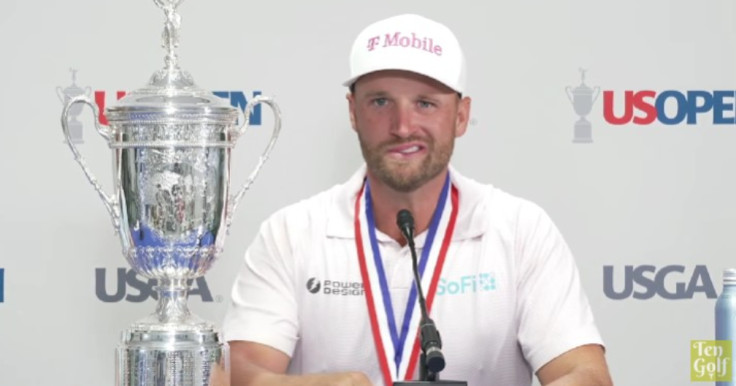
Wyndham Clark's US Open victory was overshadowed by an extraordinary final round at Shinnecock Hills, where crowd hostility became so intense that his sports psychologist Julie Elion briefly left the course.
Clark still delivered when it mattered most. A 52-foot lag putt on the 72nd hole helped him close with a three-over 73, finishing four under par and one shot ahead of Sam Burns to claim his second major championship.
The win was not only about controlling his golf game. It was also a test of the mental work Clark has done with Elion since 2022, helping him deal with criticism, pressure and the doubts that once affected his confidence.
Crowd Turns Hostile
'Man, they definitely didn't want me to win,' Clark said after the final round. The reaction from sections of the gallery was hostile throughout Sunday's play, with spectators directing comments towards Clark and some fans being removed from the course.
Wyndham Clark on how much heckling he heard from fans during the final round of the U.S. Open: "They definitely didn't want me to win. It's pretty rare in an (U.S.) Open Championship or a major to have fans kind of boo against your shots or cheer for bad shots.
— Cameron Jourdan (@Cam_Jourdan) June 21, 2026
"Rhat was tough,… pic.twitter.com/5wnzCcAZMU
The treatment was linked partly to Clark's reputation among some golf supporters. His image became more controversial after the 2025 U.S. Open at Oakmont, when he damaged a couple of lockers following his missed cut and faced criticism for the incident.
But the atmosphere at Shinnecock was not simply a continuation of that controversy. It became a test of whether Clark could stay focused while facing constant outside pressure.
Clark's Mental Reset
Clark began working with Elion in 2022, although he admitted he was initially reluctant to seek help from a sports psychologist. After winning the 2023 U.S. Open at Los Angeles Country Club, he credited her influence.
'I was a little reluctant to do it,' Clark said. 'I'm just so glad that she was brought into my life.'
Elion later described the challenge of working with a player whose confidence had been damaged by years of negative thinking. Speaking on season two of Netflix's 'Full Swing,' she recalled telling Clark that he needed to change his approach.
'We had a little heart to heart,' she said. 'I was like, "Buddy, you're on the verge of not being on the PGA Tour or on the verge of being a star. You have to make a change because you can't keep doing this to yourself."'
Clark has also spoken openly about his struggles before becoming a major champion. On 'Full Swing,' he described periods of isolation, excessive drinking and a mindset that left him questioning whether he wanted to continue playing golf.
The change was significant. Clark won his first PGA Tour title at the Wells Fargo Championship in May 2023 before winning his first major at the U.S. Open one month later.
Pressure at Shinnecock
Sunday's final round created a different kind of challenge. Elion said the comments from spectators became so frustrating on the eighth hole that she stepped away from the course and spoke with someone before returning.
'It got to me,' she said. 'I had to go inside and talk to somebody.' She said Clark's team had expected a difficult atmosphere.
'We planned,' Elion said. 'We knew.' Elion compared the situation to the support Rickie Fowler received during the 2023 U.S. Open, when fans regularly backed the American golfer. This time, Clark faced the opposite challenge: trying to win while much of the gallery wanted him to fail.
Clark said he focused on controlling his own response rather than the behaviour around him. 'Anytime someone said something negative to me, I replaced it with something positive,' he said.
He also used humour to deal with the hostility alongside his caddie David Pelekoudas, known as 'Big Wave Dave.' 'I was kind of making jokes about it with Dave where if we heard someone cheer for me, I'd go, "Oh, there's one person that likes me,"' Clark said.
Winning Through Noise
The ability to block out the crowd became one of the defining moments of Clark's victory. 'That's also what makes him great,' Elion said. 'He's so competitive.' That competitiveness has always been central to Clark's career. It has helped him succeed, but it has also contributed to the polarising reaction he sometimes receives from fans.
At Shinnecock Hills, however, the challenge was not winning approval from the crowd. It was preventing the crowd from affecting his performance. Clark did not change the atmosphere around him. He simply refused to let it decide the outcome.
The U.S. Open ultimately became a test of the same mental strength that helped transform his career. The fans provided the pressure, but Clark produced the response.
© Copyright IBTimes 2026. All rights reserved.
- Recommended For You