D4vd Murder Trial Defence Strategy: Mark Geragos Explains How Singer Could Avoid Death Penalty
Prominent attorney analyses potential legal tactics in the David Anthony Burke case, suggesting the death penalty threat may be a strategic jury selection tool.

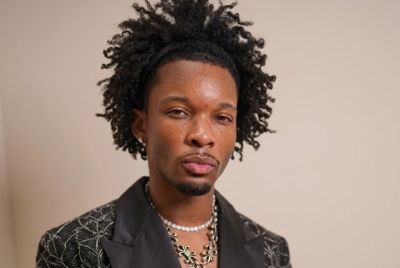
Musician David Anthony Burke, widely known by his stage name D4vd, faces a high-stakes legal battle following a Los Angeles judge's ruling that sufficient evidence exists to proceed to trial.
Following a rigorous five-day preliminary hearing in July 2026, the 21-year-old artist stands accused of first-degree murder with special circumstances, continuous sexual abuse of a child under 14, and unlawful mutilation of human remains.
Prosecutors allege that Burke killed 14-year-old Celeste Rivas Hernandez at his Hollywood Hills home in April 2025 to prevent her from exposing their illicit relationship and destroying his budding music career.
Her decomposed and dismembered remains were subsequently discovered inside the front trunk of his impounded Tesla in September 2025. With an arraignment scheduled for August 31, legal experts are closely scrutinising the courtroom tactics that Burke's defence team may deploy to avoid a conviction and potential capital punishment.
The singer has pleaded not guilty to all charges. These charges include murder with special circumstances, continuous sexual abuse of a child under 14 and unlawful mutilation of human remains.
Analysing the D4vd Murder Trial Defence Strategy
With the case now headed to trial, criminal defence attorney Mark Geragos told Brian Entin on his podcast that the case may not be as straightforward as it appears. Geragos has represented high-profile clients including Michael Jackson, Scott Peterson and Winona Ryder. He stated that much of the preliminary hearing focused on the disturbing details of how the body of Rivas Hernandez was found and handled.
However, Geragos noted that those details do not necessarily prove how the teenager died or who caused her death. He mentioned that investigators reportedly indicated early in the case that they were not certain a homicide had occurred. Furthermore, he pointed to testimony from the medical examiner that included words such as 'possible' rather than definitive conclusions. Geragos argued that such tentative testimony could face greater scrutiny at trial.
Examining Potential D4vd Murder Trial Defence Tactics
According to Geragos, the attorneys representing Burke could argue that he concealed and dismembered the body without being responsible for the death of Rivas Hernandez. To support this possible legal approach, he referenced the case of Robert Durst. Durst was acquitted in a Los Angeles murder case after admitting to dismembering a body but claiming self-defence.
Geragos said the defence could also contend that the injuries Rivas Hernandez sustained were self-inflicted. Another potential argument is that a third party was responsible for the death and Burke remained silent to protect that person.
During the preliminary hearing, defence attorneys highlighted messages in which Rivas Hernandez allegedly threatened Burke and discussed lying to her father. Geragos said he expects the defence to use those messages to portray Rivas Hernandez as a troubled teenager who was acting out.
Assessing the Death Penalty in D4vd Trial
In his view, the continuous sexual abuse of a child under 14 charge may present a greater legal threat to Burke than the murder charge. Regarding the murder charge, Los Angeles County District Attorney Nathan Hochman has raised the possibility of seeking the death penalty. Geragos described that prospect as largely symbolic.
He noted that California effectively has a moratorium on executions at present. Because of this moratorium, Geragos argued that pursuing the death penalty is often used as a jury-selection strategy. He suggested that jurors who are willing to consider a death sentence may be more favourable to the prosecution overall.
As legal teams prepare for the upcoming August arraignment, public and judicial attention remains locked on one of the most sensational celebrity criminal cases in recent years.
© Copyright IBTimes 2026. All rights reserved.
- Recommended For You