How Did Alex Bueno Die? Real Cause of Death, Net Worth and Career Highlights
Alex Bueno's death marks the end of an era in Caribbean music, leaving an irreplaceable void.

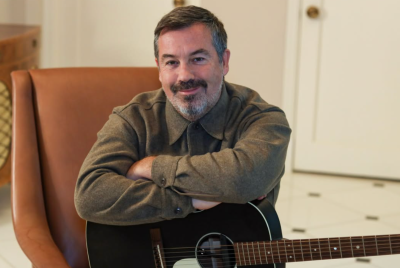
Alex Bueno died in New York on Thursday, 18 June 2026, at the age of 62 after complications linked to treatment for a brain tumour, according to reports and a statement from his team.
The Dominican singer, whose real name was Alejandro Wilberto Bueno López, had spent more than four decades shaping merengue and bachata, and his death closes a chapter in Caribbean music that felt bigger than one man.
Bueno had been one of the most recognisable voices in Dominican music since the late 1970s, when he won a local television singing contest and began moving through orchestras before launching a solo career that made him a fixture of the genre's golden years.
His catalogue stretched across merengue, bachata, salsa and bolero, with songs that travelled well beyond the Dominican Republic and into the wider Latin market.
Cause Of Death And Final Months
The confirmed cause of death was complications from cancer treatment after a brain tumour diagnosis in September 2025. EFE, citing his team, said he had initially undergone surgery to remove a small tumour and later received preventive treatment after cancerous cells were found, before his condition worsened in the weeks leading up to his death.
His team said the deterioration became more serious about three weeks before he died, when his sodium levels and blood pressure dropped sharply. In its public message, the team said, in translation, that his passing left 'an irreplaceable void' in the arts and asked for privacy for his family.
Bueno's death was also confirmed on his official Facebook account, which announced the news from New York. Social media posts from fans, fellow musicians and civic officials followed quickly, reflecting the sort of reach only a handful of Dominican singers ever achieve.
Career Highlights And Legacy
Born on 6 September 1963 in San José de las Matas, Santiago province, Bueno grew up around music and entered the public eye early. He won a voice contest in 1978 on a Wilfrido Vargas programme on Radio Televisión Dominicana, a victory that effectively opened the door to the professional circuit.
His first recording breaks came with Gerardo Veras's All Star orchestra, followed by a run with Fernando Villalona's group and, later, the formation of Liberación. His solo career took off in 1984 with arrangements that softened merengue's edges and gave it a more melodic, romantic feel.
This helped define the sound of an era and made Bueno one of those singers who could move a crowd with ease, not just volume.
Over the years, he built a reputation for crossing genres without losing his identity. Songs such as 'Colegiala,' 'Qué cara más bonita,' 'La radio,' 'Esa pared,' 'Que vuelva' and 'Our Love,' his bachata collaboration with Romeo Santos, became part of a catalogue that, by the reports shared after his death, covered roughly twenty records and more than fifty popular songs.
There was also the less polished side of the story, and it should not be scrubbed out in a polite obituary. Bueno spoke openly at different times about alcohol and drug problems that shadowed much of his career, and later said he had moved away from those vices and back towards faith in his final years.
That arc, from public struggle to late-life recovery, is part of why fans saw him as more than just a polished voice. He was human, messy, and still stood up to sing.
Net Worth And Private Life
On the question of Alex Bueno's net worth, there is no reliable figure confirmed, and nothing authoritative sets out a verified amount. Claims circulating online should be treated cautiously unless they can be tied to a primary financial disclosure or a clearly sourced interview.
His private life was also reported unevenly. He had romantic relationships and children, but the exact number varies by outlet, with some citing five and others seven. That kind of wobble is common in fast-moving death coverage, and it is precisely why editors have to keep a tight grip on what can actually be confirmed.
What is clear is that Bueno remained active until shortly before the illness overtook him, and that his influence reached well beyond one style or one generation.
He was the sort of singer whose voice could sit comfortably in merengue, bachata, salsa or bolero without sounding like a guest in his own career. In Dominican music, it was a proper gift.
© Copyright IBTimes 2026. All rights reserved.
- Recommended For You