

Why Was Italian Football Journalist Luca Esposito Killed? Investigators Probe Whether His Work Was a Motive
Luca Esposito's murder prompts questions about the risks faced by journalists in Italy.
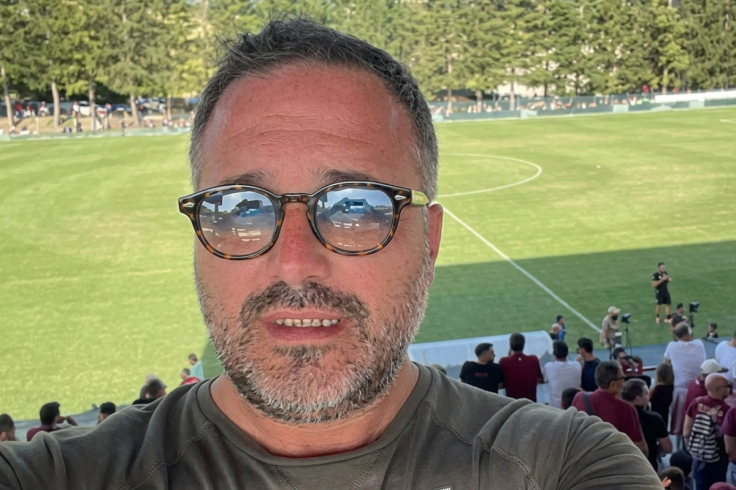
Italian football journalist Luca Esposito was found shot and burned in a remote field near Eboli in the southern Italian province of Salerno on Sunday 19 July, in a suspected murder that has triggered a major homicide inquiry and urgent questions over whether his work may have played a part in his killing.
The 53-year-old, whose legal first name was Luigi, went missing on Saturday night after friends lost contact with him. In the early hours of Sunday, firefighters were called to tackle a blaze on farmland at Bivio Cioffi, outside Eboli.
As they extinguished the flames, they discovered Esposito's charred body. Police later found bullet casings close to the remains and his car nearby, leading investigators to believe he had been shot before his body was set on fire.
The Salerno Public Prosecutor's Office is treating the death as suspected murder, with the investigation led by anti-mafia chief prosecutor Raffaele Cantone, a detail that in Italy inevitably raises eyebrows. An autopsy has been ordered to determine the precise cause of death and the sequence of events before the fire was lit.
Investigators Weigh Journalism as Possible Motive
The Committee to Protect Journalists urged Italian authorities on Monday to move quickly and transparently.
CPJ's Europe representative Attila Mong said the organisation was 'deeply shocked by the brutal killing of Italian sports journalist Luca Esposito' and called on prosecutors to 'determine whether this terrible event is linked to Luca Esposito's journalism.'
Investigators are publicly keeping all possibilities open, examining both Esposito's personal and professional contacts, including any disputes over money or relationships. Italian media reports suggest a link to his journalism is not currently the main line of inquiry, but prosecutors have not ruled it out.
Prominent Voice in Campania's Football World
Esposito was editor-in-chief of local football news site TuttoSalernitana.com, a supporter of Salernitana 1919 and a regular pundit on regional television channel OttoChannel, where he covered clubs including Avellino and Juve Stabia.
He also wrote for Salerno daily La Città di Salerno and contributed to TuttoC.com, which focuses on Italy's Serie C.
OttoChannel director Pierluigi Melillo described him as 'a precious collaborator, awkward but never banal, always brave in defending his opinions on football,' adding that the team was 'shocked and incredulous' at what he called a 'horrible execution.' Esposito had already been lined up as one of the channel's star pundits for the coming season.
Separate Row Over Alleged ARPAC Claims
LUCA ESPOSITO : investigators are focusing their attention on Luca (Luigi) Esposito's alleged employment at ARPAC. The agency released an official statement clarifying that he was neither an employee nor a manager of the agency.
— Barbara Pelle (@barbarapelle1) July 20, 2026
Alongside speculation about motives, Esposito's name has also been drawn into an unrelated row. Italian journalist Barbara Pelle highlighted on X that investigators were looking into Esposito's alleged links to ARPAC, Campania's Regional Agency for Environmental Protection.
According to Pelle, ARPAC issued a statement clarifying that Esposito was neither an employee nor a manager at the agency, despite allegedly claiming such a role, including presenting himself as working for its Avellino office, a claim the agency has denied. These assertions have not been independently verified.
Relatives Struggle To Understand the Killing
Friends and family have struggled to reconcile the circumstances of the killing with the man they knew. His sister told local media he was calm and had no known enemies. Esposito, who had around 15,500 followers on Instagram, also held degrees in biology and literature.
The case has unsettled Italy's sports-media community and revived questions about journalist safety in a country still marked by past mafia attacks on reporters, even as investigators are currently steering away from that narrative.
Police have made no arrests so far. Until the autopsy and forensic tests are complete, much surrounding Esposito's killing remains unclear: his final movements, the weight of his journalism, the truth behind the ARPAC confusion, and whether his work in football media was incidental or central to his death.
© Copyright IBTimes 2026. All rights reserved.