

Netanyahu Faces New Election Threat as Ex-IDF Chief Who Lost Son in Gaza Conflict Surges in Polls
Gadi Eisenkot, former IDF chief, has become Netanyahu's main election rival, reshaping Israel's political landscape with his military credentials and personal story resonate with voters.
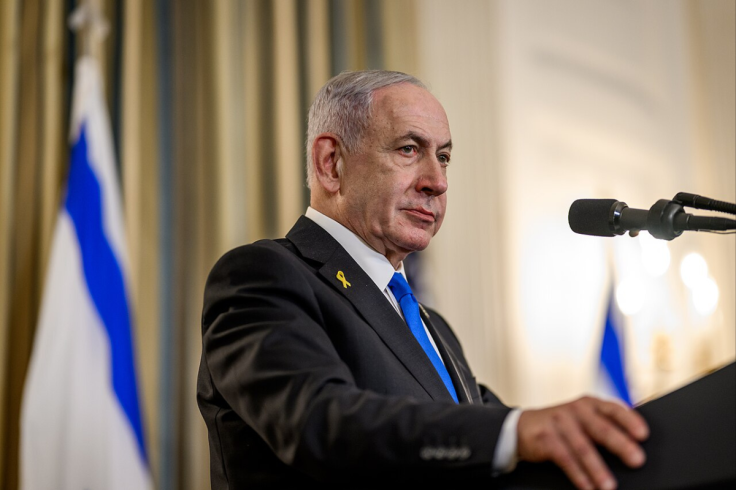
Israeli Prime Minister Benjamin Netanyahu is facing his toughest election challenge in years after former Israel Defence Forces (IDF) chief Gadi Eisenkot surged in the polls, prompting Likud to shift its campaign towards the retired general ahead of October's parliamentary election.
Less than a year after founding his Yashar party, which had been polling in the single digits, Eisenkot has emerged as Netanyahu's principal rival, overtaking former Prime Minister Naftali Bennett and the joint Bennett-Yair Lapid alliance in recent surveys.
The shift has been significant enough for Likud to redirect its attacks from Bennett to Eisenkot, signalling that Netanyahu's camp now views the former military chief as its biggest political threat.
Eisenkot's rise has coincided with a personal story that has resonated with many Israelis. His youngest son, Gal, was killed fighting in Gaza in December 2023, while two of his nephews later died in combat.
Analysts say his military credentials, coupled with his family's sacrifice during the war, have strengthened his standing with voters at a time when the conflict remains Israel's defining political issue.
Poll Surge Reshapes the Campaign
The latest Channel 12 poll projects Yashar would win 21 seats in the 120-member Knesset, just behind Likud on 23 and ahead of the Bennett-Lapid alliance on 18.
In the same survey, 38 per cent of respondents said Eisenkot would make a better prime minister, compared with 36 per cent for Netanyahu.
The tightening race has already altered Likud's campaign strategy.
The party recently released an AI-generated video linking Eisenkot with Arab lawmaker Ahmad Tibi. It ended with the message: 'Eisenkot does not have a government without the Arabs.'
אין גדי בלי טיבי pic.twitter.com/ONgILTWx0u
— הליכוד (@Likud_Party) June 10, 2026
The video revived Likud's long-standing argument that any coalition seeking to replace Netanyahu would depend on Arab parties.
Other campaign messages have questioned Eisenkot's ability to confront Iran and mocked his English-speaking ability, highlighting the growing focus on the retired general.
The political contest also carries a notable irony. Netanyahu appointed Eisenkot as IDF chief in 2015 and publicly praised his leadership when he retired four years later.
Today, the former military commander has become the main target of Likud's election campaign.
Political observers say Eisenkot's appeal lies in offering voters a clear contrast with Netanyahu.
While the prime minister has built his career on forceful political messaging and campaigning, Eisenkot has cultivated a quieter, more understated image.
Rather than attempting to emulate Netanyahu's style, analysts believe his different approach has helped distinguish him from previous challengers.
A Different Challenger
Eisenkot joined Netanyahu's emergency war cabinet after the Hamas attacks of 7 October 2023, but later resigned alongside Benny Gantz, arguing that the government lacked a clear long-term strategy for the Gaza war and the release of hostages.
He subsequently left Gantz to establish Yashar, a move that has since transformed him into the opposition's leading contender.
His background has also broadened his appeal. Born to Moroccan immigrants and raised in Tiberias and Eilat, Eisenkot could become Israel's first Mizrahi prime minister.
As Mizrahi voters have traditionally formed a core part of Likud's support base, some analysts believe his background could help him win support beyond the opposition's traditional electorate.
Despite his momentum, Eisenkot still faces a significant challenge. Israel's coalition-based political system means that even a strong election result may not be enough to form a government, with any anti-Netanyahu alliance likely to require support from parties across the political spectrum.
Netanyahu has survived numerous challengers during his decades in power.
Whether Eisenkot can convert his growing popularity into an electoral victory remains uncertain. However, his rapid rise, personal story and growing support have already reshaped the election campaign, making him the most significant political threat Netanyahu has faced in years.
© Copyright IBTimes 2026. All rights reserved.