Netanyahu Pushes Plan To Wean Israel off Us Military Aid Within a Decade
Israeli PM Netanyahu proposes a decade-long plan to phase out US military aid, aiming for defence independence.
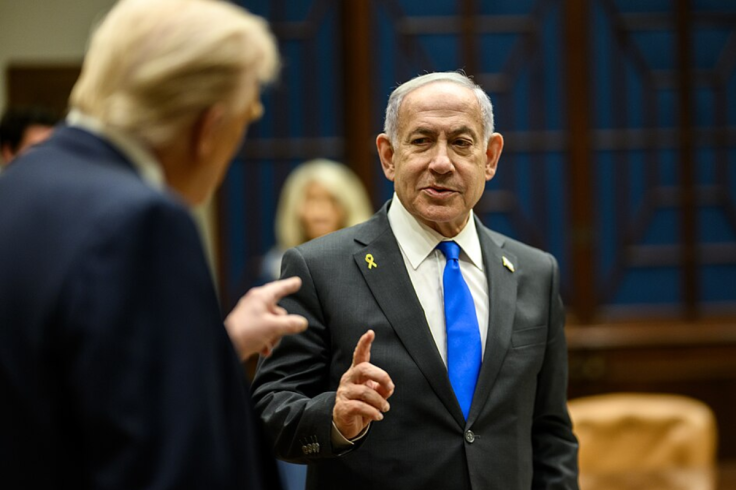
Prime Minister Benjamin Netanyahu told Donald Trump he is 'serious' about cutting Israel's reliance on US military aid to zero within a decade, according to a senior Israeli official who briefed reporters after Tuesday's Oval Office meeting.
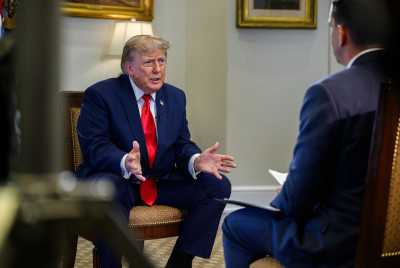
The 90-minute sit-down, Netanyahu's first with Trump since the Iran war began in February, was dominated by discussion of Tehran. But the prime minister also used the meeting to press ahead with a long-term plan to end Israel's dependence on annual US funding, the official said, telling Trump, Vice President JD Vance and envoy Steve Witkoff he wanted to move forward with negotiating a memorandum of understanding on the phase-out.
Republicans Wary of Backing Aid Cut
Trump and his team told Netanyahu they are already fielding pushback from Republicans who fear being accused of being 'anti-Israel' if they support winding down the aid, the official said.
Netanyahu responded that he intends to lead the push publicly himself, framing it as a bid for what the official called Israel's 'defence independence'.
'We're talking about a 10-year process. We're open to proposals, maybe it can happen faster,' the Israeli official said, describing Netanyahu's pitch to the Americans.
The prime minister does not want Israel dependent 'on the goodwill of the US Congress', the official added, pointing to what Netanyahu sees as shifting political winds on military aid within both American parties.
Israeli Prime Minister Benjamin Netanyahu proposed to US President Donald Trump a plan to gradually end direct US military aid to Israel over the next decade during their White House meeting on Tuesday, according to Israeli media on Wednesday, Anadolu reports.
— Middle East Monitor (@MiddleEastMnt) July 29, 2026
Israel’s public… pic.twitter.com/ocOpgws9Oc
Fighter Jet Programme Ordered
To back up the plan, Netanyahu has instructed Israel's defence sector to develop a modern fighter jet within 10 years, so the air force stays strong even if Washington were to stop supplying F-35s and other advanced aircraft, the official said.
Netanyahu believes Israel's economy can absorb the transition. Under his proposal, a new memorandum of understanding would still include $16 billion in direct US military aid, plus $5 to 10 billion to support Israel's missile defence systems. He is also pushing for a separate $16 billion joint fund with the US for research and development of new weapons systems, according to the official.
The $3.8 Billion Package Netanyahu Wants To Reshape
Israel's current aid arrangement with Washington, signed in 2016, guarantees $3.8 billion annually through 2028, split between $3.3 billion in military financing and $500 million for missile defence cooperation, according to the Council on Foreign Relations.
It is the largest bilateral aid package in US history, and negotiations on what replaces it when it expires were already underway before Tuesday's meeting. Netanyahu's remarks suggest he wants that successor agreement to look structurally different, leaning far more heavily on joint development funds and one-off missile defence support than on the straightforward annual grants that have defined the relationship for decades.
If Netanyahu follows through, it would mark one of the most significant shifts in the US-Israel security relationship in a generation, moving Israel from a recipient of US grants to a co-investor in joint weapons programmes. It would also hand Republicans in Congress a politically awkward choice, caught between a prime minister publicly campaigning to reduce US spending and a domestic base that has long treated aid levels as a proxy for support of Israel.
Any agreement would still need to survive negotiation with an administration and Congress focused, for now, on the unresolved war with Iran. Whether Netanyahu's pitch becomes policy depends on two things: an administration consumed by Tehran, and a Congress wary of being seen to cut support. But by putting the proposal on the table and backing it with a fighter jet programme, Netanyahu has shifted the terms of the debate. The question is no longer whether Israel will take US aid, but whether the US is ready to let it go.
© Copyright IBTimes 2026. All rights reserved.
- Recommended For You