Hamas Names 'Calm' Negotiator Khalil al-Hayya as Chief, but His Refusal to Disarm Threatens Trump's Gaza Plan
Khalil al-Hayya's election as Hamas leader signals a tougher stance on disarmament, complicating peace efforts.
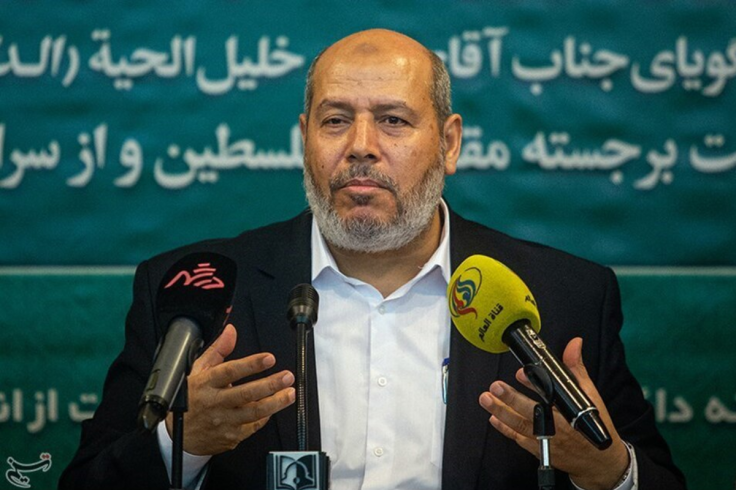
Hamas has named Khalil al-Hayya as its new overall leader. Those close to him describe him as calm and broadly respected, but his consistent refusal to disarm without guarantees of Palestinian statehood threatens to stall US President Donald Trump's Gaza peace plan.
Al-Hayya, 65, takes over a movement still reeling from nearly three years of war with Israel, at the exact moment mediators are trying to push Hamas toward giving up its weapons. His election makes that goal harder, not easier.
How al-Hayya Won the Hamas Leadership Contest
Al-Hayya previously served as Hamas's chief ceasefire negotiator, leading the group's delegations in indirect talks mediated by Qatar and Egypt. He won a run-off vote in the movement's Shura Council against Khaled Meshaal, the former political bureau chief who favoured a more conciliatory approach toward Israel and Arab states.
The contest exposed a real divide inside Hamas. Meshaal's camp argued the movement should learn from the toll of the war and move toward a more pragmatic political approach. Al-Hayya's backers countered that Gaza's leadership, having carried the highest cost of the fighting, should now steer the movement and hold firm against pressure to make concessions on disarmament.
'Doesn't Get Carried Away Easily'
A Hamas official close to al-Hayya described him as someone who 'doesn't get carried away easily, and is respected by all members of the political bureau as well as by military commanders.'
That reputation for restraint has shaped how he is viewed by mediators who have dealt with him directly through years of ceasefire talks.
Disarmament Talks Stall Over 'Heavy' vs 'Light' Weapons Definitions
Al-Hayya has repeatedly said Hamas's weapons are tied to 'the presence of occupation, and if the occupation ends, these weapons will belong to the state.'
Israeli sources say that position has stiffened rather than softened in recent talks. Aryeh Lightstone, an adviser to both US special envoy Steve Witkoff and Trump's Peace Council, met al-Hayya as part of ongoing disarmament negotiations. According to Israeli officials, Hamas has 'hardened its position' in those discussions, with talks reverting to disputes over which weapons count as 'heavy' and 'light' under any disarmament framework.
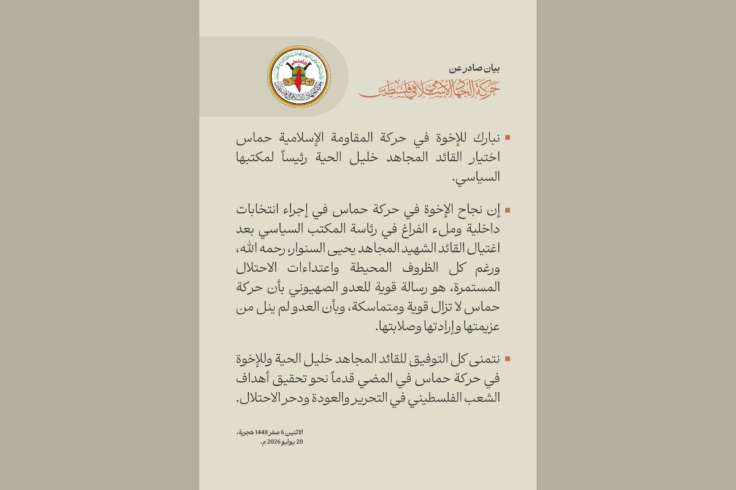
Congrats to Khalil al-Hayya, the newly elected "political" leader of Hamas:
— Yossi Zilberman (@YossiZilberman) July 20, 2026
"October 7 will forever be a source of pride for our people".
Right after the hostage deal was announced, Hamas leader delivered a 17-minute speech from Qatar, praising October 7 and *vowing to repeat…
Hamas's Choice Signals 'Significant Difficulties' for Disarmament, Analyst Says
Palestinian political analyst Reham Owda said al-Hayya's win sends a clear message. Hamas 'remains committed to armed struggle, rejects disarmament under any conditions, and intends to rebuild its military strength while preserving its alliance with Iran and the so-called Axis of Resistance.'
'This indicates that negotiations related to disarmament are likely to face significant difficulties and obstacles,' she added.
Trump's ceasefire plan for Gaza demands Hamas's disarmament alongside an Israeli military withdrawal, with the territory eventually run by a technocratic Palestinian administration overseen by Trump's Board of Peace. Talks between Hamas, mediators from Egypt, Qatar and Turkey, and Board of Peace envoys have so far failed to reach a broader agreement.
The Question Now
Disarmament sits at the centre of whether Gaza's reconstruction and any longer-term political settlement can move forward. A Hamas leader who has publicly ruled it out, and whose election analysts describe as a hardening of that position, directly affects the more than two million people still living in the territory's ruins.
Al-Hayya arrives with personal credibility built over years at the negotiating table, and a reputation, even among rivals, for staying level-headed under pressure. Whether that translates into any real movement on disarmament, or simply gives Hamas's hardest line its most capable spokesman yet, is the question mediators in Cairo, Doha and Washington are now trying to answer.
© Copyright IBTimes 2026. All rights reserved.
- Recommended For You