Fatal Merlin MK4 Crash Reignites Debate Over Navy Funding, Ageing Aircraft and £7M Fleet Losses
Funding shortages have shrunk the Royal Navy's fleet, leaving Britain weak and unprepared amid Middle East tensions
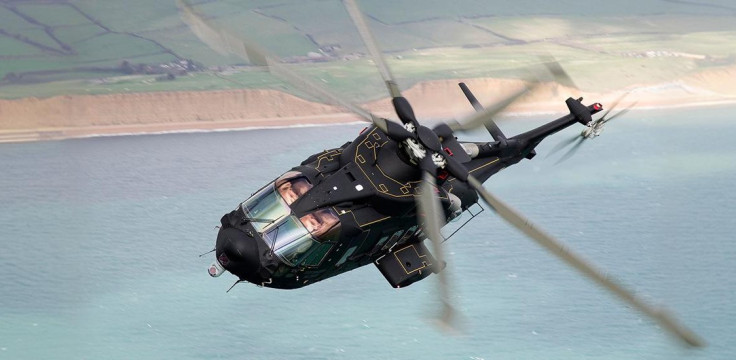
The Merlin MK4 helicopter has been in the news once again, following a tragic crash in which three servicemen lost their lives this week. The accident occurred when the aircraft crashed into a field at Sourton, Okehampton, Devon.
According to a BBC News report, Tim Ripley, editor of Defence Eye, said the principal role of Merlin Mk4s was to carry Royal Marines into battle, describing the aircraft as a 'go anywhere helicopter'. He explained that Merlin helicopters were first used by the Royal Air Force in 2001 before being transferred to the Marines a decade ago.
Ripley added that the helicopter had three engines, which, while unusual, meant it had greater speed and better manoeuvrability when flying at low level over battlefields. 'Flying military helicopters at night, even on home turf, is inherently dangerous,' Ripley said. 'There is a risk that comes with this type of flying helicopters at night and at low level. It's a dangerous activity wherever you do it, let alone in a foreign battlefield.'
The Role of the Merlin MK4
The Commando Helicopter Force is based at Royal Navy Air Station (RNAS) Yeovilton, in Somerset, and has been used for training exercises. The Navy operates a total of 25 Merlin Mk4/4a aircraft from two Squadrons. The aircraft is considered to be the world's most advanced amphibious battlefield helicopter, providing air support to the Royal Marines.
The Merlin Mk4 helicopter is one of the most adaptable aircraft in the Commando Helicopter Force, capable of operating in many roles across a range of environments.
Impact of Losses
Although the MK4 has a strong safety record, it has experienced several incidents in recent years, including two fatal crashes in 2024 and 2026. Each Merlin costs £2.4 million, and with 12% of the fleet lost—worth over £7 million—there is still no clear explanation for these failures.
In 2010, an MK4 suffered a heavy landing at night after the pilot became disoriented due to a brownout on sand during an emergency landing outside the perimeter fence at Camp Bastion, Afghanistan. In September 2024, an MK4 had to ditch in the English Channel during a night-flying training exercise, killing the pilot. The Royal Navy is investigating whether a double engine failure was responsible.
In June 2026, an MK4 crashed during a training exercise, killing the three crewmen onboard. The cause is still under investigation, but reports indicate mechanical failure.
Decline of the Navy
It has been well publicised that the Royal Navy is suffering from a lack of funding, and its cry for help has been largely ignored. Its contraction has largely gone under the radar, but with the crisis in the Middle East, it's now in the spotlight.
Politicians have described Britain's naval position as 'weak' and 'embarrassing'. Over the last few years, the fleet has gradually declined as older vessels have been retired—a trend that has been highlighted significantly amid rising tensions in the Middle East. It has become increasingly difficult to produce a ship on short notice.
The Navy, put simply, is just too small. It continues to support NATO and its allies, traits it should be proud of, but its readiness levels are not high enough.
The latest tragic crash has shifted the spotlight to the safety of their aircraft, and questions must once again focus on funding and the replacement of not just ageing ships, but also ageing aircraft.
© Copyright IBTimes 2026. All rights reserved.
- Recommended For You