World Cup Erupts as Iran Star Accused of 'Gun Gesture' Celebration
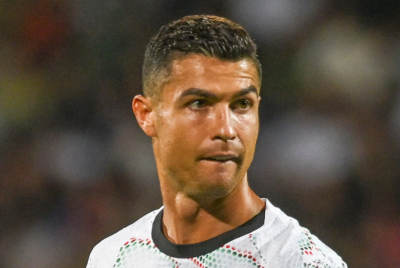
Iran midfielder Mohammad Mohebi's goal celebration against New Zealand has sparked controversy after fans accused him of making a political 'gun gesture' at the World Cup.
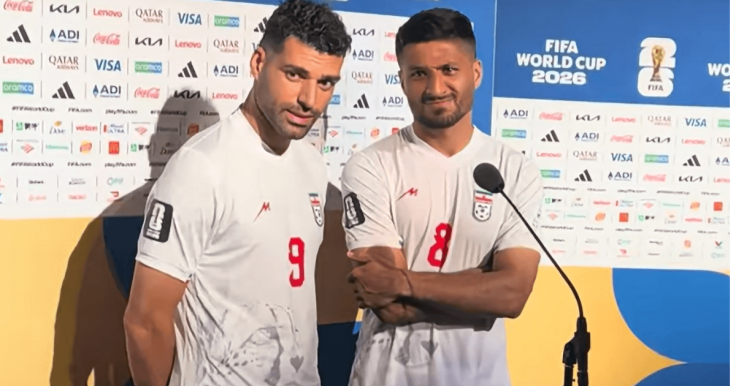
Iran midfielder Mohammad Mohebi has found himself at the center of one of the 2026 FIFA World Cup's first major controversies after a goal celebration against New Zealand sparked accusations of a politically charged 'gun gesture'.
The Mohammad Mohebi goal celebration controversy erupted moments after the 27-year-old scored in the 64th minute of Iran's 2-2 draw with New Zealand. But it was what happened after the goal, not the goal itself, that quickly became the talking point.
Television footage appeared to show Mohebi pointing two fingers toward his arm before extending two fingers from his right hand and moving them through the air. Some viewers interpreted the sequence as mimicking a firearm, triggering immediate backlash online and calls for FIFA to review the incident.
What has fueled the debate even further is Mohebi's own response.
After initially insisting the gesture was harmless, the midfielder later appeared to suggest there was more to the story.
'It's something political,' Mohebi said. 'I don't want to talk about that.'
For many observers, that comment transformed what might have been dismissed as a misunderstood celebration into one of the tournament's most closely watched controversies.
Iran's Mohammad Mohebi causes outrage with gun celebration during World Cup 2026 https://t.co/XPfeDaWuvL pic.twitter.com/unAoiSO4qu
— New York Post (@nypost) June 16, 2026
Conflicting Explanations Raise Questions
Speaking after the match, Mohebi first denied any controversial intent behind the gesture.
'I wanted to say thank you to all Iranians who live in Los Angeles, they make a great atmosphere,' he said.
'The celebration came to mind, and I do this for all of the fans, just a celebration, you know.'
Yet his later remarks appeared to create more questions than answers.
When asked to elaborate, Mohebi declined.
'We are here to answer football questions. If there is a problem between us (the Iranian people), it is between us.'
The apparent contradiction between describing the moment as 'just a celebration' and then calling it political has only intensified the Mohammad Mohebi gun gesture accusation circulating across social media.
At the time of writing, FIFA has not announced any investigation, though fans have continued urging the governing body to examine the incident.
A Politically Charged Atmosphere
The Iran World Cup gun gesture celebration did not occur in isolation.
Long before Mohebi found the net, the atmosphere surrounding the Iran vs New Zealand World Cup match had already become deeply political.
Iran's national anthem was reportedly booed by sections of the crowd, while supporters displayed the Shir o Khorshid, or Lion and Sun flag, a symbol associated with pre-revolutionary Iran and opposition to the country's current government.
The flag has been prohibited by FIFA during tournament matches, and footage from the game reportedly showed at least one being confiscated by security personnel.
The scenes reflected the significant presence of the Iranian diaspora in Los Angeles, home to one of the largest Iranian communities outside Iran. Following the 1979 Islamic Revolution, hundreds of thousands of Iranians settled in Southern California, making the city a focal point for political activism and cultural identity.
Against that backdrop, every gesture, statement, and symbol inside the stadium was likely to face heightened scrutiny.
Iran's Turbulent Road To The World Cup
The Iranian football political celebration backlash is only the latest controversy surrounding the national team.
Iran arrived at the tournament amid ongoing geopolitical tensions involving Iran, the United States, and Israel. Those tensions forced the team to relocate its World Cup base from the United States to neighboring Mexico.
The squad has also faced significant travel complications.
According to Iranian officials, 11 members of the delegation were denied entry into the United States despite being considered essential members of the team's support staff.
Those reportedly denied visas included Iran Football Federation president Mehdi Taj, a federation vice president, two senior administrators, a media officer, and a security official.
While players were ultimately permitted to enter the country, the Iran World Cup visa issues and tensions have remained a major talking point throughout the tournament.
Will FIFA Step In?
Whether the World Cup celebration controversy of 2026 results in formal action remains unclear.
FIFA has historically taken a strict stance on political messaging during international competitions, particularly when gestures or displays are perceived as carrying political meaning.
For now, there is no confirmation of a FIFA investigation into the Iran player celebration review, and Mohebi continues to insist his actions were intended as a celebration for supporters.
Yet the debate shows no sign of fading.
Was it an innocent goal celebration? A misunderstood gesture? Or a political message delivered on football's biggest stage?
Until those questions are answered, the controversy surrounding Mohammad Mohebi is likely to remain one of the defining stories of the early World Cup.
© Copyright IBTimes 2026. All rights reserved.
- Recommended For You