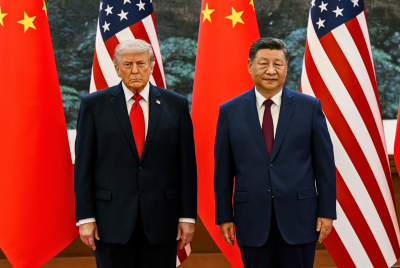
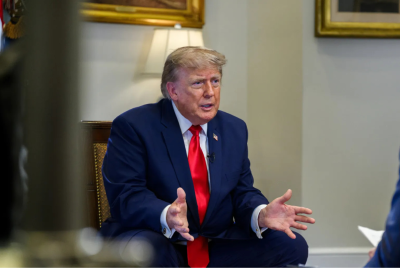
'Worse Than Obama's Deal': GOP Insider Exposes Trump Administration's Secret Multi-Billion Dollar Bailout of Iran
A Republican insider's broadside against Donald Trump's Iran deal lays bare a White House that talks tough on American power while quietly preparing to shrink it.
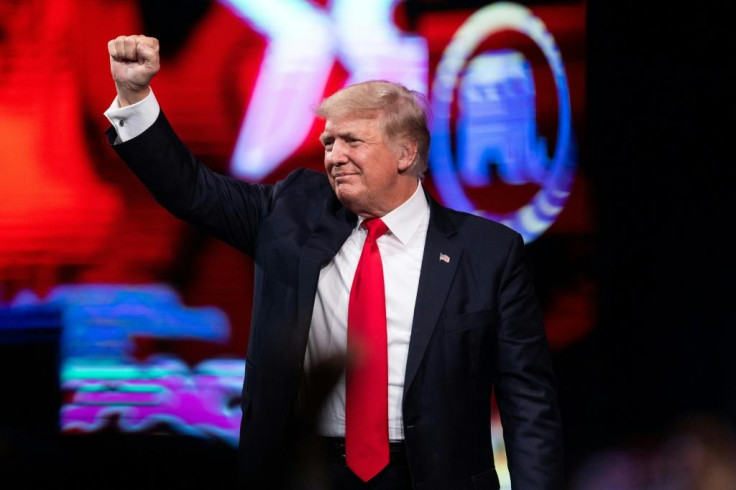
Donald Trump's White House has secretly agreed to a multi‑billion dollar bailout for Iran as part of its new peace deal, according to prominent conservative commentator Erick Erickson, who says senior officials privately believe the United States is 'in decline' and are deliberately pushing an isolationist retreat. The alleged Iran agreement, thrashed out while Trump promotes himself as tough on Tehran, would unlock huge sums of cash and oil revenue for the Iranian regime.
Vice President JD Vance, Secretary of State Marco Rubio and other Trump officials spent days publicly swatting away leaked details of the Iran deal as 'Iranian propaganda.' Those leaks, published across US media, suggested Washington had signed up to concessions that critics saw as worse than Barack Obama's Joint Comprehensive Plan of Action (JCPOA). Erickson, a fixture of Republican politics and a long‑time hawk on Iran, now says the leaks were largely accurate and that the Trump team has been misleading both reporters and voters about what it has actually agreed.
In a lengthy post on Tuesday, Erickson said that 'it turned out that all the stuff the Iranian regime said was in the deal was actually in the deal.' By his account, the agreement allows Iran to sell oil worth billions on global markets, unfreezes Iranian assets and opens the door to 'hundreds of billions' in outside funds flowing into the country's battered economy. None of those figures has been independently verified by official documents, and the full text of the deal has not been released, so everything should be taken with a grain of salt until the administration publishes the terms or Congress gains access.
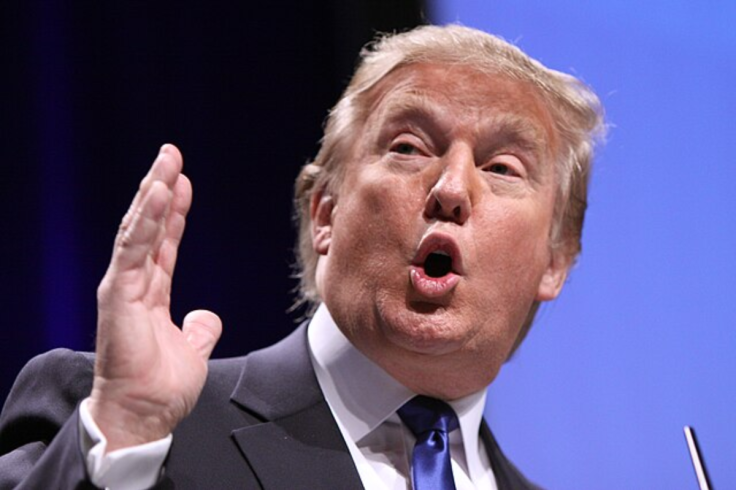
Iran Deal Claims Pile Pressure On Donald Trump's Foreign Policy
Trump built much of his first presidential campaign on savaging Obama's nuclear accord, promising a tougher line that would deny Iran both money and nuclear capability. Republicans cheered when he walked away from the JCPOA, imposed 'maximum pressure' sanctions and presented himself as the one man willing to face down Tehran. Erickson was among those who dismissed Obama's agreement as dangerously weak.
Yet the conservative host now argues that Trump has overseen something even more generous to Iran. 'Even Barack Obama's JCPOA deal was not this bad,' he writes, claiming that Obama's arrangement 'did not fund Iran the way the Trump administration has agreed to do, and it did not negotiate American troop levels in the Middle East with Iran.' If those elements are indeed in the new accord, it would mark a dramatic inversion of Trump's own rhetoric.

According to Erickson, the disconnect extends beyond money. He says top officials have repeatedly made assurances that are flatly contradicted by statements from Tehran. 'The Vice President now says Iran will buy our agriculture products,' Erickson notes. 'Iran's leaders say that this is not only not true, but Iran would rather starve than fund the Great Satan.' Vance has also insisted Iran agreed to allow inspectors from the International Atomic Energy Agency into its facilities. 'Again, Iran says this is not true,' Erickson adds.
On missiles, the shift is even starker. Erickson recalls that, at the outset of hostilities, Rubio argued Iran was racing to develop a missile shield, stockpiling so many projectiles that it could overwhelm Israel and Arab allies and then complete its nuclear work. That build‑up, the secretary said, had to be stopped. 'Now, President Trump says Iran can keep its ballistic missile programme,' Erickson writes, casting it as a fundamental climbdown.
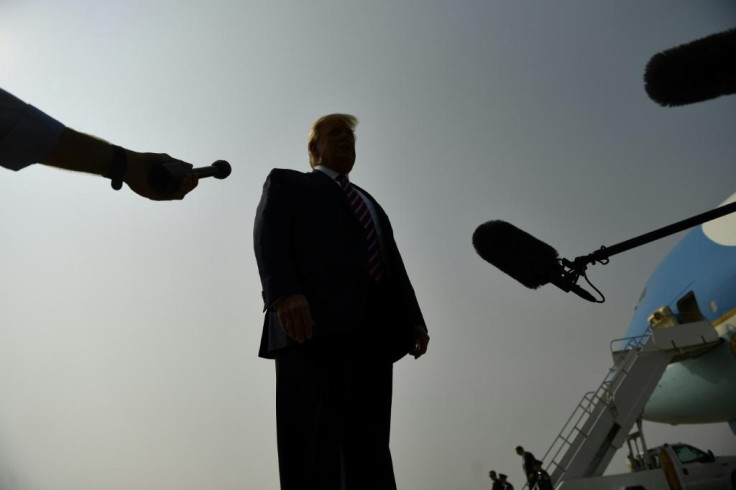
A 'Managed Decline' Strategy Around Donald Trump
To understand why the Trump team would sign onto what looks, even to conservatives, like a strategic gift to Tehran, Erickson points his finger at ideology rather than incompetence. 'If you want this all to make sense,' he suggests, 'consider this: the Vice President and those around him believe the United States is in decline, though they will not say so publicly.' In his telling, the isolationist faction around Trump has concluded that Washington should pull back to the Western hemisphere while China, Russia and 'possibly Europe' jostle over the rest of the world.
Seen through that lens, a series of decisions that once looked disjointed start to line up. Erickson argues that refusing meaningful help to Ukraine, trimming support for Israel and cutting a deal that leaves Iran stronger and harder to confront all serve a single goal: shrinking America's footprint so it cannot be dragged into future wars beyond its own neighbourhood. 'If you believe we need to scale back our place in the world,' he writes, then putting Iran 'in a position where we cannot take them on without overwhelming collateral damage is exactly what you would do.'
None of this has been openly owned by Trump, Vance or Rubio. On the contrary, they continue to insist publicly that they back 'robust American leadership'. Erickson's charge is that they are saying one thing while methodically engineering another. He describes the vice president as 'rational' but 'an isolationist who opposed the engagement in Iran,' someone 'perfectly comfortable looking reporters in the eyes, telling them they are spreading Iranian propaganda that turns out to be true.'

The White House has so far not provided a detailed rebuttal of Erickson's account, nor has it published the full agreement with Tehran. Without that paper trail, it is impossible to independently verify precisely how much money Iran stands to gain, or how far the US has tied its own hands on troop deployments and missiles. What is clear is that the criticism is not coming from the usual liberal quarters, but from inside Trump's own ideological family and that may prove harder for him to dismiss.
© Copyright IBTimes 2026. All rights reserved.
- Recommended For You