Trump Defends US Strike That Killed 120 Children as He Blames JD Vance for Iran Deal Risk
US-Iran tensions rise as Trump defends missile strike and promotes peace framework.
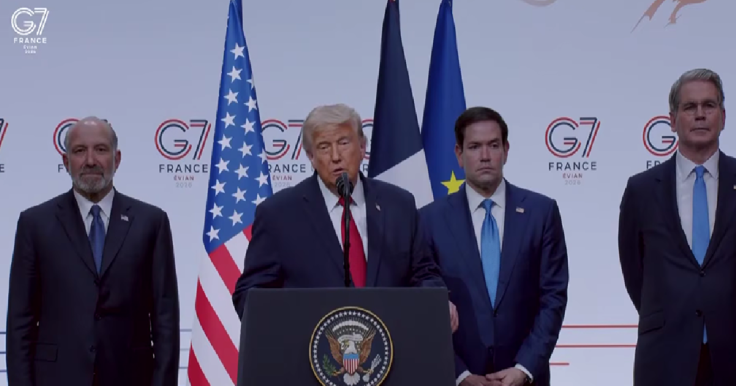
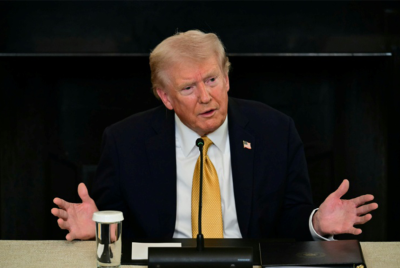
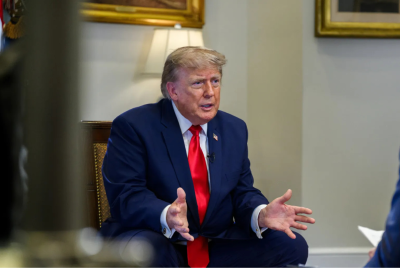
Donald Trump on Thursday defended a US missile strike that killed around 120 children at an elementary school in Iran, telling reporters at the G7 summit that 'war is nasty' as he promoted a new 14‑point peace framework with Tehran and joked about blaming Vice President JD Vance if the Iran deal later falls apart.
The school bombing took place in the opening days of the war between the United States and Iran, a conflict that has since spread across the region, including to Lebanon. The attack, which officials say killed 165 people in total, has hung over Washington's conduct in the war, resurfacing whenever the White House talks about restraint and 'precision' strikes. Now, as the Trump administration races to finalise a memorandum of understanding with Iran within days, the unresolved questions about that strike sit uneasily beside the promise of a new diplomatic chapter.
At the G7 gathering, Trump was pressed directly on whether anyone in his administration would be held accountable for the elementary school strike in Iran, which he acknowledged had claimed the lives of 'around 120 schoolchildren'. He responded by casting the bombing as a tragic but inevitable by‑product of conflict.
'All war is nasty,' Trump said, arguing that the incident should be viewed in the context of the war's chaotic first days. He added that 'mistakes might have been made' but insisted, 'Nobody did it on purpose.' According to the president, the Department of Defence is still investigating the bombing, although he did not offer any timeline for findings or disciplinary action.
He circled back to the subject in a later answer, repeating the same bleak refrain: 'Bad things happen in war.' It is the sort of line that sounds brutally honest at one level and deeply evasive at another. For families staring at the ruins of a school, it is not an explanation so much as a shrug.
Trump Defends US Strike While Selling Iran Deal
The news came after a senior US official publicly released the full 14‑point outline of the proposed US‑Iran peace deal, a document the administration hopes to see signed on Friday. The memorandum of understanding, if agreed, would halt military operations 'on all fronts, including in Lebanon,' commit both sides not to threaten or use force against each other, and launch a 60‑day sprint to a final, more detailed agreement.
Under the framework, Iran would be required to reopen the Strait of Hormuz within 30 days and 'end all military operations, including in Lebanon, immediately.' Tehran would also have to destroy its stockpile of enriched uranium by down‑blending it on site under International Atomic Energy Agency supervision and reaffirm that it will not procure or develop nuclear weapons.
In return, the United States pledges to dismantle its naval blockade, withdraw its forces from the proximity of Iran within 30 days of a final agreement, and begin lifting sanctions. Washington also commits to work with regional partners on a reconstruction and economic development plan for Iran worth at least $300 billion, subject to details being finalised within the 60‑day window.
The deal frames both the sanctions issue and nuclear steps as 'critically important,' with the two sides vowing to keep Iran's nuclear programme frozen at current levels while negotiations continue. The US would refrain from imposing new sanctions or sending additional forces to the region, while Iran would maintain the 'status quo' of its nuclear activities.

Trump, who has faced intense criticism at home for the civilian death toll in Iran and abroad for the scale of sanctions, has been at pains to deny that US taxpayers will be bankrolling Tehran. He repeated that line again while discussing the plan, but backed the unfreezing of Iranian assets blocked during the war.
'It's not our money, it's their money, and we froze it,' Trump said. 'At a certain point in time, I guess we're going to have to give it back.'
The memorandum states that the US will make Iran's frozen or restricted funds 'fully usable' and issue all necessary licences and authorisations so the Central Bank of Iran can direct payments to any beneficiary it designates. On top of that, Washington would immediately grant waivers for the export of Iranian crude oil and petroleum products, along with associated banking, insurance and transport services, pending the full termination of sanctions.
It is, frankly, an enormous shift from the war footing of recent months to something that looks very much like a massive economic reset. Whether Congress, Gulf allies or Israel will just nod that through is another question.
JD Vance Dragged Into Iran Deal Spotlight
The politics of the agreement is almost as tangled as the technical stuff. Trump told reporters he 'might be at the signing' on Friday but suggested it was 'more likely to be JD Vance,' pulling his vice president‑elect directly into the spotlight on one of the most high‑risk foreign policy bets of his presidency.
Asked whether Vance would be blamed if the Iran deal collapses or fails to prevent future escalation, Trump did not exactly rush to reassure his running mate.
'I like that idea, sure,' he replied, before laying out a division of labour that sounded half joking and half brutally sincere. 'This way, if it works out, I'm going to take the credit. If it doesn't work out, I'm blaming JD.' Turning to a more playful tone, he added: 'You better be careful, JD.'
On one hand, he is promoting a peace deal that would end a war, reopen vital sea lanes and dismantle a sanctions regime that has crippled the Iranian economy. On the other, he is deflecting questions about a strike that killed 120 children with the line that 'bad things happen in war,' and treating responsibility for a nuclear‑sensitive peace deal almost like passing around a political hot potato.
The memorandum itself leans heavily on mechanisms, timelines and monitoring structures. It calls for an 'executive mechanism' to oversee implementation, commits both sides to keep talking exclusively on unresolved points once key steps begin, and says the final deal will be endorsed by a binding UN Security Council resolution.
Who, if anyone, in Washington will be held to account for the day a US missile slammed into an Iranian classroom, and whether 'nobody did it on purpose' will be seen as anything like enough. Nothing is confirmed yet so everything should be taken with a grain of salt.
© Copyright IBTimes 2026. All rights reserved.
- Recommended For You