Budget Airline's Move to Charge for Overhead Bin Draws Backlash: 'A Masterclass in Gaslighting'
Jetstar's overhead bin fee evolves into a controversial move in airline fee policies
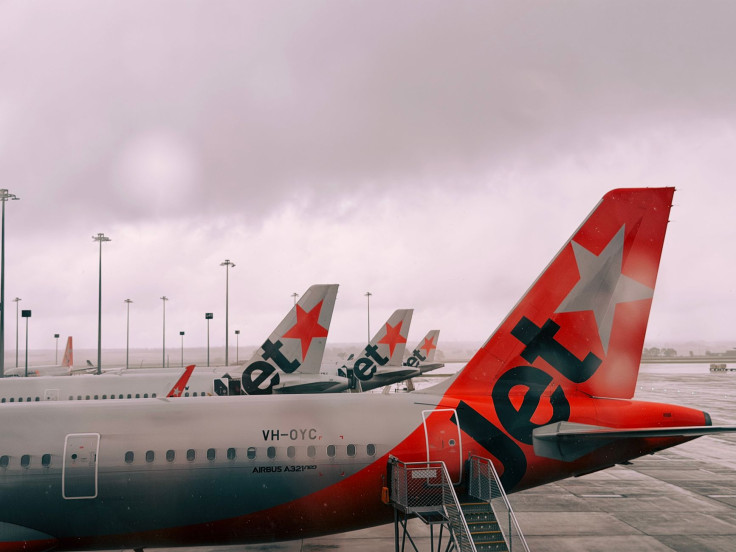
Jetstar, the budget arm of Australian flag carrier Qantas, announced it will begin charging passengers to use overhead storage starting February 2027. The fee starts at 25 Australian dollars ($18) one way. This move clearly didn't sit well with the masses.
The airline's new 'Priority Carry-on' option, which bundles overhead bin access with priority boarding, applies to bags weighing up to 10 kilograms (22 pounds). Passengers who do not purchase the add-on can still bring a smaller personal item that fits under the seat in front of them at no charge. Prices run from $18 to $37 depending on the route.
Jetstar is the first Australian airline to impose a fee for overhead bin use, though some budget carriers in the United States and Europe have already adopted similar charges. The airline framed the policy as a response to passenger and crew feedback, with gate-side bag weigh-ins and cramped overhead compartments ranking among the most stressful parts of the boarding experience.
'By giving customers an underseat bag with the option to add Priority Carry-on, we can make better use of overhead locker space, streamline boarding and help more flights depart on time,' the airline said in a statement.
Social media users, however, weren't happy as they accused the carrier of disguising a revenue move as a service improvement. One user called it 'a masterclass in gaslighting', adding that 'Jetstar rebranding a blatant cash grab as "Priority Carry-on Choice" is a masterclass in gaslighting. Hope it backfires.'
Aviation analyst Tony Stanton warned the policy carries competitive risk. 'It will ruffle feathers because Australian travellers have got such high expectations,' Stanton was quoted as saying.
How Global Airline Fee Rules Are Splitting in 2027
The Jetstar announcement comes at a time when regulators on opposite sides of the world are moving in opposite directions on ancillary fees.
In the European Union, for instance, airlines will be required to include the cost of a standard 7-kilogram carry-on bag in their advertised ticket prices from 2027. Under the new EU framework, passengers will be able to bring both a small personal item and a standard cabin bag without paying any surcharge beyond their base fare. The rules are expected to hit low-cost carriers hardest, as additional revenue from baggage fees makes up for a substantial share of their income.
'Passengers should be able to compare fares easily and know exactly what is included in the price they see,' an EU lawmaker involved in the negotiations had said.
In the United States, major airlines, including American, Delta, United, Frontier, and Spirit Airlines, collectively collected more than $3 billion in seat fees alone during 2023, a figure representing a 50% increase from 2018, according to a US Senate investigation. Across the same five-year period, those five carriers collected $12.4 billion in seat fees combined. The US Senate has been examining the impact of such fees on consumers, but no federal rule comparable to the EU's 2027 carry-on mandate has been enacted.
The US carriers have also been raising checked baggage fees. United Airlines and JetBlue are among those that have increased bag charges in recent periods, citing surging jet fuel costs. Jetstar's overhead bin fee fits that same model: the airline has said passengers traveling with less will pay less, with the add-on structured as optional.
'You only pay for what you need — traveling with less means paying less, and you can always add more if you need,' the airline said.
© Copyright IBTimes 2026. All rights reserved.
- Recommended For You