Is Lee Andrews a Con Artist? Expert Identifies Red Flags Ignored by Katie Price Prior to Husband's Disappearance
An agony aunt uses Katie Price's marriage to Lee Andrews to highlight how online long-distance love can slip into suspected fraud.

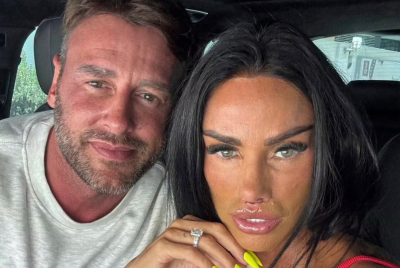
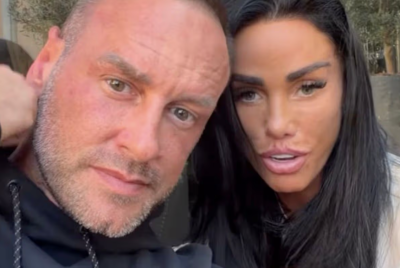
Katie Price was warned about 'red flags' in husband Lee Andrews' past months before his disappearance in Cyprus, according to a relationship expert who now questions whether the online businessman was a sophisticated romance con artist.
Price's whirlwind fourth marriage to Andrews began as a long‑distance relationship, with the pair reportedly spending much of their time apart while he worked abroad. The union has since unravelled in public, with Andrews going missing, his phone apparently switching off and then back on, and a steady drip of accusations about his finances and backstory emerging from ex‑partners and commentators.
'Too Good to Be True'
The latest scrutiny of Lee Andrews came not from a police report or a courtroom, but from an agony aunt letter column. Writing in the Daily Star, long‑time advice columnist Jane O'Gorman was asked by a reader whether a sexually charged long‑distance relationship with a man she had met online could realistically work.
In her response, O'Gorman used the high‑profile case of Katie Price and Lee Andrews as a cautionary tale, suggesting that Price had ignored clear warning signs. 'My heart goes out to Katie Price at this very difficult time because she's a mum and a human being and she's worried and hurting,' O'Gorman wrote, before adding that 'long separations are notoriously difficult to navigate.'
She then turned directly to what she described as red flags. According to O'Gorman, Price 'chose to dismiss' what Andrews's former girlfriends had publicly alleged about 'his finances, his promises and his back story.' Those ex‑partners' claims, shared online and via social media, painted a picture of a man whose version of events did not always match up with their experiences.
There is, at present, no independent verification of those women's accounts, and Andrews himself has not publicly addressed their specific claims. No formal charges relating to romance fraud have been reported. Even so, O'Gorman's line is stark: she characterises Andrews as 'an accomplished and devious love rat' and warns that 'seasoned scam artists' often use precisely the same tactics that have been described around his relationship with Price.
Long‑Distance Romance, Digital Intimacy and the Cautionary Tale
The letter that prompted the discussion had an eerily familiar outline. The reader described a 'hot man online' who was 'genuinely interested' in her life and with whom she was having 'off the scale' cybersex. He wanted her to visit. He had even offered to pay for her flight.
On the surface, that might sound flattering. To O'Gorman, it rang alarm bells.
Her advice was blunt. Do not rush. Look him up. Check his social media footprint. See whether ex‑partners have posted 'anything worrying' about him. Question inconsistencies in his story, and be wary of photographs and videos that could be faked or AI‑generated.
She then turned to what she called 'the biggest red flag of them all,' money. In her view, accepting an airfare from an online lover is a step towards indebtedness. It is far better, she argued, to pay your own way and 'definitely don't part with a penny of your cash, no matter how convincing any sob stories may be.'
That line about sob stories is where the comparison to Lee Andrews lands hardest. Without naming specific incidents, O'Gorman sketches out a familiar scammer script — urgent family emergencies, blocked funds overseas, implausible crises that demand rapid bank transfers. 'I don't care if his granny's leg is falling off or he has funds trapped in Kenya – keep your money in the bank and don't budge,' she wrote.
Again, there is no public evidence that Andrews used such stories, and no authority has accused him of those specific tactics. But O'Gorman plainly sees patterns that worry her, and she frames Price's experience as a warning about what happens when emotional connection overrides basic due diligence.
The Emotional Cost of Suspicion
O'Gorman's column is not an investigation, and it does not pretend to be one. What it does offer is something more personal and perhaps more uncomfortable: a glimpse of how the Katie Price–Lee Andrews saga is now being used as a cultural reference point for digital‑age romance risks.
Towards the end of her reply, O'Gorman addresses Price directly. She urges the former glamour model to 'take care of herself,' insists that 'there is life beyond this current situation' and reminds her that 'Lee never defined you, Katie, and you will rise again – hopefully older and wiser this time around.'
It is sympathetic but unsparing. Price, in this telling, is not a foolish celebrity who should have known better, but a recognisable figure in a familiar story, a person who wanted to believe in a relationship that existed largely on screens and in airports, and who may now be paying the emotional price for overlooking other people's warnings.
Police have previously encouraged anyone who believes they are a victim of romance fraud to come forward, stressing that online relationships involving money, secrecy and pressure deserve scrutiny. O'Gorman echoes that call, advising readers to report suspicious behaviour 'to the police' and to trust their instincts when something feels off.
In the absence of formal findings about Lee Andrews, the rumours swirling around him remain exactly that. But in living rooms and advice columns, his name is already shorthand for a question that refuses to go away: how do you tell the difference between a long‑distance lover and a very patient con artist?
© Copyright IBTimes 2026. All rights reserved.
- Recommended For You