

Lena Headey Condemns 'Weird Protection' Offered to Predatory Men in Hollywood
Lena Headey is done playing nice with the system that made her famous and left her furious.

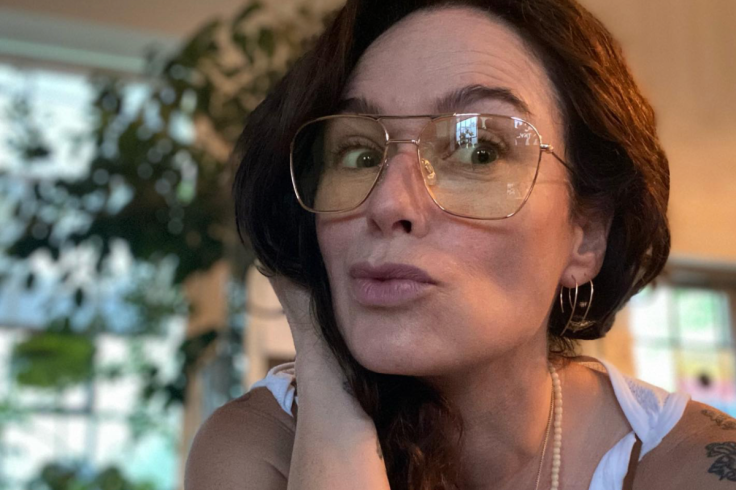
Lena Headey has condemned what she calls the 'weird protection' given to predatory men in Hollywood, telling a New York interview this week that the film industry still shields powerful abusers at the expense of vulnerable actresses trying to work.
The Game of Thrones star, now 50 and living in the US, said the system that once protected Harvey Weinstein and men like him 'makes me very angry,' and has inspired her new BBC radio drama Intimacy.
For context, Headey has spoken publicly before about her encounters with Weinstein, the former Miramax boss now in prison on multiple sexual assault convictions.
She has alleged that he spoke to her suggestively at the Venice Film Festival in 2005, then later tried to usher her into a hotel room in Los Angeles under the guise of a script meeting. She says she refused and never worked with Miramax again, a professional freeze‑out she has long suspected was not a coincidence.
Using Intimacy To Confront Hollywood's Protection Of Predatory Men
Headey's anger over the protection of predatory men is at the heart of Intimacy, which she has written and stars in. The drama follows Liza, an intimacy coordinator who lands a major job, only to discover that the film's director is the man she says raped her years earlier.
On set he behaves like the old‑school king of the lot, summoning actresses to his trailer at 11pm to 'talk script' and feigning hazy recollection of what happened between them.
Headey describes him as 'an old school, I‑can‑do‑whatever‑I‑f—ing‑want‑type of guy,' and the resemblance to Weinstein is hardly subtle. Speaking about the broader pattern, she argues that the real scandal is not simply the existence of predators, but the machinery that props them up.
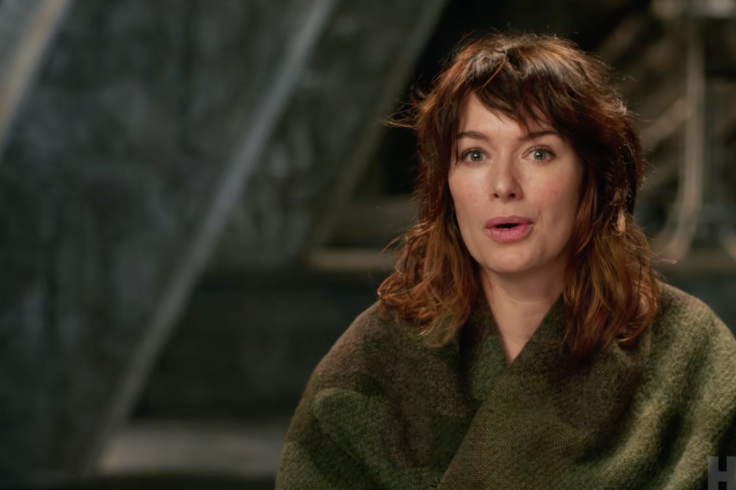
'The weird protection that we offer predatory men in the business, because of the disproportionate power they wield set against the need among vulnerable actresses to work to put food on the table to get the job, it makes me very angry,' she says. 'A job can be completely soured by one person who, for some reason, is allowed to get away with it.'
She credits the #MeToo movement in 2017 with exposing how routine that dynamic had become. 'It was only when the #MeToo movement erupted that we realised, oh, this is everywhere,' she says.
But Intimacy is not just a reckoning, it is also, in her view, about how much savvier the next generation has become. 'I think most young women I speak to now in this business are so savvy. The attitude today is, 'I'm not f—ing doing that.''
On Sex Scenes, Power Games And Saying No
Headey's critique of Hollywood's 'weird protection' is rooted in her own early experiences on British and American sets. She remembers a time when there were no intimacy coordinators, no real conversation about consent, and a kind of unspoken expectation that young actresses would do whatever was asked.
'When I started out there was this rite of passage all young female actors had to go through, which usually involved snogging and falling in love, and having sex and showing your boobs,' she recalls. 'They'd call them the ingenue parts, to make it sound nicer.'
She says she simply pushed through, overwhelmed to have work at all. 'I didn't go to drama school so I would just arrive on a set and be, 'Oh my God, I've got a job.' And when it came to those moments, I don't think I even questioned that I should be safe. Instead I'd go home and cry, or think, 'Oh, that felt weird and too familiar.' Now I look back and feel, 'Hmm, that was rough.''
Even now, she says, basic care is not guaranteed. On some sets, she recalls being told to strip off and offered only 'this large lumpy mat' to protect her body during nude scenes. It is the sort of casual discomfort Intimacy skewers in an early scene where a fictional intimacy coordinator has to stop actors being told to have sex on top of a bed of pine cones.
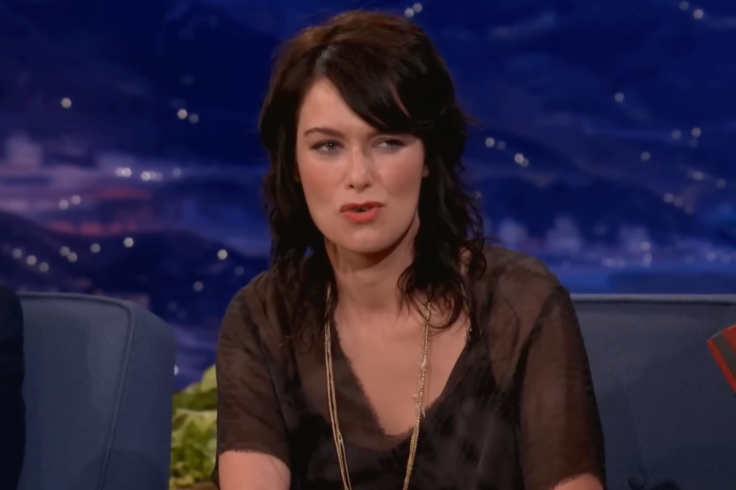
Headey insists she is better placed to push back these days. 'I'm in my 50s now and I feel more in control. It's a different game.' That hard‑won confidence was already visible by the time she joined Game of Thrones in 2011 as Cersei Lannister. The HBO epic has since become infamous for chaotic, often unprotected sex scenes, with some younger co‑stars recalling them as 'a frenzied mess.'
Headey says she did not have the same experience, but only because she had been 'through the wringer' already. Where others quietly endured and 'cried about it in the bathroom later,' she joked around to defuse tension and, crucially, said no when it mattered. For Cersei's infamous walk of shame, she insisted on using a body double.
The backlash stunned her. 'I was really shocked by the anger, by this idea that I'd duped the audience,' she says.
With thousands of extras on set and a level of fame that made a trip to the shops feel mad, she argues she could not have delivered the performance if she had also been fully naked in front of a small city. 'Acting is a joy but it requires a lot of you. I wouldn't have been able to do the emotional part of the job, I'd have been in full on defensive mode.'
Fame, Fallout And A Career That Refuses To Behave
Despite rumours she was earning around $1 million (£740,000) per episode by the final seasons of Game of Thrones, Headey is blunt about its long‑term impact. 'Thrones was mega, and I don't think anyone expected it, but thankfully it wasn't my first job, so it didn't make me nuts,' she says.
'I was famous for a second, and all I found was that, yes, I could suddenly get a good table in a restaurant, and all the knobby things that come with it, but we put so much f—ing weight into fame. We equate it with greatness, and that's just not true,' she added.
If there is a trace of bitterness, she does not hide it. 'You might think that [Game of Thrones] would have [changed everything] but I've been knocking on doors for years now. Yes, the door opens, but it opens for a certain amount of time. If you don't get in, you're back to the bottom of the pile.'
For women, she suggests, the rules are tighter. 'It's as though on some level, if you are a woman, the power must always be maintained. The Golden Age of TV is still very much for men, and we should be honest about that.'
Her response has been to take as much control as she can. Alongside Intimacy, she directed and adapted the psychological thriller The Trap in 2023 and executive produced the adaptation of H is for Hawk. It is not an easy path, she concedes, particularly as a middle‑aged actress. But it is hers.
When she was younger, she says, she never felt beautiful, and the industry's insistence on seeing her that way left her tense and suspicious. Now, getting older has been a kind of sideways liberation. 'The joy of getting older is that it's not about being a thing for somebody else. Instead you just want to do the thing for you and for other women. Such as tell the sorts of stories that women want to hear.'
Whether Hollywood is ready to stop protecting the men who do not want those stories told is, frankly, another question.
© Copyright IBTimes 2026. All rights reserved.