'Believe All Women — but Only the Right Women?': Viral Post Slams Feminists Over Silence on UK Grooming Gangs
Examining the response of feminist voices to the UK's grooming gangs scandal
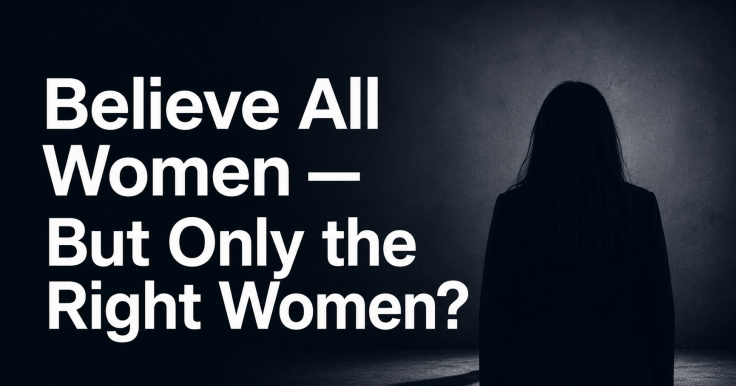
For decades, thousands of girls in towns like Rotherham, Rochdale and Telford were groomed, abused and dismissed by the very authorities meant to protect them. Now, as a new inquiry drags the scandal back into national view, a viral social media post is turning its fire on some of Britain's best‑known feminist figures and asking a blunt question: where were you?
Shared on Instagram by the account @basicoptimism and reshared widely this week, the post addresses the feminist movement directly. 'You marched for "Believe All Women." You protested mansplaining and microaggressions. You flooded the streets for causes abroad,' it reads. 'Yet when the Rape Gang Enquiry laid bare the systematic rape, torture, trafficking and murder of tens of thousands of young British girls over decades, you stayed silent.' The post calls it 'the biggest child sexual exploitation scandal in European history' and accuses mainstream feminist institutions of selective outrage.
The claim is a provocation, not a legal finding. But the question it raises has weight, and the girls at the centre of this story deserve to have it examined openly.
What Happened to These Girls
From the late 1980s until 2013, an estimated 1,400 girls, most from care home backgrounds, were subjected to organised sexual exploitation in Rotherham, South Yorkshire alone. Similar networks were later exposed in Rochdale, Telford, Oxford and towns across England.
The 2014 Jay Report described children being raped by multiple perpetrators, trafficked between towns, abducted, beaten and intimidated. Girls as young as 11 were raped by large numbers of men. Some were doused in petrol and threatened with being set alight. Police, schools, social services and healthcare workers repeatedly failed to intervene, in part because they feared accusations of racism. The children were not believed. In some cases, they were the ones arrested.
A new crowdfunded inquiry led by MP Rupert Lowe, published on 16 June 2026, brought the scandal back into global focus. Its pages of survivor testimony have since been viewed and shared tens of millions of times.
The Rape Gang Inquiry Report.https://t.co/EuKgGWBRhS pic.twitter.com/SD5G9HPVtV
— Rupert Lowe MP (@RupertLowe10) June 16, 2026
The Feminist Figures Being Questioned
The viral post does not name individuals. But the National Review, whose coverage this week examined the same silence, does. J. K. Rowling, Helen Joyce, Maya Forstater and Kathleen Stock are among the prominent gender-critical feminist voices identified as absent from the current debate.
Rowling wrote in early 2025 that details emerging about the rape gangs were 'downright horrific,' but had not addressed the new inquiry report at time of publication. Forstater returned no relevant results when searched for public commentary on the gangs. Stock has written about the issue in the past year, which makes her current silence, as the National Review notes, 'rather unusual.'
These are the same figures who were vocal participants in the debate over male athletes competing in women's sport. The National Review draws the comparison directly: the scale of feminist outrage over a male athlete standing atop a women's podium far exceeded the response to the systematic exploitation of children across England. That contrast is what the viral post is pointing at.
The Feminists Who Did Speak — and Were Punished for It
Julie Bindel published her first investigation into grooming gangs in 2007. The Guardian refused to run it, fearing accusations of racism. When the Sunday Times published it instead, Bindel's name was added to an Islamophobia Watch website the same day. She has spent nearly two decades reporting on the scandal, most recently through a 2026 podcast series featuring direct survivor testimony.
Ayaan Hirsi Ali, writing in The Free Press this week, said the scandal 'should have summoned the full ferocity of the UK's feminist tradition,' but that the dominant institutions of gender equality had instead 'mostly responded with caution, euphemism, and procedural language where plain moral speech was required.'
'Believe all women' was the mantra of the #MeToo movement. But as Spiked observed, that principle was never consistently extended to the girls exploited in Rochdale and Ramsgate. They were, in the words of one analysis, 'the wrong type of girl, with the wrong type of perpetrator.'
The statutory independent inquiry into grooming gangs is now underway, with national accountability hearings due before the end of this year. The girls it represents waited decades for institutions to take them seriously. The viral post asks whether the feminist movement is still making them wait.
© Copyright IBTimes 2026. All rights reserved.
- Recommended For You