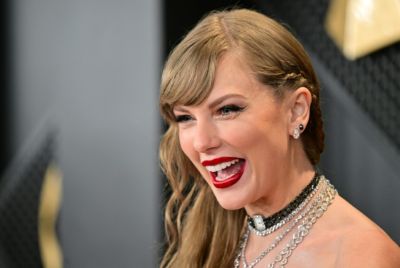
'Men Need Just as Much Protection': Shania Twain Says She Is Not a Feminist
The country-pop icon shares her thoughts on feminism and personal independence.

The globally acclaimed Canadian country-pop icon Shania Twain said she does not see herself as a feminist. Despite being widely seen as an icon of female empowerment, the singer revealed she views herself as an independent thinker rather than an adherent to the specific movement.
The multi-Grammy winner discussed her personal philosophy during a recent interview with The Sunday Times Magazine. Her perspective challenges decades of public perception that branded her a foundational icon of modern pop feminism.
Why the Country Icon Rejects the Feminist Tag
Twain addressed the common public perception of her beliefs, explaining that she prefers to separate her personal strengths from specific gendered labels. She clarified that her self-sufficiency is inherent to who she is, rather than being an explicit reaction to being a woman.
'I don't see myself as a feminist,' she stated. 'I see myself as a very independent thinker and not necessarily because I'm a woman.'
She acknowledged that many have referred to her as a 'feminist' because she has 'a lot of feminist points of view.' However, she was reluctant to embrace the term, admitting that while she is a strong person, she dislikes her strength being qualified by her gender.
'I'm not strong for a woman. I'm not independent for a woman. I'm not self-sufficient for a woman. I just am a woman,' the 'You're Still the One' singer explained.
She extended this perspective to men, adding: 'And this falls on boys too. It's like, "Oh, the boy needs less protection than the girl because he's a boy." That is so not true and it's not fair. Vulnerable men need just as much protection as vulnerable women.'
Twain: 'I'm Just Myself'
This is not the first instance where the country icon has intentionally distanced herself from the feminist label. In her 2022 documentary, 'Shania Twain: Not Just a Girl,' she sat down with Yahoo Entertainment to discuss how her early battles against industry sexism shaped her outlook. During that conversation, she highlighted how her fight to be taken seriously was personal rather than political.
'I think it's all in the perception of whoever is making their conclusions about me,' Twain said. 'I'm not a like self-proclaimed feminist, I'm just myself.'
During her youth, Twain felt forced to suppress her physical femininity, even binding her breasts, to be taken seriously while playing sports with men. This ongoing struggle against societal focus on her body meant she spent years fighting against her own feminine curves to get people to focus on her abilities.
When she finally achieved creative freedom as a recording artist, she eagerly embraced her womanhood rather than continue to hide it. For Twain, this personal rejection of gender stigmas and the celebration of her identity represent her own unique definition of feminism.
'That's probably feminism in its own way, it's to me a very personal rejection of these stigmas that we are us women often branded,' the 60-year-old artist explained. She added that her song, 'Not Just a Girl' is 'very celebratory' for her.
The Paradox of Global Anthems for Female Empowerment
Twain's rejection of the word stands in sharp contrast to her extensive musical legacy. She dominated the late 1990s global charts with bold, unapologetic tracks that defined an era of womanhood.
Anthems such as 'Man! I Feel Like A Woman,' 'That Don't Impress Me Much' and 'Not Just A Girl' served as definitive cultural soundtracks for female liberation. Millions of listeners worldwide still view these musical works as foundational pieces of contemporary feminist pop culture.
Despite this deep alignment with the core values of female empowerment, Twain remains uncomfortable with the cultural baggage of the word itself. Ultimately, she prefers to focus her advocacy on vulnerable individuals across the entire gender spectrum.
© Copyright IBTimes 2026. All rights reserved.
- Recommended For You