Who Is Vance Boelter? Dems Hit List Uncovered After Fake Officer Shoots Hortman and Husband, Sen. Hoffman
Vance Boelter's guilty plea highlights politically motivated violence in Minnesota

A Minnesota man who compiled a list of Democratic politicians and abortion rights advocates before carrying out a deadly shooting spree has pleaded guilty to federal charges linked to the killings of former House Speaker Melissa Hortman and her husband, and the shooting of State Sen. John Hoffman.
Vance Boelter, 58, admitted responsibility on Thursday for the murders of Hortman and her husband Mark, as well as the shootings of Hoffman and his wife, Yvette Hoffman. The long-term consequences of the attack continue to affect survivors. Court filings state that John Hoffman suffered permanent injuries, including damage to his left arm and hand, while Yvette Hoffman was left with lasting physical impairments.
Their daughter, Hope Hoffman, who called 911 during the attack, was reported to have suffered severe psychological trauma.
The plea comes nearly a year after an attack that triggered the largest manhunt in Minnesota history and exposed what investigators described as a politically motivated targeting operation.
Details About Vance Boelter's Background
Before he admitted plotting the murders of former Minnesota House Speaker Melissa Hortman and her husband, Mark, Vance Boelter lived a life that appeared, at least on the surface, far removed from political violence.
Born in Sleepy Eye, Minnesota, in 1967, Boelter built an eclectic career that spanned food manufacturing, retail management, missionary work and funeral services. He earned a degree in international relations from St. Cloud State University before later obtaining master's and doctoral degrees in leadership from Cardinal Stritch University in Wisconsin.
Over three decades, Boelter moved frequently, living in Wisconsin, Oklahoma, Iowa and Minnesota. He worked at companies including Gerber Products, Johnsonville Foods, Del Monte Foods, Greencore and 7-Eleven. More recently, he worked for Minnesota funeral homes transporting bodies for organ donation before leaving those jobs in early 2025.
Boelter was also active in evangelical Christian circles. Alongside his wife, he co-founded Revoformation Ministries and travelled internationally for missionary work, including trips to the Democratic Republic of Congo. He preached conservative religious views and publicly opposed abortion rights.
Despite later presenting himself online as a security professional with military-style experience, reporting by NPR found no evidence that he had served in law enforcement, the military or a private security role. Friends told reporters that some of his claims appeared exaggerated. His security company, Praetorian Guard Security Services, advertised police-style vehicles but reportedly had no known clients.
Boelter's public profile extended into state government. In 2016, he was appointed by Governor Mark Dayton to Minnesota's Workforce Development Board, a bipartisan advisory body. Governor Tim Walz later reappointed him.
What Was Vance Boelter's Motive?
Federal prosecutors say Vance Boelter carried out the attacks with the intention of 'kill[ing], injur[ing], harass[ing], and intimidat[ing] Minnesota legislators', though a definitive motive has never been fully established.
Investigators have pointed to several pieces of evidence suggesting ideology played a role. Boelter was known for his opposition to abortion rights and had previously expressed conservative political views.
A longtime acquaintance from his hometown of Sleepy Eye described him as a supporter of President Donald Trump who was strongly anti-abortion and had been struggling financially and professionally in the years before the attacks.
The strongest indication of motive came from material recovered after the shootings. Authorities found a list of roughly 70 potential targets inside a Ford Explorer allegedly used by Boelter. The names included Democratic lawmakers, abortion providers, abortion-rights advocates and senior political figures across Minnesota and neighbouring states.
Among those listed were Governor Tim Walz, Attorney General Keith Ellison, Senators Amy Klobuchar and Tina Smith, and several members of Congress.
Prosecutors say the list demonstrated that the attacks extended beyond the victims who were ultimately shot. Boelter later admitted that he intended to kill 'as many lawmakers as possible'.
Investigators also recovered AK-style firearms and flyers linked to planned 'No Kings' demonstrations, raising concerns that additional targets may have been considered.
In a letter left for the FBI, Boelter claimed Walz had directed him to carry out the killings. Prosecutors dismissed the allegation as a 'fantasy', describing the letter as rambling and conspiratorial. When he pleaded guilty in June 2026, Boelter acknowledged that he had planned the attacks alone over several months.
Hit List Raised Fears of Wider Political Violence
Investigators recovered documents from his vehicle containing the names of dozens of Democratic elected officials, abortion rights campaigners and organisations linked to reproductive healthcare.
Several people named on the list only learned they had been potential targets after police arrived at their homes with urgent warnings to shelter in place.
Among them was Congresswoman Kelly Morrison, who told CNN in 2025 that she was awakened by officers shortly after the attacks and informed that a man impersonating law enforcement was moving through the area.
Federal prosecutors have consistently described the attacks as political in nature.
According to court records, Boelter carried out the attacks in the early hours of 14 June 2025 while disguised as a police officer.
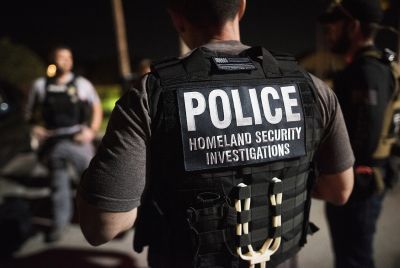
Authorities said he arrived at lawmakers' homes in a black SUV fitted with emergency lights and displaying a police-style licence plate. He wore body armour and tactical equipment designed to make him appear legitimate.
Prosecutors said Senator John Hoffman and his wife were shot first but survived. Boelter then travelled to other addresses connected to elected officials before reaching the home of Melissa Hortman.
Hortman, one of Minnesota's most influential Democratic leaders, and her husband were killed. Their family dog was critically injured and later euthanised.
Investigators allege Boelter deliberately selected and tracked his targets before carrying out the attacks.
Questions Over Motive Remain
Despite the guilty plea, a clear motive has never fully emerged.
Prosecutors previously released a handwritten letter they said Boelter sent to FBI Director Kash Patel in which he appeared to confess. The letter, however, offered little explanation for why specific lawmakers were targeted.
In messages sent to journalists, Boelter referred to a supposed investigation he had been conducting and made vague references to Covid-19 vaccines. Authorities have not identified any evidence supporting those claims.
Friends have described Boelter as an evangelical Christian with conservative political views who had struggled with employment in the years before the shootings.
Boelter entered his guilty plea after federal prosecutors agreed not to seek the death penalty.
The decision was closely watched because Minnesota abolished capital punishment more than a century ago and has never prosecuted a federal death penalty case.
© Copyright IBTimes 2025. All rights reserved.
- Recommended For You