

'They Used a Child to Welcome That Orange Guy': 245 Arrested in Protests During Trump's Philippines Visit
Demonstrators objected to Trump's welcome and raised concerns over the proposed technology project's impact on Indigenous communities, farmers, water and energy resources
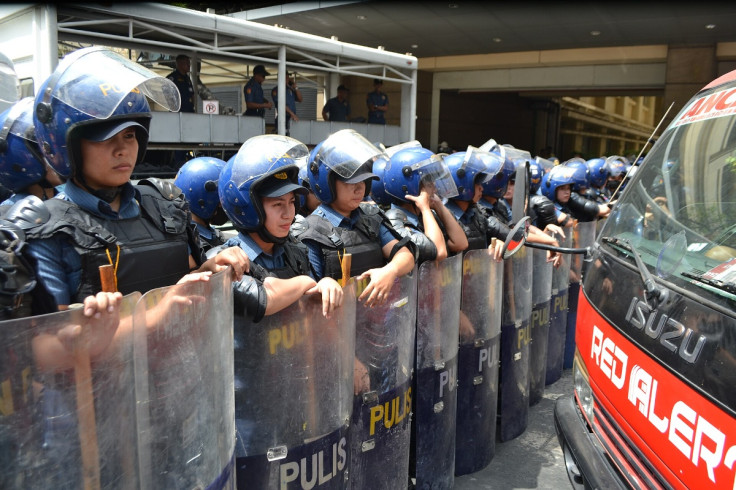
At least 245 people were arrested during protests in the Philippines against US President Donald Trump's visit and a proposed technology hub linked to Washington's artificial intelligence and critical minerals initiative, Pax Silica. Demonstrators raised concerns about the project's potential impact on Indigenous communities, farmers and local resources.
The protests took place in Manila during the 49th Association of Southeast Asian Nations (ASEAN) Summit, hosted by the Philippines from 15 to 17 November. Demonstrators tried to march to the summit venue, but police stopped them.
Trump's Welcome Draws Criticism
According to protest leader Renato Reyes, the mass arrests in Manila stemmed from a heavy-handed government response under President Ferdinand Marcos Jr. Reyes noted that Monday marked the highest number of police detentions recorded in a single day since Marcos assumed office in 2022.
Human Rights Watch reported that police arrested 236 people travelling from the Southern Tagalog region on 15 November, and that they had detained another nine protesters at the main protest site. Lawyers said 19 children were among those detained.
'It is really crazy that the Philippine government is rolling out the red carpet for someone who has been so flatly rejected by the American people. Trump started a war that devastated the global economy and pushed oil prices in the Philippines to historic highs. It has caused untold suffering on the Filipino people,' Reyes said.
Trump's reception in the Philippines also prompted criticism on social media. In a Threads post, user @titomototanga criticised footage showing a child greeting the US president, writing: 'Our moron government officials even use a child to welcome that orange guy.'
Opposition to the US-Backed AI Hub
Pax Silica is a US-led initiative aimed at strengthening supply chains for semiconductors, critical minerals and other technologies used in artificial intelligence.
The Philippines joined the initiative in April 2026. A proposal submitted by the Philippine Bases Conversion and Development Authority to the US Department of State identified an approximately 4,000-acre (1,619-hectare) site in the New Clark City area of Tarlac for a Pax Silica coordination office and related economic security activities.
The proposed development has faced opposition from Indigenous Aeta communities and farmers, who fear displacement from their homes and agricultural land. Protesters have also raised concerns about the project's potential demands on water and energy resources.
Meanwhile, Department of Science and Technology Secretary Renato Solidum Jr. promoted regional cooperation on technology, saying the ASEAN Digital Economy Framework Agreement would establish common rules on AI, cross-border data flows, cybersecurity and online consumer protection.
The agreement is separate from the US-led Pax Silica initiative.
Indigenous Land Rights Under Philippine Law
The Philippines' Indigenous Peoples' Rights Act of 1997 recognises the rights of Indigenous communities to ancestral lands and resources. It also provides protections against relocation without free and prior informed consent, subject to the law's provisions.
The issue is particularly relevant to Aeta residents in Capas, Tarlac, where it has been reported that 40 households, affecting approximately 200 people, could be relocated.
However, former BCDA chief Joshua Bingcang had previously said that the project would not displace Indigenous communities. He said the proposed site was public land designated for industrial development under the Bases Conversion and Development Act of 1992.
The BCDA has also said the land would remain under Philippine jurisdiction and ownership, with private investors permitted to enter long-term lease arrangements.
© Copyright IBTimes 2026. All rights reserved.