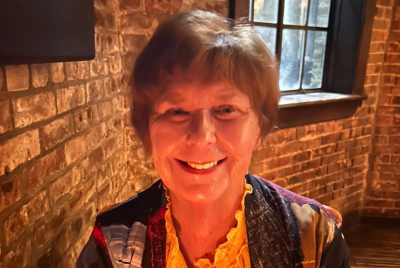
Savannah's Sister Annie and Tommaso Cioni Facing Trouble In Nancy Guthrie Kidnapping Case, Expert Claims
A psychologist warns that the rush to assign blame may be inflicting a 'second injury' on relatives while the FBI quietly corrects claims about 'new' DNA evidence.

Savannah Guthrie's sister, Annie, and brother‑in‑law, Tommaso Cioni, are facing mounting public suspicion and harassment in the disappearance of 84‑year‑old Nancy Guthrie, who was reported missing from her Catalina Foothills home near Tucson, Arizona, on 1 February, even though authorities say no family member is a suspect.
Attention turned quickly to the people closest to Guthrie. Her daughter, Savannah, the high‑profile co‑anchor of NBC's Today show, inevitably became the public face of the family's nightmare. But the most intense glare has settled on Savannah's younger sister Annie and Annie's husband, Italian‑born chef and restaurateur Tommaso Cioni.
On the night before Nancy was reported missing, Annie and her mother had dinner together. It has been reported that Cioni drove Nancy home afterwards, making the couple among the last known people to see her before she vanished.
Savannah Guthrie Speaks Out As Rumours Swirl Around Annie And Cioni
The pressure on the couple escalated after former NewsNation journalist Ashleigh Banfield reported that Cioni had been named a possible suspect. The Pima County Sheriff's Department swiftly rejected that characterisation, and Sheriff Chris Nanos later clarified that no member of the Guthrie family is considered a suspect in the case.
Savannah Guthrie, who usually spends her mornings quizzing politicians and celebrities, found herself on the other side of the camera, addressing speculation about her own family.
In a conversation with her NBC colleague Hoda Kotb, she spoke about the emotional toll the scrutiny had taken on Annie and Tommaso, describing how painful it was to see them treated as if they had something to hide, while they lived with the same fear and uncertainty as everyone else who loved Nancy.

Even that didn't slow the online theorising. True‑crime influencers descended on the story, combing through timelines and body language.
In one instance, a YouTuber set up outside Annie and Tommaso's home to film, prompting Cioni to come out and ask to be left alone. The couple have reportedly put up 'no trespassing' signs in an effort to reclaim a sliver of privacy.
Expert Says Public Need For A 'Villain' Is Harming Annie And Tommaso
Into this atmosphere stepped Dr Jenny Shields, a licensed psychologist and certified healthcare ethics consultant who heads Shields Psychology & Consulting in The Woodlands, Texas. Speaking to Parade magazine, Shields did not weigh in on the criminal investigation itself. Instead, she tried to explain why people like Annie Guthrie and Tommaso Cioni can become lightning rods in an unsolved case.
'When something terrible feels random, people instinctively search for a reason,' she said. 'If they can point to a mistake, a lapse, or a person to blame, they get to feel that the world is still orderly and predictable. Psychologically, blame often works as a form of self‑protection.'

In her view, much of the speculation targeting the couple is less about evidence than about fear management. She described blame as 'a thin veil for fear', arguing that by identifying a supposed misstep inside the family, observers tell themselves: 'As long as I don't make their mistake, I am safe.'
The human brain, Shields added, 'abhors a vacuum.' When investigators have released limited information and there are no clear leads, that vacuum gets filled with what she called 'a narrative of suspicion.' Many people online would rather latch onto a 'guilty party' than accept the terrifying reality of a random, senseless tragedy.
When that narrative centres on relatives, she warned, the psychological cost can be severe.
How Public Scrutiny Is Changing The Guthrie Family's Grief
Turning specifically to Annie and Tommaso's situation, Shields argued that the 'public dimension changes grief completely.'
'When every expression, every silence, and every decision is being interpreted, the bereaved are forced to manage two realities at once,' she said. 'The private pain of loss and the public pressure to appear as though they are grieving in the "right" way.'
According to Shields, that split focus can make it significantly harder to process trauma. 'You cannot fully process a tragedy when part of you is still bracing to defend yourself from it,' she noted.
She described what is happening to the Guthrie family as a potential 'second burden' layered on top of the original horror of Nancy's disappearance. In some cases, she suggested, the race to 'find a villain' inflicts a 'second injury' on relatives who are already living with fear and heartbreak.
FBI Plays Down Talk Of 'New' Critical DNA In Nancy Guthrie Case
While the Guthrie family contends with that scrutiny, investigators are still working through more traditional leads.
On 16 April, ABC News reported on X that the FBI had 'recently received and is now analysing potentially critical DNA' recovered from Nancy Guthrie's Tucson home, citing unnamed sources. The phrasing suggested a possible breakthrough.
Ben Williamson, the FBI's assistant director for public affairs, took the unusual step of publicly pushing back. Responding on X, he wrote that the DNA in question was 'not new evidence or information', explaining that the FBI had asked to test it two months earlier 'with the same technology we've always had' after the local sheriff's office chose instead to send it to a private laboratory. He added that any further developments would be shared 'as soon as appropriate.'
Still receiving inquiries on this: this is not new evidence or information. FBI asked to test this DNA 2 months ago with the same technology we’ve always had - when the local Sheriff instead sent it to a private lab. Any further developments we will share as soon as appropriate. https://t.co/FohRJtv8oH
— Ben Williamson (@_WilliamsonBen) April 20, 2026
Previous DNA samples from the scene, according to earlier reporting, either failed to generate a match in the FBI's Combined DNA Index System or were mixtures involving more than one person, limiting their usefulness.
Investigators believe Nancy Guthrie was taken from her home in the early hours of 31 January. Her family raised the alarm when she failed to appear at a church service, and her pacemaker later disconnected from her phone at around 2:30am, suggesting she was suddenly moved out of range.
Despite a large‑scale search and a federal inquiry, more than two and a half months later, there is still no trace of her, no publicly identified suspects and no clear narrative of what happened.
© Copyright IBTimes 2026. All rights reserved.
- Recommended For You