10 Photos of Eurovision 2026 Winner, Dara Dude: Bulgaria Wins Amid 5-Nation Boycott as UK Crashes to Last Place With 'Nul Points'
Bulgaria wins Eurovision as protests, boycotts and UK 'nul points' shape Vienna final.

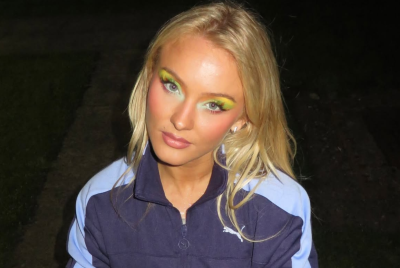
Bulgaria's Dara won the 70th Eurovision Song Contest in Vienna on Saturday night with her track 'Bangaranga,' beating Israel into second place as the UK slumped to last with 'nul points' in the public vote.
The news came after an already fraught build-up to Eurovision 2026, overshadowed by protests against Israel's participation and a five‑nation boycott. Ireland, Spain, the Netherlands, Slovenia and Iceland all refused to compete this year, objecting to Israel remaining in the line‑up while attacks continue in Gaza and critical of how the European Broadcasting Union (EBU) handled rule changes and state‑backed promotion of entries.
First Eurovision Win for Bulgaria
For Bulgaria, Dara's victory is historic. The 27‑year‑old delivered the country's first ever Eurovision win, two decades after it joined the contest in 2005 and following a three‑year absence from the competition.
On stage, she described 'Bangaranga' as 'pop music with folklore bones' — a high‑energy party song steeped in kukeri, an ancient Bulgarian ritual where men parade through villages in animal masks, bells and thick, furred costumes to drive out evil spirits. The word 'bangaranga' itself became a running joke throughout the night, with Dara offering a deliberately elusive definition: 'a special energy that everyone has got in themselves, a feeling that everything is possible.'
Her win also spared organisers a logistical and political migraine. Had Israel topped the scoreboard instead of finishing second, the EBU would almost certainly have faced relentless pressure over where, and under what conditions, the 2027 contest could be staged. This way, the question simply moves to Sofia.
The 70th anniversary edition of Eurovision returned to Vienna's Wiener Stadthalle, after Austrian act JJ secured victory last year. Around 10,000 spectators packed into the venue, while broadcasters estimated a television audience well north of 100 million. It was Austria's third time hosting the contest, and by far its most politically charged.
The grand final featured 25 participating countries, including Bulgaria, Moldova and Romania, all returning after recent absences. The stage was glossy, the interval acts big, yet the absence of five boycotting nations hung over proceedings, a reminder that the Eurovision bubble is no longer able to fully insulate itself from geopolitics, if it ever did.
Win Amid Israel Row, Boycott and Protests
The boycott was rooted in a tangle of grievances. For context, the EBU recently reduced the number of phone votes each fan can cast from 20 to 10 and tightened guidelines on state‑sponsored online promotion, moves widely seen as a reaction to Israel's aggressive social media campaigning in past years. Yet the EBU stopped short of banning Israel's broadcaster Kan, prompting fresh anger in several European capitals.
Pressure on the institution had already been building. In December, Nemo, the Swiss artist who won Eurovision 2024, announced they were returning their trophy in protest at Israel's continued participation in the 2026 edition. That symbolic gesture clearly did not change the EBU's mind.
Outside the arena, Austrian police said roughly 2,000 people joined a demonstration in central Vienna earlier on Saturday against Israel's place in the contest. Inside, though, the atmosphere was noticeably calmer than in 2025, when Israeli singer Yuval Raphael faced loud jeers.
This year's Israeli entry, 'Michelle,' a romantic pop track about a toxic relationship performed by Noam Bettan, performed strongly with viewers and ultimately finished second. ORF, Austria's host broadcaster, had announced it would not use the 'anti‑booing' audio technology deployed at some past contests. Even so, the live audience mostly greeted Bettan warmly when he took to the stage.
The tension broke through only in flashes. During the read‑out of Israel's public vote, a small group of fans in the arena continued to chant the country's name, prompting some audible booing. And during the jury vote segment, Kan's on‑screen spokesperson appeared to riff on last year's controversy by saying he already knew who would win this year — a pointed, if opaque, reference that Eurovision insiders will spend days dissecting.
Kan also found itself on the defensive earlier in the week after it mocked Croatian group Lelek by likening their traditional stage make‑up to 'henna tattoos in Eilat.' The broadcaster later apologised. Lelek condemned the comparison as dismissive of their culture and of 'the history of oppressed women.' Their song 'Andromeda' focuses on Catholic resistance to the Ottoman Empire, and their facial patterns draw on sicanje, a tattooing tradition historically used to prevent forced religious conversions.
UK Eurovision Heartbreak
If Dara's win gave Bulgaria a long‑awaited moment in the spotlight, the UK's night ended in all‑too‑familiar gloom. British entrant Look Mum No Computer — real name Sam Battle, a YouTuber known for building his own synthesisers — finished dead last. His track 'Eins, Zwei, Drei' failed to secure a single point in the public vote, meaning it did not register in the top ten of any country.
It was another bruising Eurovision chapter for the UK. With the notable exception of Sam Ryder's much‑loved 'Space Man' in 2022, Britain has spent the last decade collecting disappointments, including James Newman's infamous 'nil points' in 2021. On Saturday, Belgium and Germany joined the UK in recording zero points from the public, suggesting that catchy hooks and staging alone are no guarantee of continental affection.
Another UK‑based act, Boy George, was also absent from the final. His cameo with San Marino's Senhit on the track 'Superstar' never made it out of the first semi‑final.
For now, the story belongs to Dara and to Bulgaria. A country that once hovered on the Eurovision margins now holds the trophy, its winning song built on what its singer calls 'folklore bones' and a word no one can quite translate — but which, for one night in Vienna, seemed to make perfect sense.
Bulgaria has yet to confirm its location and the method of hosting Eurovision 2027.
© Copyright IBTimes 2026. All rights reserved.
- Recommended For You