

Trump Floats US Government Stake in NVIDIA Just a Day After Raising Concerns About an Insider Trading Lawsuit
His disclosed share transactions add scrutiny to a proposal that could make Washington both an investor and a regulator
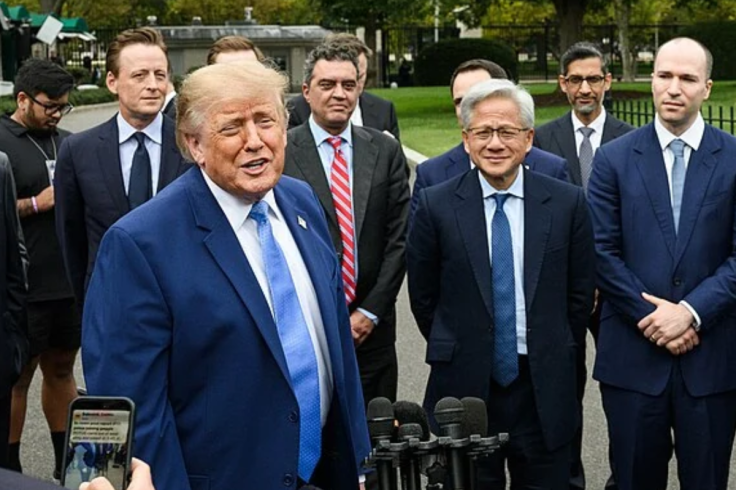
President Donald Trump has floated the possibility of the US government taking an equity stake in NVIDIA, while joking that such a move could prompt the Justice Department to sue the government for insider trading. The proposal raises questions about public investment and Trump's own disclosed trades.
Trump made the comments during a CNBC interview on 23 November 2026, after NVIDIA reinstated Jensen Huang as chief executive. Asked whether he had considered a government stake, Trump said: 'I would have loved it, but I don't want to get sued.' He then joked about the Justice Department bringing an insider-trading case against the US government.
He said he had not raised the proposal but added: 'It's probably not too late.' He did not announce an investment plan or specify a proposed stake.
Intel Deal Offers a Precedent, Not a Blueprint
The closest recent comparison is the US government's investment in Intel. Under an agreement announced in August 2025, the administration committed $8.9 billion (£6.8 billion) for Intel common stock. The funding included $5.7 billion in previously awarded but unpaid CHIPS Act grants and $3.2 billion from the Secure Enclave programme.
Any NVIDIA investment would require decisions on valuation, the size of the holding, voting rights, and how taxpayers would share in gains or losses. Government ownership could also complicate its role in setting export controls that affect NVIDIA's overseas sales. The company operates in a sector where access to international markets is shaped by national security policy, making a clear separation between commercial and government interests important.
Trump's Disclosed NVIDIA Trades Raise Scrutiny
The proposal is sensitive because Trump's latest financial disclosure records NVIDIA share purchases and sales. Released on 19 November, it showed purchases of up to $265,000 (£201,000) in NVIDIA stock during September, alongside sales of up to $15,000 (£11,400). The filing uses transaction-value ranges, so exact amounts are unknown.
The White House has said Trump's investments are managed by independent third-party institutions and that neither the president nor his family directs their decisions. The disclosure does not establish that Trump personally selected the trades or used government information.
Any stake would require safeguards separating shareholder interests from export-control and other policy decisions. Questions would include who oversees the investment, whether the government receives voting rights, and how officials would manage decisions that could affect the value of its holding.
NVIDIA Shareholder Case Is a Separate Legal Matter
The lawsuit involving NVIDIA is distinct from Trump's hypothetical concern about insider trading. Investor Mark Kistenmacher filed a proposed securities class action in California on 9 November 2026 against NVIDIA and Huang, alleging the company misled investors by omitting information about risks connected with Huang's reported relationship with a woman associated with Megaspeed.
The complaint alleges the relationship raised potential national security and commercial risks. These are the plaintiff's claims, not findings by a court. The case does not accuse Trump or the US government of insider trading, and it does not establish that NVIDIA or Huang broke securities laws.
Trump's comments raise a policy question, not a confirmed transaction or legal dispute involving the government: whether the US should become an NVIDIA shareholder, and how it would protect public interests if it did.
© Copyright IBTimes 2026. All rights reserved.