

'The President Had no Power': Federal Judge Voids Trump's $100,000 Fee Requirement for H-1B Visas
Judge Leo Sorokin emphasised the executive branch cannot invent new financial penalties without explicit approval from Congress

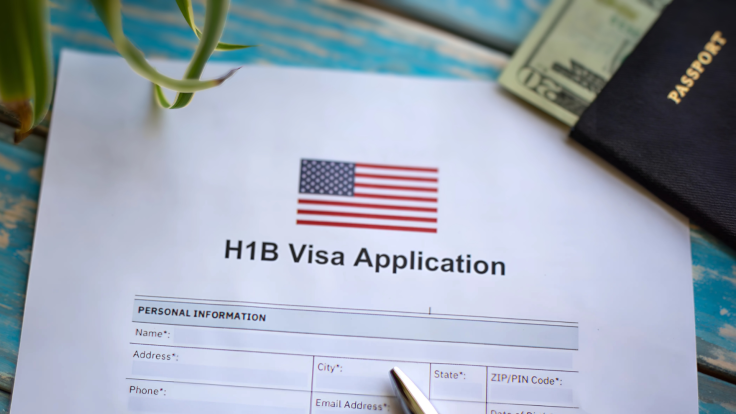
A US court on Monday blocked Donald Trump's attempt to attach a $100,000 (£74,895) price tag to H-1B visas. Striking down the policy, the judge declared that the president simply did not have the legal backing to alter the rules for a system that overseas specialists and domestic businesses depend on.
According to US District Judge Leo Sorokin, the White House essentially tried to bypass the Constitution by treating a new tax as a standard immigration rule. He maintained that the executive branch has no right to alter fiscal policy on its own, noting that such sweeping financial changes require explicit approval from Congress.
Sorokin, a Barack Obama appointee, delivered the nationwide block from his Boston courtroom, writing in a 42-page decision: 'The President had no power or delegated authority to impose a tax on H-1B petitions.'
Limits on Presidential Power
The multi-state legal battle was initiated in December by a group of Democratic attorneys general, coming just months after Trump introduced the six-figure mandate. The president had implemented the restriction to curb what he claimed was widespread exploitation of the visa system.
Aimed at overseas professionals looking to build a career in highly specialised fields, the H-1B visa route requires candidates to possess a university degree or an identical level of qualification.
🚨 BREAKING: An Obama leftist Judge has just STRUCK DOWN President Trump's landmark $100,000 H-1B visa fee
— Eric Daugherty (@EricLDaugh) June 8, 2026
WTF?! Judge Leo Sorokin just declared himself PRESIDENT and said Trump isn't allowed to do this.
IMPEACH THE JUDGE and OVERTURN!
This judge is foreigner-first and needs… pic.twitter.com/8ApeI0GwOF
The route grants an initial three-year stay with the option to extend for an identical duration. Experts look at the system as a critical driver for domestic growth, pointing out that it helps American firms stay ahead globally and ultimately expands local employment.
Court Rejects Executive Tax Leeway
Sorokin completely threw out the administration's defence, refusing to buy the argument that general immigration laws gave the White House the right to bring in this fee. The judge pointed out that while the president does have some flexibility with policy, Congress never gave him the green light to go around inventing new taxes for visa applicants.
Justice Department spokesperson Natalie Baldassarre pushed back, stating that the DOJ 'is committed to protecting American workers and fully supports President Trump's America First agenda.' She also noted that the administration had actually won a previous legal battle over the same policy.
'We will continue to hold companies accountable when they unlawfully exploit American workers and fail to use the H-1B program as intended,' she said.
A Victory for State Attorneys General
Leading the legal challenge, New York Attorney General Letitia James welcomed the victory, stating that the court had 'put an end to this administration's illegal attempt to destroy this critical program and the many jobs it makes possible.'
'Workers with these visas contribute immensely to our state, and I will keep fighting to stop this administration's unjust and unlawful attacks on our immigrant communities,' James added.
The ruling also marked a major win for California Attorney General Rob Bonta, who spearheaded the multi-state group when they took the policy to court in December 2025. His team had warned that the massive price hike would cripple the system, preventing local employers from bringing in the expert foreign talent they need.
'This tax was an attack on America's ability to attract and retain the high-skilled talent that strengthens our economy and helps us meet critical workforce needs,' Bonta said in a statement released Monday.
Shifting the Financial Burden from Employers
The massive price jump hit employers hard. Before the spike, companies paid anywhere from $960 (£718.99) to $7,595 (£5,688.28) for each application, according to the lawsuit brought by the attorneys general.
© Copyright IBTimes 2026. All rights reserved.