Trump's War on Mail-In Ballots Suffers 5-4 Blow as Two of His Own Supreme Court Picks Side Against Him
Justice Barrett's majority opinion supports states' rights to count late-arriving mail-in ballots, impacting upcoming elections

The Supreme Court delivered a significant blow to President Donald Trump's campaign against mail-in voting on Monday, ruling 5‑4 that states may continue counting absentee ballots that arrive after Election Day, provided they were postmarked on time. The decision in Watson v. Republican National Committee rejected a challenge by the Republican National Committee, the Mississippi Republican Party and the Libertarian Party of Mississippi to Mississippi's practice of accepting mail ballots received up to five business days after polls close.
Justice Amy Coney Barrett, a Trump appointee, wrote the majority opinion. Chief Justice John Roberts, also appointed by a Republican president, joined her alongside the court's three liberal justices: Sonia Sotomayor, Elena Kagan and Ketanji Brown Jackson. The four remaining conservative justices, led by Samuel Alito, dissented
Barrett's Reasoning
Barrett drew a firm line between when voters must cast their ballots and when those ballots must arrive, noting that federal election‑day statutes 'say nothing about ballot receipt' and that 18th‑century modes of transmission did not offer same‑day delivery, according to the court's opinion. She concluded that 'the Constitution therefore envisions a system in which receipt is necessarily divorced from voting' and said any national ballot‑receipt deadline would need to come from Congress, not the courts.
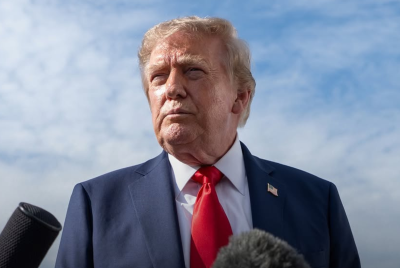
Donald Trump urges passage of the 'Save America Act' after a Supreme Court setback on voter rights, calling for photo ID, proof of citizenship and limits on mail‑in ballots in a Truth Social statement, 29 June 2026.

Alito's Dissent
Justice Alito was sharply critical in his dissent, arguing the ruling contradicted what he described as 'two centuries of historical practice' and insisting that holding an election on a specific day has historically meant ballots must be received, not merely sent, by that date. He cited Justice Brett Kavanaugh's earlier warning that when 'thousands of absentee ballots flow in after election day and potentially flip the result of an election', 'charges of a rigged election can explode'.
What the Ruling Means
According to CBS, 14 states and Washington, DC allow officials to accept and count mail ballots postmarked by Election Day but received after that date, while a further 29 states and DC permit late‑arriving ballots at least for military and overseas voters. Under Mississippi's law, ballots are counted so long as they were postmarked by Election Day and received within five business days.
Trump has repeatedly called for severe restrictions on mail voting, at one point saying he would 'lead a movement to get rid of MAIL‑IN BALLOTS', describing them as 'Highly Inaccurate' and 'Seriously Controversial' in posts on Truth Social. His administration backed the RNC's challenge, and Mississippi's Republican Attorney General Lynn Fitch, despite defending the state's law in court, responded to the ruling by urging legislators to tighten the rules anyway, saying 'President Trump is right to prioritise improving public trust in our elections'.
President Trump reacts to Supreme Court rulings: "Because of the mail-in ballot ruling, which was a little bit surprising, gives people more time to vote illegally...the SAVE Act is even more important." pic.twitter.com/hXQHEadbcA
— CSPAN (@cspan) June 29, 2026
A Ruling With Reach
Washington Secretary of State Steve Hobbs noted that more than 250,000 ballots postmarked on time arrived after Election Day during the 2024 election, warning that those voices would have been silenced, 'especially in rural areas where mail delivery can take longer', had the RNC's challenge succeeded. The decision lands just months before the November 2026 midterm elections, giving immediate certainty to the roughly 30 states that count some form of late‑arriving ballots, which will not need to overhaul their procedures ahead of polling day.
The Senate's rejection of the SAVE America Act in early June removed one major avenue for Trump's preferred overhaul; NPR reports the bill, which he urged allies to prioritise, would have imposed strict proof‑of‑citizenship requirements for voter registration. Monday's Supreme Court decision adds another setback to the administration's efforts to reshape how Americans vote. For millions of voters who rely on postal voting, particularly those in rural areas where mail delivery takes longer and military personnel serving overseas, the ruling preserves a process they depend on to participate in elections.
© Copyright IBTimes 2026. All rights reserved.
- Recommended For You