

Melania Trump Claims to 'Fully Support' LGBTQ+ Community While Applauding SCOTUS Trans Athlete Ban
Melania Trump's careful phrasing captures a country trying, and often failing, to separate inclusion from exclusion.

In Washington on Monday, first lady Melania Trump publicly claimed to 'fully support' the LGBTQ+ community while applauding a US Supreme Court ruling that upholds bans on transgender women and girls competing in female school sports. In her rare political intervention, posted on X, Melania framed the decision as a necessary step to protect 'female athletes,' even as critics argued the ruling entrenches discrimination against transgender students.
The Supreme Court's decision, handed down by its six-justice conservative majority, upheld state laws in Idaho and West Virginia that bar transgender girls and women from competing in female sports teams. According to court records, the justices found that the bans do not violate the US Constitution, and unanimously concluded they do not breach Title IX, the federal law that prohibits sex discrimination in education. The ruling comes after more than two dozen Republican-led states passed similar restrictions, turning school sports into a frontline battle over transgender rights in America.
Melania Puts LGBTQ+ Support and Trans Sports Ban Side by Side
Melania Trump's statement tried to walk a tightrope that many LGBTQ+ advocates say simply does not exist. She opened her post on X by quoting her own book, referencing a line she says appears on page 156 of what she calls a '#1 NYT Bestseller.'
“As many of you may know, I fully support the LGBTQIA+ community. But we must also ensure that our female athletes are protected and respected." - MELANIA, #1 NYT Bestseller, (p. 156)
— First Lady Melania Trump (@FLOTUS) June 30, 2026
The U.S. Supreme Court has now legally confirmed this opinion:
“Under Title IX and the Equal…
'As many of you may know, I fully support the LGBTQIA+ community. But we must also ensure that our female athletes are protected and respected,' she wrote, quoting herself.
She then directly linked her previously stated position to the Supreme Court ruling, adding: 'The U.S. Supreme Court has now legally confirmed this opinion: "Under Title IX and the Equal Protection Clause of the Fourteenth Amendment, may schools maintain women's and girls' sports for biological females? ... The answer is yes."'
In a closing line that seeks to smooth over a culture war with a slogan, she continued: 'America, we can support the rights of the LGBTQIA+ community and also protect opportunities for female athletes. Respect everyone and keep girls' sports fair. Both ideals are essential.'
On one level, it is classic Melania: sparse, tightly controlled, leaning on a polished image rather than a lengthy argument. On another, it plants her squarely on the side of those celebrating what transgender campaigners view as a serious rollback of rights.
BIG WIN: The United States Supreme Court just RULED AGAINST MEN PLAYING IN WOMEN’S SPORTS. Wow! That takes that ridiculous situation off the table!!! President DONALD J. TRUMP
— Commentary Donald J. Trump Truth Social Posts On X (@TrumpTruthOnX) June 30, 2026
( TS: Jun 30 2026, 10:46 AM ET )… pic.twitter.com/50yOZa6XiM
Her husband was far less nuanced. On Truth Social, Donald Trump hailed the decision as a 'BIG WIN,' writing that the Supreme Court 'just RULED AGAINST MEN PLAYING IN WOMEN'S SPORTS' and that the ruling 'takes that ridiculous situation off the table!!!'
IBTimes UK could not independently verify Melania Trump's claim that her book is a '#1 NYT Bestseller,' nor the precise page reference she cites, so those details should be taken lightly.
What the Supreme Court Actually Decided on Trans Athletes
The ruling at the heart of Melania Trump's statement involved legal challenges to bans in Idaho and West Virginia, both defended by Republican officials as necessary to protect 'fairness' and safety in girls' and women's sport.
Writing for the court, Justice Brett Kavanaugh said that 'states may maintain women's and girls' sports for biological females' in order to address competitive and safety concerns. He added that 'The Constitution and Title IX do not require an overhaul of women's and girls' sports throughout America.'

The language is strikingly blunt for a court that often dodges sweeping declarations. In practical terms, it gives clear constitutional cover to the more than two dozen Republican-led states that have already enacted similar bans. Legal analysts expect the ruling to be cited quickly in lower courts across the country as those laws are tested.
Yet the decision does not settle everything. As the court itself noted, lawsuits challenging policies in states such as Connecticut and California, which allow transgender athletes to compete in line with their gender identity, remain unresolved. The legal map on trans participation in sport is now sharply fractured, and the Supreme Court has signalled it is willing to let that stand for the moment.
Human Stories Behind the Trans Sports Fight
Behind the abstract language about 'biological females' sit real teenagers whose lives have effectively become test cases. In West Virginia, court records show that 16-year-old Becky Pepper-Jackson has been at the centre of the state's litigation. Pepper-Jackson, a high school student in Bridgeport, has publicly identified as a girl since the age of eight and has been prescribed puberty-blocking medication. She has also been issued a West Virginia birth certificate that lists her as female, according to filings.
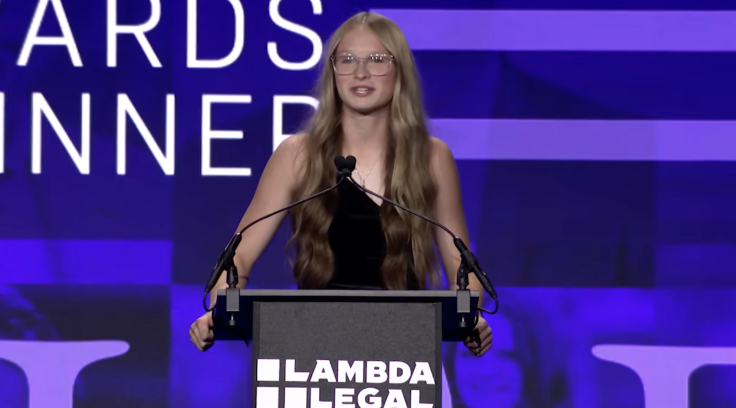
She began as a 'back-of-the-pack' cross-country runner in middle school, then moved to field events, becoming a statewide champion in the shot put. At last month's West Virginia championship meet, she won by two feet. Supporters say her trajectory shows what happens when trans youth are allowed to participate and develop like any other athlete. Opponents cite the same statistics to claim an unfair advantage. The numbers have become ammunition, not just results on a scoreboard.
In Idaho, the court reviewed the case of Lindsay Hecox, who sued the state after it passed what was described in filings as the first statewide ban of its kind. Hecox wanted the chance to try out for the women's track and cross-country teams at Boise State University. Her lawyer, Kathleen Hartnett, told the justices during arguments in January that Hecox ultimately failed to make either squad because 'she was too slow.' She has, however, competed in club-level soccer and track.
Justice Sonia Sotomayor, speaking for the court's liberal bloc, took aim at the majority's certainty. She dissented from the bench, arguing that the justices were wrong to dismiss Pepper-Jackson's equal protection claim and that the science around transgender athletes is still evolving.
'We just simply do not know scientifically that transgender students pose dangers,' she said, in a dissent joined by the court's other liberal justices.
It is a line that cuts through much of the political noise: for all the furious certainty on social media, key questions about performance, hormones and fairness remain contested even among experts.
Sports Icons Split as Melania Trump Weighs in
The Supreme Court fight has dragged major sporting names off the sidelines. According to court submissions and public statements, tennis legend Martina Navratilova, swimmers Summer Sanders and Donna de Varona, and beach volleyball star Kerri Walsh Jennings have all backed state bans that restrict transgender women from competing in female categories. They frame their stance as a defence of women's sport rather than an attack on trans rights, though for many LGBTQ+ advocates that distinction feels paper thin.

On the other side, football icons Megan Rapinoe and Becky Sauerbrunn, along with basketball stars Sue Bird and Breanna Stewart, have lined up in support of transgender athletes. They argue that inclusion can be balanced with fair competition and that young trans people should not be turned into political targets just to settle adults' arguments.
Melania Trump has now inserted herself into that divide, claiming to 'fully support' LGBTQ+ people while endorsing the legal logic used to keep some of them off girls' and women's teams. Whether LGBTQ+ voters, or indeed queer young people reading her post, feel supported by that line is another question entirely.
© Copyright IBTimes 2026. All rights reserved.