'A Victory For Democracy': Barack Obama Celebrates Trump-Ally Viktor Orbán's Loss in Hungary Elections
Hungary's political shift sends ripples across Europe and reshapes global alliances.
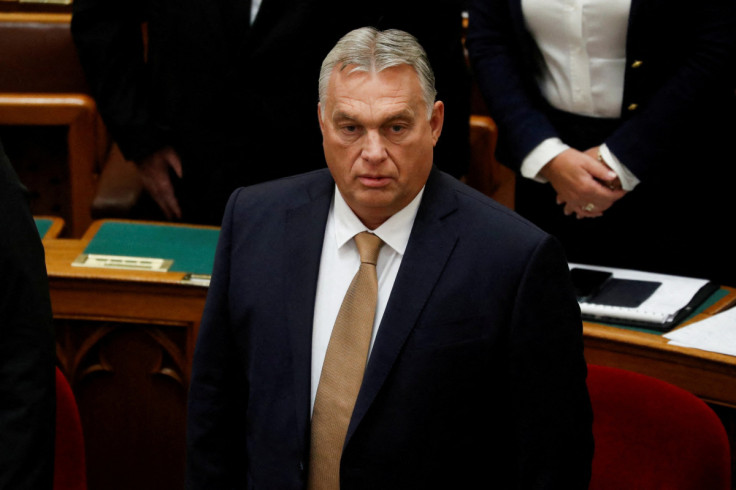
Former US President Barack Obama called it a 'victory for democracy' after long-time leader Viktor Orbán, widely known as an ally of Donald Trump, lost power in a striking election result.
The outcome marks a turning point for a country that has spent years under Orbán's firm grip. His defeat signals change not only at home but across Europe's political landscape.
For many watching, the response from world leaders shows just how much was at stake. Hungary's vote has come to represent a wider struggle over democratic values.
Obama's Message Carries Global Weight
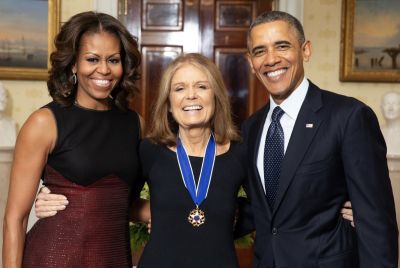
Following Magyar's victory, Obama did not hold back in offering his congratulations. In a public statement, he praised the Hungarian people for choosing a new path and standing up for democratic principles.
According to a post shared on X, he described the result as proof that voters still have the power to shape their future, pointing to their 'resilience and determination.' The 64 year old former president also said the election was a 'reminder' to keep working towards 'fairness, equality and the rule of law.'
The victory of the opposition in Hungary yesterday, like the Polish election in 2023, is a victory for democracy, not just in Europe but around the world. Most of all, it’s a testament to the resilience and determination of the Hungarian people – and a reminder to all of us to…
— Barack Obama (@BarackObama) April 13, 2026
Obama's message travelled quickly, drawing attention far beyond Hungary.
It struck a chord with those who see the election as more than a national event. For many, it reflects a broader pushback against leaders accused of weakening democratic systems.
For Obama, the moment echoes earlier warnings about the need to protect institutions and public trust.
A Landslide that Reshaped the Political Map
The result itself was decisive. Péter Magyar and his EU-friendly, centre-right Tisza Party secured a strong mandate in parliamentary elections held on Sunday, 12 April.
As reported by TVP World, the scale of the victory caught many observers off guard. What some expected to be a tight race instead became a clear rejection of Orbán's leadership.
Magyar's rise has been swift. He presented himself as a reform figure, promising transparency and a break from years of centralised control, including releasing billions of frozen EU funds.
For voters, the decision felt personal. It was not only about policy, but about the kind of future they wanted for their country.
Europe Responds with Cautious Optimism
Across the European Union, leaders moved quickly to respond. Many welcomed the result as a step forward for democratic governance in the region.
According to Politico, several EU officials expressed hope that Hungary could rebuild stronger ties with its European partners. Orbán's time in power had often put the country at odds with Brussels.
Poland's Prime Minister Donald Tusk posted online, welcoming Hungary back to Europe. German Chancellor Friedrich Merz said Magyar's victory showed that European societies are 'resilient against Russian propaganda' and other outside pressures.
Welcome back to Europe! 🇵🇱🇭🇺 pic.twitter.com/OycXLz1p6u
— Donald Tusk (@donaldtusk) April 13, 2026
Defence Minister Theo Francken also shared his reaction, saying he was glad Orbán lost and describing him as a 'traitor.' European Commission President Ursula von der Leyen added, 'Hungary has chosen Europe,' following the result.
Ik vind Orban een verrader en ben blij dat hij verloren heeft. Ik vond de steun van Vance ook een erg domme campagnezet. Heeft niemand in Hongarije wat aan.
— Theo Francken (@FranckenTheo) April 12, 2026
Ik ben een rechtse politicus en vind extreemrechts heel dom bezig. En de MAGA’s zouden best stoppen met internationaal…
The shift could open the door to closer cooperation on issues such as the rule of law and economic policy. Still, there is a sense of caution, as any transition of power often brings uncertainty.
For Europe, the moment feels hopeful, but not without its risks.
US Democrats Frame It as a Wider Signal
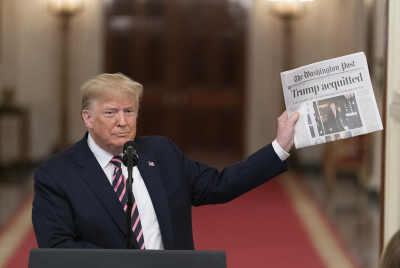
In the United States, Democrats pointed to the outcome as part of a broader political trend. Orbán has long been seen as aligned with America's President Donald Trump, which makes his defeat symbolically significant.
US Democratic figures welcomed the result and framed it as a setback for populist politics linked to Trump's influence, The Express Tribune reported.
That framing adds another layer to the story. Hungary's election is now part of ongoing debates within US politics, especially with future races on the horizon.
For some, it reinforces the sense that political movements do not stay within borders. They shift, adapt and influence one another in ways that are not always predictable.
A Moment of Change with Uncertain Outcomes
Despite the celebrations, questions remain. A change in leadership is only the beginning. Delivering on promises will be the real test for Magyar and his party.
For many Hungarians, the result brings both relief and expectation. There is hope for reforms that improve daily life and rebuild trust in institutions.
The global response shows how closely the situation is being watched. Hungary's decision now sits within a broader narrative about democracy, power and the direction of global politics.
In the end, the election marks both an ending and a new beginning. It closes a long chapter under Orbán and opens a new one that will shape not only Hungary, but the broader political climate in the years ahead.
© Copyright IBTimes 2026. All rights reserved.
- Recommended For You