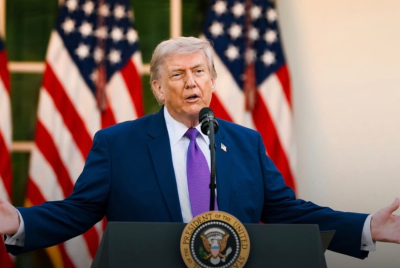
Donald Trump Branded 'Weakest' US President, Nickname 'Comrade Nation Builder' By Chinese Netizens
Chinese netizens' nickname 'Comrade Nation Builder' captures a brutal view of a US president seen as strengthening China more than his own country.
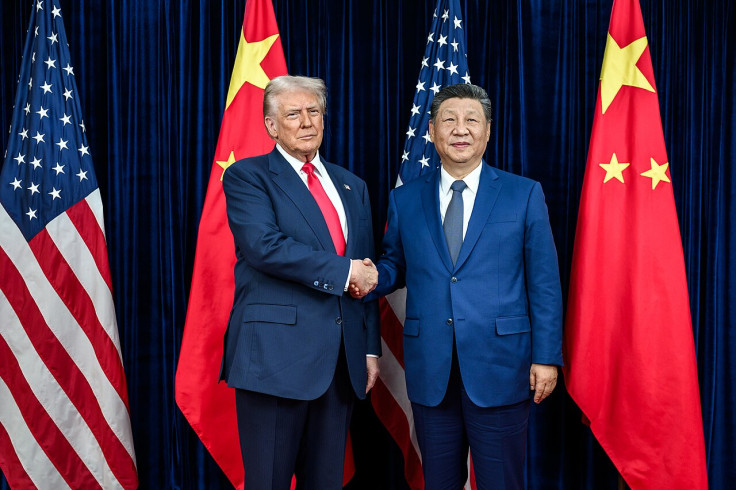
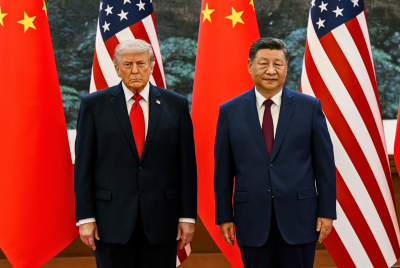
US President Donald Trump was branded 'the weakest' American leader by Chinese social media users and nicknamed 'Comrade Nation Builder' during his visit to Beijing from 13-15 May, widely seen as a test of who really holds power in today's world.
Trump's China trip took place as he neared his 80th birthday and grappled with a grinding war in Iran, collapsing approval ratings at home and growing questions about his physical and political stamina.
Trump, Xi And The Question Of Who Held Power
The symbolism of Donald Trump's China visit was hard to miss. Xi received him in a capital that, historically, had made a ritual art of forcing foreign envoys to acknowledge their inferior status. Imperial visitors were once expected to perform the 'three kneelings and nine prostrations,' the Grand Kowtow, in front of the emperor.
Modern Chinese protocol stayed far less theatrical, but analysts quoted by the Daily Beast argued that the substance had shifted rather than vanished. Their view was blunt: Trump arrived in Beijing as the weakest US president ever to sit opposite China's top leader.

The case laid out against him was not subtle. Since taking office, Trump has been described as having systematically weakened the core pillars of US strength.
American credibility as a dependable partner had been damaged. Investment in research, higher education and high‑tech industries, areas that once underpinned US leadership, had been cut back, just as China increased its own spending.
The same pattern showed up in energy and trade. Trump's push for fossil fuels had helped keep prices high, allowing China, already a major player in green technology, to profit from the global shift towards renewables. His hostility to immigration had made top international students and researchers think twice about US universities, which, the piece argued, ultimately favoured Chinese institutions hungry to recruit global talent.
At home, tax and spending decisions had, in the critics' view, funnelled money towards the wealthiest Americans instead of schools or public health, choices that, over time, blunted the country's competitive edge. Abroad, slashed development aid and erratic trade wars opened the door for Beijing to move in with investment, loans, and infrastructure deals.
'Comrade Nation Builder' And China's Quiet Confidence In Trump
It was against this backdrop that the mocking Chinese nickname for Donald Trump, Chuan Jianguo, loosely translated as 'comrade nation builder,' gained traction online.
The joke was that Trump had done more to build up the People's Republic than to strengthen the United States.
China's rise under Xi was not depicted as problem‑free. The country faced serious economic and demographic headwinds. Yet the narrative outlined here contended that Beijing had adroitly exploited Trump‑era missteps to deepen its global reach, particularly through trade, investment and diplomacy in the developing world.
That seemed most evident in regions such as the Middle East, where China was experimenting with a more transactional, less ideological model of great‑power behaviour. Rather than exporting a political system, Beijing offered infrastructure, markets and discreet mediation, while keeping its public rhetoric deliberately low‑key.

Hosting Trump became part of that approach. Xi could provide exactly what the American president craved: pageantry, flattery, the optics of a 'great relationship.' In return, Chinese negotiators were expected to offer vague commitments to buy more US goods or invest in American projects, pledges which previous experience suggested might not always be honoured in full.
Behind closed doors, China specialists feared something more consequential. They were worried that Trump, focused on short‑term image management, might give Beijing private assurances over its ambition to bring Taiwan under its control, or at least signal a softer US line.
Those same analysts linked Trump's perceived indulgence of Russia's war against Ukraine, his own 'illegal wars' and the diversion of US military resources away from the Indo‑Pacific to a broader message being sent to Beijing. In their view, the door to a forceful move on Taiwan looked more open than at any point in decades.
Yet, Trump's attention appeared to be elsewhere. The second half of his term had been dominated by what even allies privately described as a chain of foreign‑policy failures and domestic crises. Beijing offered a simpler stage: lavish banquets, red carpets and the chance to claim that he had pressed Xi hard on issues like Iran, even if the underlying pressure was minimal.
Chinese social media users seemed to grasp, and Trump himself perhaps did not, the irony at the heart of the visit. While he posed in front of Beijing's grand backdrops, chasing an image of strength, the running joke online was that 'Comrade Nation Builder' had turned up to help build someone else's superpower.
© Copyright IBTimes 2026. All rights reserved.
- Recommended For You