What Crimes Did Former NFL Player Daniel Adongo Commit Before His ICE Deportation Move
From experimental NFL prospect to headline deportee, Daniel Adongo's journey traces the hard edge of America's latest immigration regime.
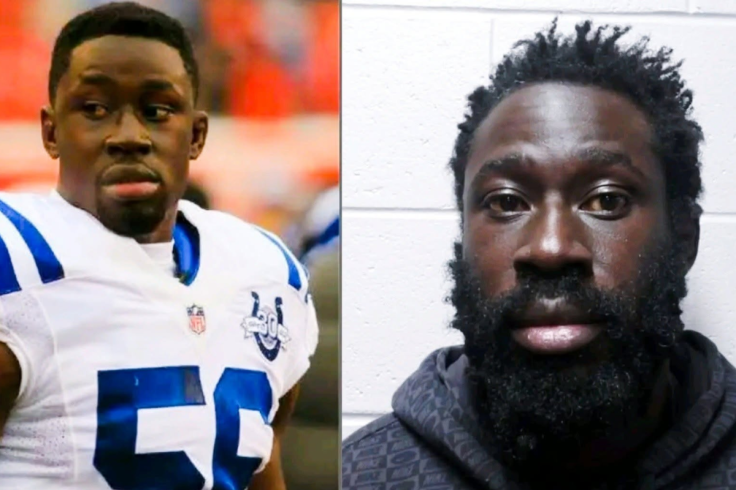
Former NFL linebacker Daniel Adongo was deported from the United States to Kenya on 20 June after an immigration judge ordered his removal, following a string of criminal arrests in Indiana over nearly a decade, US immigration authorities have confirmed.
Adongo had first come to prominence in the US as an unusual NFL experiment. Recruited out of rugby union, the Kenyan-born athlete joined the Indianapolis Colts in 2013 and spent two seasons with the team before his American football career stalled in 2015. According to US Immigration and Customs Enforcement (ICE) in Chicago, it was after that brief sporting career ended that his immigration status and then his criminal record began to unravel.
Daniel Adongo's Criminal Record Under Scrutiny
ICE says Adongo, whose full name is given as Daniel Ogama Adongo, overstayed his visa in 2016 and remained in the country illegally. Over the past nine years, Indiana law enforcement arrested him multiple times on various charges, including felony intimidation, battery and disorderly conduct.
Court records cited by ICE show that in 2020 he was convicted of criminal mischief with damage and sentenced to 364 days in jail. The statement does not detail the nature of that damage, nor whether he served the full term, but a one-day-short-of-a-year sentence is usually designed to keep a case within the remit of local jail rather than state prison.

His most recent criminal charges, which ICE did not list individually, are said to fall under the Laken Riley Act, a new federal statute that sharply tightens immigration detention rules. Under that law, certain criminal offences committed by people in the US illegally require mandatory detention without the possibility of bond. In other words, once those charges were filed, Adongo's route back to freedom inside the United States was effectively cut off.
Nothing in ICE's public statement sets out his legal defence to those latest charges, nor any mitigation offered on his behalf. There is no indication that Adongo or his representatives have commented on the deportation, and no independent court documents were released by ICE beyond what is summarised in the agency's announcement. In the absence of that, the official narrative is doing all the talking.
Laken Riley Act Looms Over Daniel Adongo Deportation
The political framing in the Adongo case is hard to miss. ICE pointedly linked his treatment to the Laken Riley Act, legislation named after a student killed in Athens, Georgia, by an undocumented immigrant who had previously been cited for shoplifting. That killing, heavily publicised by Republican politicians, prompted the bill's introduction and eventual passage in Congress.
According to ICE, President Donald Trump signed the Laken Riley Act into law on 29 January 2025, embedding the requirement that 'illegal aliens' facing certain criminal charges be detained without bond. Adongo's latest case, officials say, fit that category.
Once a Department of Justice immigration judge ordered his removal on 23 March 2026, the machinery of deportation moved quickly, with ICE Chicago putting him on a flight to Kenya less than three months later.

'This dangerous individual was clearly a threat to the community, which is now safer since he's been removed,' said Douglas Thompson, ICE Chicago's assistant field office director, in the agency's statement. 'Those who violate immigration law are held equally accountable, including former professional athletes.'
The choice of language is striking but not unusual for the current Department of Homeland Security leadership. The release closes by highlighting that nearly 70 per cent of ICE arrests involve people charged or convicted of a crime in the US, and that 'more than 3 million illegal aliens are out of the country and counting,' held up as evidence of the administration delivering on Trump's promise to arrest and deport criminals.
Again, none of those broader statistics are broken down by offence type or time period in the release, and no independent verification is supplied. They are, however, consistent with the messaging ICE has used for years to frame removals like Adongo's as a matter of public safety rather than bureaucratic housekeeping.
From Colts Prospect To Cautionary Tale
For anyone who followed his brief stint in the NFL, the name Adongo once meant something very different. A gifted rugby forward, he was signed by the Colts in 2013 as a developmental outside linebacker, part of a small wave of crossover experiments where teams tried to mould rugby athletes into American football players. He spent parts of the 2013 to 2015 seasons with Indianapolis, mostly on special teams and practice squads, before injuries and competition for roster spots ended his run.
There is no mention in the ICE account of what Adongo did in the US after his NFL career ended, or how he supported himself once his immigration status lapsed in 2016. The public record, at least as presented by ICE, jumps from promising athlete to serial arrestee with very little in between.
What is clear is that once those arrests accumulated and particularly once his conduct intersected with the Laken Riley Act Adongo became a textbook example for an agency eager to show it is not shy about deporting anyone with a criminal record, however famous they may once have been. ICE's message in the release is blunt: 'If you come to our country illegally, we will find you, we will arrest you, and we will deport you.'
Nothing in the official material suggests any ongoing legal appeal by Adongo against his removal. Without further filings or public statements from his side, the portrait that remains is largely the one painted by ICE itself, and it is not a flattering one.
All details and official claims above are drawn from a single ICE Chicago news release and have not been independently corroborated; where specific legal proceedings or statistics are referenced, they should be treated with caution until verified against primary court and government records.
© Copyright IBTimes 2026. All rights reserved.
- Recommended For You