Leaked iPhone 18 Fold Prototype Suggests Huawei-Inspired Design Ahead of Apple's First Foldable
Leaked dummy units suggest Apple's first foldable iPhone may adopt a wider, tablet-like design inspired by Huawei's Pura X.

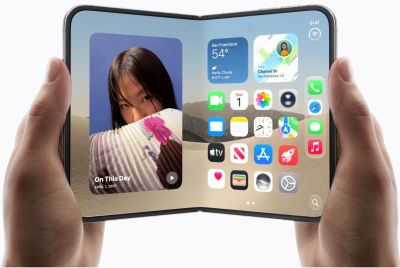
Apple's first foldable iPhone may have been revealed in newly surfaced dummy units that suggest the long-rumoured iPhone 18 Fold could adopt a Huawei Pura X-inspired design rather than Samsung's Galaxy Z Fold approach. If the prototype reflects Apple's current direction, the company appears to be prioritising a wider, tablet-like display over the taller book-style design that has defined most foldable smartphones.
The prototype, shared by tech creator Jam Ancheta of Jam Online, is not official Apple hardware and should be treated as an early representation rather than a finished product. However, dummy units are commonly produced using supply-chain dimensions ahead of launch, making them one of the clearest indicators of a device's physical design months before an official unveiling.
Why the Huawei Comparison Matters
The biggest revelation is not simply that Apple appears to be preparing its first foldable iPhone, but the design philosophy it seems to have embraced.
Most book-style foldables, including Samsung's Galaxy Z Fold series, unfold into a tall, almost square display after starting with a relatively narrow outer screen. Huawei challenged that convention with the Pura X by adopting a noticeably wider 16:10 aspect ratio, creating a device that feels more like a compact tablet than an elongated smartphone.
The leaked iPhone 18 Fold prototype appears to follow the same philosophy. Its wider proportions closely resemble the Pura X, suggesting Apple may prioritise a larger usable workspace over a taller display. Such a layout would provide more room for split-screen multitasking, document editing, web browsing, video streaming and reading while remaining compact enough to fit comfortably into a pocket when folded.
That marks a significant departure from earlier reports, which suggested Apple's first foldable would largely mirror Samsung's established book-style design. Instead, the latest prototype points towards a foldable built around productivity, media consumption and a more tablet-like user experience, much like Huawei's interpretation of the category.
What the Prototype Reveals
Beyond its proportions, the dummy unit incorporates several familiar Apple design elements. It retains the Camera Control button introduced on recent iPhones, the traditional side-button layout and a USB-C charging port.
The inclusion of USB-C is particularly noteworthy because it contrasts with persistent speculation that Apple could debut a completely portless iPhone with its first foldable. If the dummy unit accurately reflects Apple's current prototype, that transition may not happen with this generation.
The rear features a vertically aligned dual-camera module resembling an elongated version of the system seen on the iPhone Air. Although Apple has disclosed no camera specifications, industry expectations continue to point towards a main camera paired with an ultra-wide sensor.
The external display also echoes Huawei's design language, combining slim bezels with a punch-hole selfie camera. One side of the handset appears gently curved, while the hinge side remains flat and boxy, creating a distinctive asymmetrical profile unlike most foldables currently available.
That wider display would also require Apple to rethink how iOS operates on foldable hardware. A broader canvas could allow more natural split-screen multitasking, improved landscape productivity and an experience closer to using an iPad mini than a conventional smartphone.
As with all pre-release hardware, caution remains necessary. The prototype is a dummy unit rather than a functioning handset, and its origin and production date remain unknown. Apple could still alter the design significantly before the device reaches consumers.
Premium Pricing Expected
Current industry estimates suggest the iPhone 18 Fold will sit at the very top of Apple's smartphone range. Rumoured pricing places the 256GB model at approximately £1,509 ($1,999), the 512GB version at £1,660 ($2,199) and the 1TB model at £1,811 ($2,399), positioning it alongside the most expensive foldable smartphones currently on sale.
Apple has yet to officially announce its first foldable iPhone, and every specification, design detail and price remains unconfirmed. Nevertheless, if these dummy units accurately reflect Apple's current prototype, they provide the strongest indication yet that the company is not simply entering the foldable market. Instead, Apple appears poised to chart its own course by embracing the wider, productivity-focused design philosophy pioneered by Huawei rather than following Samsung's long-established blueprint.
© Copyright IBTimes 2026. All rights reserved.
- Recommended For You