'Asleep at the Wheel': Ex-DHS Chief Warns US Faces Most Dangerous Terror Threat Since 9/11 Under Trump
A former Trump insider now turned critic says the country built for permanent vigilance has started to look away at the very moment it can least afford to.
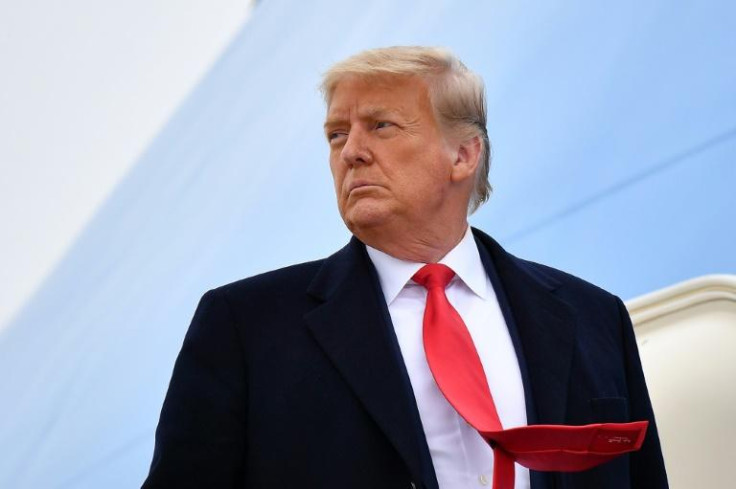
Donald Trump's second term has left the United States facing its most dangerous terror environment since the 11 September 2001 attacks, former senior Homeland Security official Miles Taylor has warned, accusing the current administration of leaving the country 'asleep at the wheel' as it heads into a volatile election year and its 250th anniversary celebrations.
Taylor, who served as chief of staff at the Department of Homeland Security (DHS) during Trump's first presidency, gave a stark on-camera assessment in a late June interview with journalist John Harwood for Zeteo. Taylor, once a loyal Republican national security hand, has become one of the most prominent conservative critics of Trump, backing Joe Biden in 2020 and now publicly supporting Kamala Harris in 2024. His criticism carries a particular sting because he is, in effect, attacking the system he helped to run.

Taylor's charge is blunt. Despite Trump and his appointees Acting US Attorney General Todd Blanche, Homeland Security Secretary Markwayne Mullin, FBI Director Kash Patel and federal prosecutor Jeanine Pirro styling themselves as uncompromising protectors of the homeland, he argues the machinery that is meant to keep Americans safe is being hollowed out.
Speaking to Harwood, Taylor said the US was now 'less prepared to stop' terrorist attacks than at any time since the months immediately after 9/11. Describing 'people who want to kill Americans', he insisted the danger is not theoretical. If his language sounds alarmist, it is hard to dismiss as the rote talk of a partisan pundit. Taylor was in the room during Trump's first term, and knows how the counterterrorism apparatus is supposed to run when it is functioning properly.
Holidays, Horror and a Homeland on Edge Under Donald Trump
Taylor's warning sits in a long, grim tradition inside US national security circles. Intelligence and law enforcement agencies have for years treated major holidays as prime terrorist windows. The reason, as Taylor put it, is simple and chilling: 'Terrorists love holidays. They see it as a prime opportunity to capture the public horror.'
Recalling his own time at DHS, he described a culture in which Christmas, New Year's Eve, Halloween and the 4 July were never really days off for senior officials, but long shifts in secure basements and operations centres. 'That also means, if you work in those agencies, you are used to holidays being destroyed,' he told Harwood. 'I can remember Christmas Days and New Year's Days where I was sitting in the basement of a family member's house for four hours dealing with the response to one of these things.'
That sense of constant vigilance, Taylor suggests, has eroded. His phrase 'asleep at the wheel' is pointed: it implies not just overstretched agencies but political leaders who are indifferent, distracted or more focused on rhetorical battles than on the grind of intelligence-gathering and inter‑agency coordination.
None of Trump's current senior appointees named in the interview has directly responded to Taylor's characterisation in the Zeteo segment, and there is no official rebuttal in the public domain accompanying his claims, so his account remains just that an insider's allegation rather than a settled fact.

Foreign Plots, Domestic Extremists and the Politics of Fear
Asked by Harwood where the greatest danger now lies, Taylor refused to pick a single front. With the US preparing for its 250th year since independence, he said law enforcement agencies 'will rightfully be concerned' about the anniversary period, and not simply because of foreign enemies.
Pressed on whether officials should be more worried about overseas groups or homegrown extremists, he replied: 'I think both.' He cited Iranian proxies and 'terrorist organizations like ISIS and al-Qaeda' as still possessing 'the capability and intent to attack the United States.' That is a familiar, almost conventional assessment in security reports, but he paired it with a more politically loaded warning about the domestic landscape.
Inside the US, Taylor said, there are now 'a wide range of domestic extremist organizations that might want to use the 250th to make a statement'. In a notable aside, he added that this included 'organizations that are opposed to Donald Trump.'
While much of the post‑January 6 debate has focused on far‑right groups and Trump's most fervent supporters, Taylor's point is that a highly polarised environment produces volatility on multiple sides, and that security planners have to assume that both pro‑ and anti‑Trump actors could resort to violence.
What Taylor sketches, in other words, is a double‑exposed picture: a still‑lethal foreign terror infrastructure overlaid with a fragmented, angry domestic scene. In his view, the federal government under Trump's second administration is not matching that complexity with the necessary seriousness.
There is, to be clear, no independent set of public data in the interview to verify whether the US is objectively more vulnerable now than at any precise point since 2001, and Taylor does not produce classified assessments to prove it. His claim rests on experience and judgement rather than hard numbers, and should be treated with that caveat in mind.
The discomfort in his remarks is hard to miss. Taylor is not just accusing Trump of bad policy. He is suggesting that those now in charge of the justice and security portfolios are presiding over the slow unpicking of the post‑9/11 security state at exactly the moment many Americans assumed the threat had faded into the background. For a country that spent two decades organising its politics around the idea of permanent vigilance, that is a jarring thought.
© Copyright IBTimes 2026. All rights reserved.
- Recommended For You