

'Level Of Incompetence Is Insane': Gunman Mocked Secret Service In Manifesto Before Trump Attack
A would‑be assassin's mocking email and a record threat tally have left Washington's premier political gala feeling more like a stress test than a celebration.

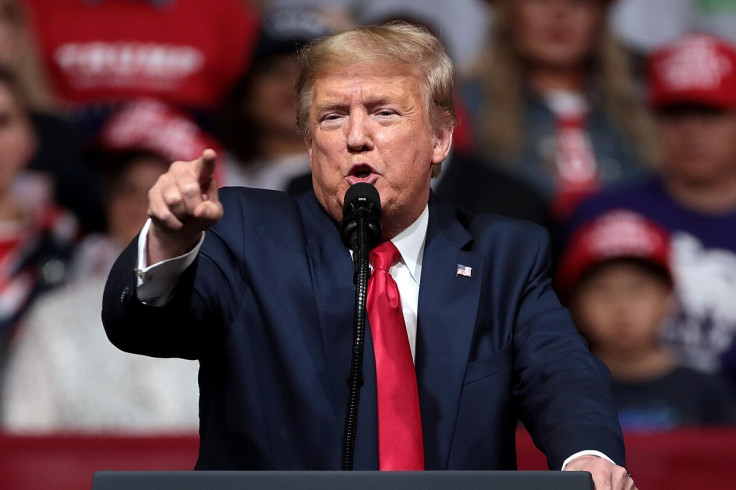
The Secret Service has opened roughly 10,000 investigations into threats against President Donald Trump and other senior US officials so far this year, director Sean Curran said in Washington on Wednesday, as new details emerged of how an alleged gunman mocked 'insane' security gaps in a manifesto minutes before trying to attack Trump at April's White House Correspondents' Dinner.
For context, the black‑tie dinner at the Washington Hilton on 25 April was cut short after authorities say suspect Cole Allen stormed a Secret Service checkpoint armed with two guns and four knives and intent on killing Trump and as many cabinet members as possible. The event, a staple of the US political calendar, was postponed and is now due to take place on Friday at a different venue under tightened security.
Curran, speaking to reporters ahead of the rescheduled dinner, said the surge in threats against Trump and other protectees was unlike anything he had seen in more than two decades in the agency.
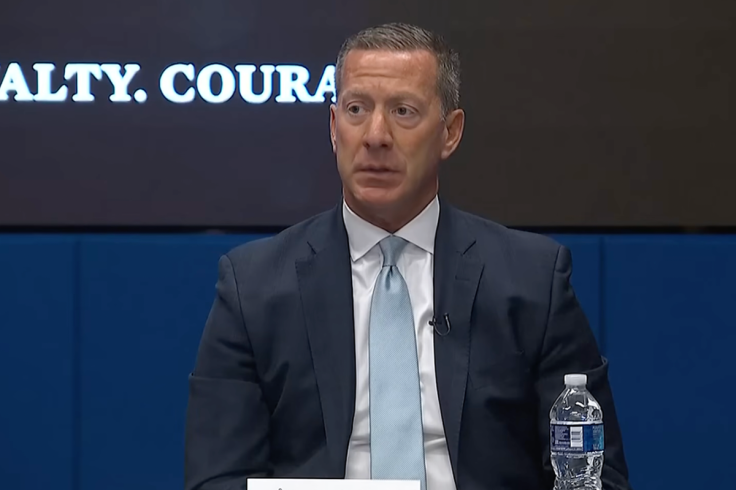
'The numbers are numbers that this agency and certainly I have never seen in my 24‑year career,' he said, adding that the Secret Service had investigated around 7,000 threats in the same period in 2025.
'The environment has become very volatile, and that's just across the board,' Curran went on. 'The threat picture and environment is as large as I've ever seen it.'
The Secret Service currently protects around three dozen people, including the president and vice president, their immediate families and officials in the presidential line of succession. Most threats, officials said, now start online, with agents instructed to treat every report as potentially credible until they can assess whether a suspect has the intent, means and ability to follow through.
It sounds clinical on paper. In reality, as the Allen case underlines, it is messy and frightening.
Secret Service Threat Numbers Collide With Trump Attack Attempt
The news came after court documents and law enforcement officials disclosed that Allen, who had checked into the Hilton the day before the dinner, had sent a manifesto to family members minutes before the alleged attack, ridiculing what he described as glaring weaknesses in the Secret Service perimeter.
'The security at the event is all outside, focused on protestors and current arrivals, because apparently no one thought about what happens if someone checks in the day before,' Allen wrote, according to investigators.
'Like, this level of incompetence is insane, and I very sincerely hope it's corrected by the time this country gets actually competent leadership again.'
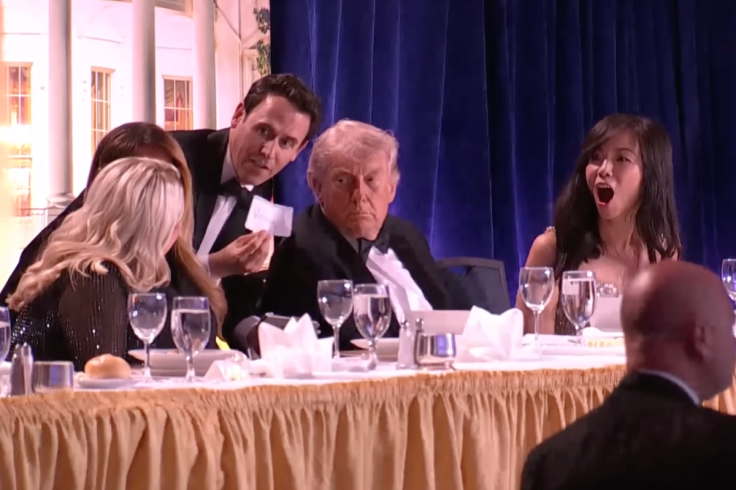
On the night itself, images captured by photographers showed guests, including members of Congress and media figures, diving under tables as agents drew their guns. One picture shows Representative Jamie Raskin sheltering alongside Kerry Kennedy and others as alarms blared through the ballroom.
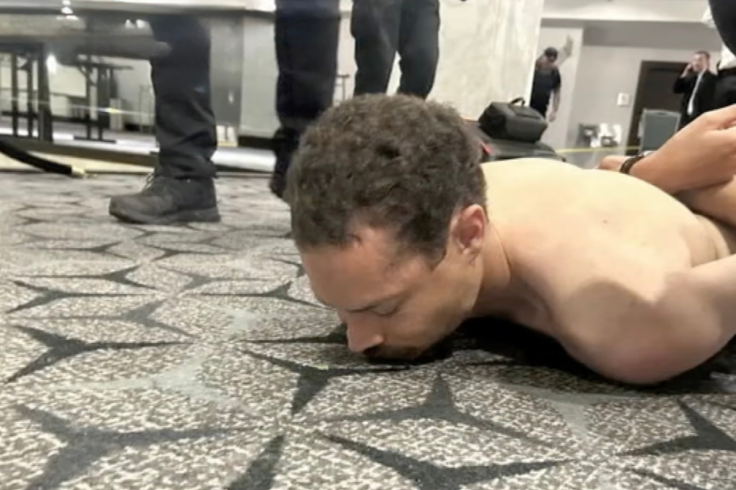
Outside, according to law enforcement accounts, Allen exchanged fire with officers at a checkpoint, striking one in the bulletproof vest before being subdued and detained around 120 yards from where Trump had been scheduled to speak.
Curran has been keen to stress that while the attempt was terrifying, it was also, in his view, evidence the security plan did its job.
'We have to start and end our perimeter somewhere,' he told reporters on Wednesday. 'If it were up to me, I'd love to end it at the bridge, but that's going to inconvenience a lot of people.'
He added: 'We do expect things to happen at the magnetometers, unfortunately, but that's why they are there. And that's where it happened, and that's where it ended. So it did work. The system worked.'
That assertion, set against Allen's own taunts about 'insane' gaps, leaves a slightly queasy contrast. Both things can be true, of course, which is exactly what makes modern political security so fraught.
Trump Dinner Returns Under 'Significantly Enhanced' Security
For starters, Friday's White House Correspondents' Dinner will look and feel very different from the one that unravelled in April.
The event has been moved to the Waldorf Astoria hotel on Pennsylvania Avenue, just steps from the White House, and into its Presidential Ballroom, which seats about 1,300 guests. That is just over half the roughly 2,500 people who crammed into the Hilton ballroom for the original dinner.
Trump is expected to attend and deliver remarks at the rescheduled event, according to organisers, who have promised what they describe as a fundamentally tougher security regime.
White House Correspondents' Association president Weijia Jiang said there would be 'significantly enhanced safety measures and new access procedures' throughout the evening.
In practical terms, outlets have been told there will be no pre‑dinner cocktail parties, which in previous years could be entered by anyone who could wave an invitation even without a dinner ticket. The informal networking that Washington lobbyists and staffers treat as the real action is, for once, being sacrificed.
On top of that, digital tickets will replace the paper passes long used to get into the dinner. According to organisers, those digital credentials will be checked before guests are even allowed to approach the magnetometers, adding another layer of verification and cutting down the scope for fake or borrowed badges.
It is a kind of tightening that sounds small on paper but, as anyone who has tried to blag their way into a DC party knows, changes the feel of the whole thing.
Secret Service officials insist none of this is an admission that the Hilton plan failed. Instead, they frame it as the inevitable evolution of an agency that is now facing more threats, from more directions, than at any point in its history.
The larger question, uncomfortably, is whether any amount of extra layers can ever fully close the sort of gap that Allen claims he exploited, or whether the US political system is now trapped in a cycle where one would‑be attacker's manifesto becomes the next attacker's how‑to guide.
© Copyright IBTimes 2026. All rights reserved.