

75% of Americans Think Billionaires Hold Too Much Political Power: Bernie Sanders Says 'We're Taking Them On'
Senator Bernie Sanders uses new survey to criticise wealth concentration
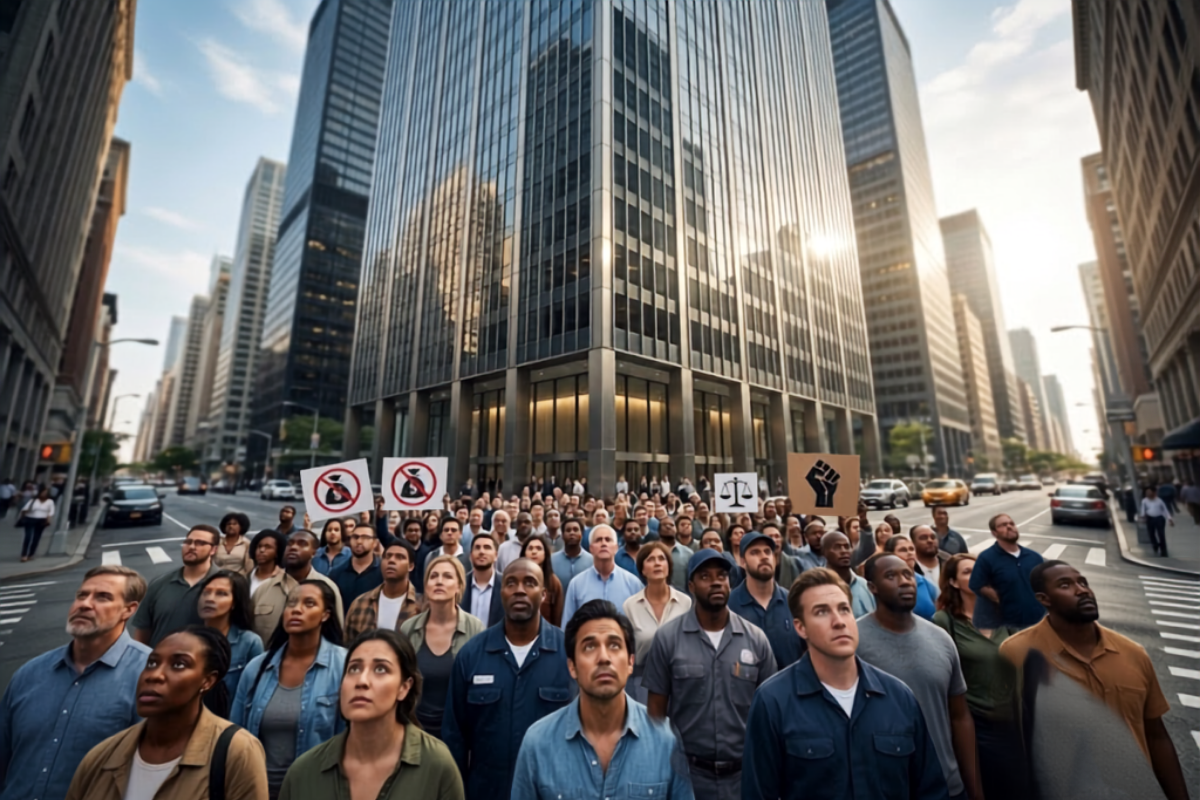
Nearly three-quarters of Americans say billionaires and big corporations hold too much power in Washington while working people hold too little, according to a new national survey that Senator Bernie Sanders has seized on to renew his long-running attack on concentrated wealth.
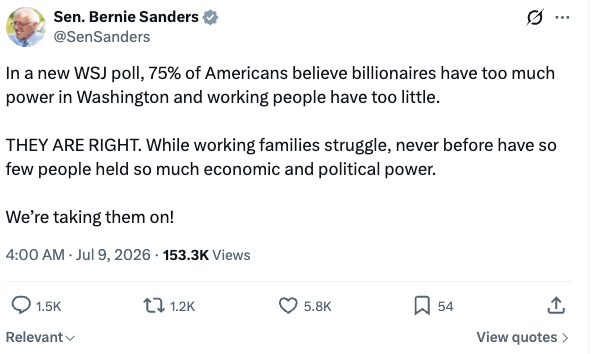
The figure comes from a Wall Street Journal-NORC survey released on 8 July, in which about 75% of respondents said political influence has tilted toward the wealthiest households and the largest companies. Sanders, the independent senator from Vermont, responded within hours.
'In a new WSJ poll, 75% of Americans believe billionaires have too much power in Washington and working people have too little,' he wrote on X. 'THEY ARE RIGHT'.
He added: 'While working families struggle, never before have so few people held so much economic and political power. We're taking them on!'
Why Americans Think Billionaires Hold Too Much Power
The billionaire question sits inside a wider slide in confidence in the American economic model. Just under half of those surveyed said capitalism is working very or somewhat well, down from 60% who said the same about a decade ago. A slim majority, 51%, said the system is not working well or not at all, up from 37% in 2015.
The Journal framed the findings as a loss of faith in two pillars of American life at once, capitalism and democracy. On corporate power, 52% said large companies profit at the expense of workers and consumers, and that government should do more to curb them, or even take a direct stake in some businesses. Roughly 45% took the opposite view, arguing that the country succeeds because it respects free markets.
Concern about billionaire influence follows a record wave of political spending. Elon Musk poured more than $250M (£188M) into President Donald Trump's 2024 campaign, according to federal campaign finance filings, part of a broader surge in money from the wealthiest donors.
Confidence in the political system was thinner still. Only 12% said democracy is working very well, and just 16% believed ordinary citizens hold real influence over politics. More than half, 56%, described democracy as barely functioning or not working at all, the weakest reading in comparable Journal polling since 2020.
The survey found similar doubts about the American dream. Only 35% felt confident the country still offers a genuine route to good jobs and upward mobility. More than two-thirds said the United States is in decline, and about six in 10 said its best days are behind it. The poll surveyed 1,862 adults between 11 and 18 June, with a margin of error of 3.4 percentage points.
Bernie Sanders Renews His Push Against the Billionaire Class
For Sanders, the numbers reinforce a message he has carried across the country for more than a year. His 'Fighting Oligarchy' tour, staged alongside Representative Alexandria Ocasio-Cortez, drew more than 261,000 people across roughly 40 stops through the end of last year, according to figures cited by his team. The tour also lent its name to his book, Fighting Oligarchy, published in September 2025.
The 84-year-old has tied the rhetoric to policy. He and Representative Ro Khanna have proposed a 5% annual wealth tax on billionaires, which they estimate would raise about $4.4T (£3.3T) over a decade. Sanders has argued repeatedly that a small group of billionaires now holds more wealth than the bottom half of American households combined, a gap he calls the widest in the nation's history. He has also warned that gains from artificial intelligence and automation risk flowing to a handful of technology firms while displacing workers.
The survey arrives amid shifting political currents. Democratic socialist candidates have won primaries in New York, Colorado, Washington, and California over the past year. President Trump, whose second inauguration in January 2025 featured several billionaires seated prominently, has argued that the economic system has failed many working-class Americans.
Sanders has made that argument the core of his 'Fighting Oligarchy' tour, which has drawn some of the largest crowds of his political career at stops from Omaha to Los Angeles.
© Copyright IBTimes 2026. All rights reserved.