Melania Trump Fury: FLOTUS Reportedly Objected to Elon Musk Staying at White House as Aides Vent Over His 'Unhinged' Stint
New book reveals Melania Trump's objections to Elon Musk's stay at the White House during Trump's second term.

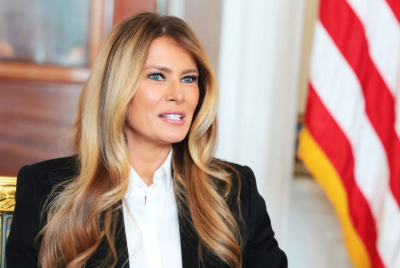
Melania Trump objected to Elon Musk staying at the White House residence in Washington during Donald Trump's second term, according to a new book that paints the Tesla billionaire's stint as an unofficial adviser as chaotic and 'unhinged.'
The reported clash dates back to the first year of Trump's second term, when the president and Musk were unusually close. The tech mogul had campaigned hard for Trump in the 2024 race, then moved seamlessly into a role as a kind of private-sector enforcer for the new administration's anti‑bureaucracy crusade. That experiment, and Musk's privileged access to the White House, did not go down well with everyone who actually worked there.
The account comes from 'Regime Change,' a forthcoming book by journalists Maggie Haberman and Jonathan Swan, which reconstructs how Trump's alliance with Musk was built and then unravelled. Their reporting, and earlier detail published by The Atlantic, suggests that while the president revelled in having Musk on call, his wife, his staff and a number of cabinet secretaries were far less enamoured.
FLOTUS Pushback on Elon Musk Staying at White House
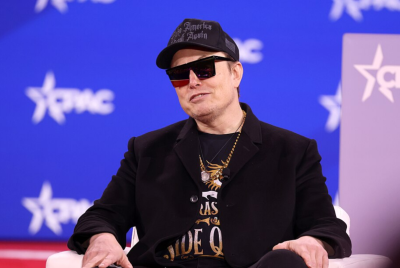
According to Haberman and Swan, Musk went beyond the typical late‑night policy session and asked if he could sleep in the White House residence itself. Trump agreed. Melania Trump, they write, 'initially objected,' but the decision stuck and Musk ultimately spent 'several nights' in the storied Lincoln Bedroom.
The news came after weeks in which Musk was reportedly treated almost like a house guest with perks. The book describes Trump encouraging Musk to stay over, making use of the guest room and ordering ice cream from the White House kitchen as if it were a hotel. Such details are small, but they capture how far the usual lines around power and access had blurred.
Melania Trump's discomfort was not isolated. White House Chief of Staff Susie Wiles is described in 'Regime Change' as openly wary of Musk, repeatedly flagging to colleagues what she saw as his 'strangeness.'
Nothing has been independently verified, so it should all be taken with a grain of salt. The picture that emerges, though, is consistent across accounts, Trump saw Musk as a disruptive genius, while many around him saw a volatile outsider suddenly camped inside the most sensitive building in the country.
Musk's 'Unhinged' Stint
Musk's presence at the White House was not just social. He was given influence over a new entity dubbed the Department of Government Efficiency, effectively the sharp end of Trump's promise to slash the federal bureaucracy. Haberman and Swan report that aides began describing Musk's conduct in that role as 'unhinged' as he pushed to purge civil servants and redirect money already allocated by Congress.
In March 2025, Secretary of State Marco Rubio, Veterans Affairs Secretary Doug Collins and Transportation Secretary Sean Duffy confronted Musk in what he thought would be a routine meeting. According to The Atlantic, Trump teed up the showdown with a characteristic flourish, telling staff, 'Bring them all in here, and we'll have at it.'
The three secretaries believed Musk had dramatically overreached into their agencies. They were furious. Musk, for his part, seems to have walked into the room unaware he was the target. It was the sort of mad, unscripted scene that defined much of Trump's second‑term style of management, or lack of it.
Still, even some of Musk's critics concede that his stint was not entirely a flop. Former federal employees told The Atlantic he did manage to shut down certain agencies and force out a chunk of the workforce, 'traumatising the employees who remain' in the process. That is one way to measure success, if cruelty and chaos are the metrics.
Where the project faltered, according to these accounts, was in the boring bit Musk claims to love, actual efficiency. The Department of Government Efficiency's Silicon Valley style 'move fast and break things' approach, imported wholesale into Washington, did not produce a nimbler bureaucracy. It produced confusion. Some of Musk's pet policies, such as a requirement that government staff file weekly bullet‑point progress reports, were so clumsily rolled out that they were later dropped quietly.
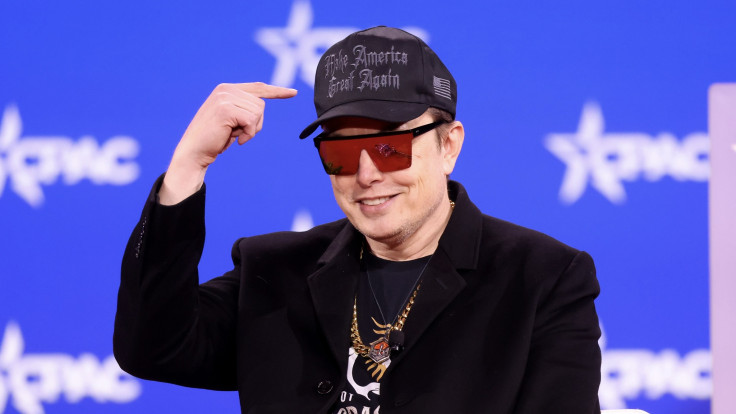
One outside Trump adviser, speaking to The Atlantic, tried to put this in more generous tech‑world language. 'He had some missteps in all of these agencies, which would have been fine because everyone acknowledges that when you're moving fast and breaking things, not everything is going to go right. But it's different when you do that and you don't even have the buy-in of the agency you're setting on fire,' the adviser said.
Another adviser dispensed with the euphemisms. 'How many people were fired because they didn't send in their three things a week or whatever the fuck it was?' the person asked, anonymously. 'I think that everyone is ready to move on from this part of the administration.'
Musk and Trump eventually fell out publicly in 2025, ending the brief, combustible alliance that had put the billionaire in such close proximity to presidential power. The new reporting suggests the split might have been less about a single dramatic rupture and more about a slow collective realisation inside the White House that the Musk experiment had become unsustainable, politically and practically.
Whether Melania Trump's early refusal to have Musk sleeping under the same roof counts as foresight or just instinctive discomfort is impossible to know. What is clear is that, for a few months, one of the world's richest men was not only helping shape the US government, he was also reportedly roaming the corridors of the executive mansion at night, ice cream in hand.
© Copyright IBTimes 2026. All rights reserved.
- Recommended For You