Ex-Pentagon Official: UAP Files Expose 'Non-Human' Technology and Government Cover-Up Going Back to 1940s
Luis Elizondo discusses newly released UAP files and their implications for US defence and public understanding.
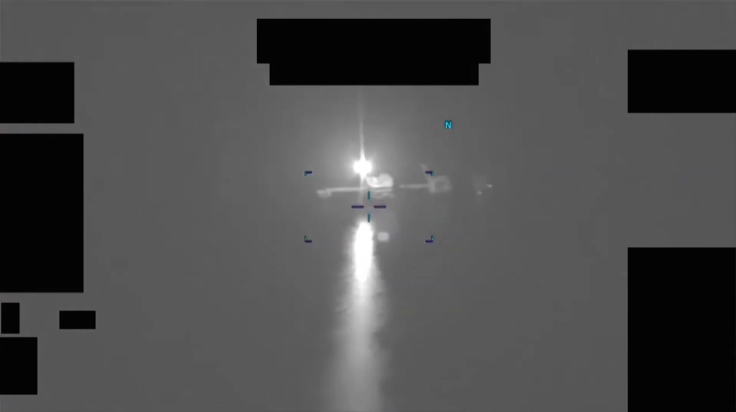
A former Pentagon intelligence official, Luis Elizondo, has claimed that newly released UAP files expose 'non-human' technology and government cover-up going back to the 1940s, saying the documents point to decades of serious US military interest in unidentified anomalous phenomena.
In a report by FOX News, Elizondo argued that the latest tranche of declassified material includes evidence he describes as a 'treasure trove' of intelligence tied to objects capable of outperforming US defence systems.
UAP — short for unidentified anomalous phenomena — is the term now used by US authorities in place of the older 'UFO' label. It covers any airborne or space-based objects that cannot be immediately explained through known technology or natural events.
In recent years, Washington has gradually opened up files once treated as tightly held national security material, a shift that has drawn both attention and scepticism from defence analysts and scientists.
Secret UAP Files Are a 'Treasure Trove'
Speaking during an appearance on Jesse Watters Primetime, Elizondo said the newly released material contains intelligence stretching back to the 1940s, suggesting the phenomenon has been tracked for far longer than previously acknowledged in public. He described the data as a 'treasure trove of information,' adding that it includes references he believes point to recovered materials of 'non-human' origin. He did not provide independent verification for those claims, and much of the material he referenced has not been made public in full.
Elizondo, a former US Army counterintelligence officer who previously worked on Pentagon UAP programmes, said the objects described in the files were capable of extreme manoeuvrability. In his words, they 'can outmanoeuvre anything that we had and still have in our inventory,' raising concerns about airspace security over controlled US regions.
The discussion also touched on why such information may have remained classified for decades. Elizondo suggested Cold War tensions played a role, arguing that secrecy may have been driven by fears of revealing sensitive capabilities — or vulnerabilities — to adversaries such as Russia and China. He said those conditions have now changed, making continued secrecy harder to justify.
UAP Files Transparency
The latest disclosures are part of the US government's push to review and release historical UAP records. Supporters of the process say it is aimed at improving transparency and standardising reporting across military and intelligence agencies. Critics, however, argue that the material being released is often incomplete and open to interpretation, which can fuel speculation rather than clarity.
Elizondo credited recent administrations with taking the issue more seriously, saying there has been a shift towards openness. He suggested that earlier resistance to disclosure reflected institutional caution rather than outright denial of unexplained activity.
Still, he acknowledged the subject carries wider implications beyond defence. In his view, the conversation stretches into philosophical and societal territory, touching on how governments communicate uncertainty and how the public processes claims that sit outside established scientific understanding.
He said the American public is capable of engaging with the issue, but also warned that fuller disclosure would likely require 'soul-searching' across multiple disciplines, including psychology and theology.
For now, the Pentagon and the intelligence community are continuing the phased release of older UAP files, with many documents still heavily redacted. No verified public evidence has been released confirming 'non-human technology,' despite ongoing claims from former officials and whistleblowers
© Copyright IBTimes 2026. All rights reserved.
- Recommended For You