Howard Stern Sued by Ex-Assistant, Accused of Creating 'Hostile Work Environment' at Hamptons Mansion
Leslie Kuhn claims her signature was forged on 'one-sided' NDAs following her sudden dismissal from a role managing the shock jock's estate

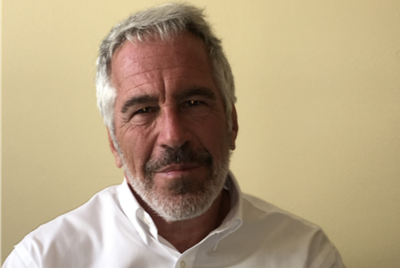
Howard Stern is embroiled in a high-stakes legal battle after a former senior assistant alleged a hostile work environment at his Southampton estate.
Leslie Kuhn, who served as the radio host's office manager before relocating to his 20,000-square-foot Hamptons mansion, filed a complaint in a New York state court this week.
The suit details claims of wrongful dismissal, questionable business practices, and a disturbing allegation that Stern's production company forged her signature on restrictive non-disclosure agreements (NDAs).
Kuhn, whose salary nearly tripled before her sudden firing in February 2026, insists the legal documents used to silence her are fraudulent and 'one-sided'.
Inside the Lawsuit Against Stern and His Wife
The case, filed in a New York state court, centres on Leslie Kuhn, who began working for Stern in 2022 as an office manager at SiriusXM before moving into a more senior role the following year. By 2024, she had relocated to Southampton at Stern's and his wife, Beth's, request and had taken on responsibilities that extended well beyond a conventional assistant's remit.
According to The Independent, Kuhn was tasked with overseeing the couple's 20,000-square-foot property. That included managing staff, scheduling shifts, handling payroll and supervising the day-to-day running of the household. The scope also stretched into Beth Stern's animal rescue work, which involves fostering cats and dogs at home. It was an unusual blend of domestic management and organisational oversight, one that, on paper, suggests considerable trust.
The lawsuit also showed Kuhn's compensation, stating that in December 2025, Kuhn's salary rose from $100,000 to $265,000, accompanied by an $80,000 bonus. Yet within weeks, the relationship collapsed.
A Sudden Dismissal and Competing Narratives
Kuhn was dismissed in February 2026 for what the defendants described as 'alleged misconduct'. The filing does not specify what that misconduct entailed. Kuhn rejects the claim outright, stating she 'denies in whole and in part the reasoning given to her' and describing it as 'manufactured by the Defendants in general and Beth Stern in particular'.
Kuhn argues that her termination was not performance-related but rooted in deeper issues within the household environment. The complaint points to 'a hostile work environment and enablement of that hostile work environment', alongside what it calls 'immense pressures' linked to the scale and management of the animal rescue operation.
There is also an allegation of 'massively disorganised and questionable business operations and accounting practices'. Kuhn claims the accusations against her risk having 'a chilling effect' on her future employment prospects.
The NDA Dispute at the Centre
At the heart of the lawsuit sits a separate but equally consequential issue. Kuhn alleges that Stern's production company forged her signature on two non-disclosure agreements that she insists she never approved. She is asking the court to declare those agreements null and void.
According to the filing, the NDAs would prevent her from discussing not only her employment but also a wide range of personal and professional details relating to the Stern household. That includes references to 'family members or friends, daily activities and personal habits', as well as business operations and travel arrangements.
Kuhn argues that the agreements are fundamentally one-sided. While they restrict her ability to speak, they do not impose equivalent limits on Stern or his associates.
Her lawyer, John Leonard, framed the issue in stark terms, saying, 'It's very easy to see that they are one-sided; they're not reciprocal, so it gives one party the right to say anything they want and the other party is muzzled.'
He added that the legal action is focused on clarity rather than escalation. 'The decision to seek declaratory relief from the court was a decision that was not made lightly,' Leonard said. 'My client, however, is a very strong woman and she just wants the court to tell her what her rights are so she can move ahead lawfully.'
Power, Privacy and Limits of Silence
The dispute cuts into a broader conversation about the use of non-disclosure agreements in high-profile employment settings.
Kuhn is described in the complaint as 'a mere at-will employee with considerably less influence and resources than the Sterns, their affiliated entities and associates'.
Leonard's framing leans into that imbalance, suggesting that individuals like Kuhn are often placed 'at distinct disadvantages in influence and resources'.
For now, the court is being asked to address a narrow but critical question. Are the NDAs valid, and can they be enforced? The answer will shape what Kuhn can say publicly about her time working for Stern and his wife. The case remains at an early stage. No findings have been made, and the allegations have yet to be tested in court.
© Copyright IBTimes 2026. All rights reserved.
- Recommended For You