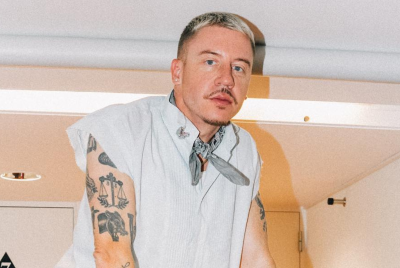
A Nazi Symbol for Laughs? The Toxic Teen Culture Exploded by Hudson Williams' Disastrous Resurfaced Photo
One drunken symbol on a teenage face becomes a test of what we're willing to forgive in the stars we've only just discovered.

Hudson Williams is facing intense scrutiny in Canada and beyond after an old photo of the Heated Rivalry actor, now 25, resurfaced online showing a swastika drawn on his face in Sharpie at a high school party. The Nazi symbol, reportedly scrawled on him by classmates at an annual teenage 'campout', has turned a long-forgotten night of underage drinking into a very current crisis for a rising TV star.
The image began circulating over the weekend before leaking from private messages into wider social media feeds, where screenshots spread faster than any official response. Celebrity site Just Jared highlighted the controversy, while TMZ cited unnamed sources close to Williams who attempted to explain the circumstances behind the photo. The image appears to date back to his high school years in Canada, prior to his breakout role, although that timeline has not yet been independently verified.
Hudson Williams Swastika Photo And The Campout Backstory
The news came after TMZ reported that the swastika photo of Hudson Williams was taken during what sources described as an annual 'campout' that had become a notorious fixture of his school's social calendar. According to those sources, teenagers would decamp to party, drink underage and draw on each other's shirts, arms and faces with permanent marker as they tried to outdo one another for shock value.
TMZ quoted people said to be familiar with that night who insisted Williams did not know what was being drawn on him. They claimed the offensive symbol was the result of other intoxicated teens scribbling 'inappropriate images on one another in an attempt to get laughs and shock reactions.' In their telling, the swastika was treated as a prop in a game of boundary-pushing rather than any considered political statement.
Sources close to Hudson Williams tell TMZ that the actor was unaware of the swastika symbol drawn on his face in resurfaced High School photo:
— Pop Base (@PopBase) June 7, 2026
“We’re told Hudson had no idea what was being drawn on his face at the time ... and the offensive symbol was the result of other… pic.twitter.com/B4eQBqwH9E
A friend of Williams, also speaking to TMZ, stressed that 'the markings do not and have never reflected Hudson's beliefs, values, or character.' The same sources said the actor is now 'keenly aware' that this behaviour was inexcusable, however drunk or naive he might have been at the time. They also said he understands the 'hurt and disappointment' caused by the image and 'deeply regrets it,' adding that he does not condone or support the symbol in any way.
So far there has been no direct public statement from Williams himself, no carefully crafted apology on Instagram, no sit-down interview addressing the backlash head-on. Instead, the narrative is being carried through intermediaries and 'sources close to' him, a setup that tends to generate as many questions as it resolves.
A Nazi Symbol For Laughs And The Line Between Stupidity And Harm
For starters, the resurfaced Hudson Williams swastika photo drops straight into a wider, messy argument about what teenagers think is funny and who teaches them that. The idea of 'edgy' humour, using taboo symbols to get a rise out of friends, is nothing new. What has shifted is that those moments are now recorded, preserved and able to reappear years later with career‑altering force.
None of that softens the power of the swastika itself. A symbol tied to genocide and violent antisemitism does not become harmless because it was drawn on a drunk pupil at a campout. Even if Williams genuinely had no idea what was on his face, the shock some of his fans feel is not just for show. For many Jewish communities, images like this are not abstract debates about cancel culture but painful reminders of lived and inherited trauma.
So far, the coverage rests on anonymous sources and friends rather than on‑the‑record comment from the actor or his representatives, which makes it harder to test the claims being put forward in his defence. Did anyone challenge what was drawn at the time. Was this part of a wider pattern of 'jokes' involving racist or fascist imagery at the school. Those missing details leave a visible gap in the story.

The entertainment industry knows this pattern by heart. An old photo or post resurfaces, a rising star is suddenly under fire, and a familiar script kicks in: context, contrition, a promise to learn and do better. Audiences then have to decide whether they buy the explanation or see it as neat damage control.
Here, the alleged context matters. If Williams was effectively a canvas for other teenagers' graffiti, that suggests a group dynamic where Nazi imagery was treated as cheap provocation rather than ideology. It also hints at a culture where nobody present, sober enough to see what was happening, thought to intervene. That, many would argue, is the more troubling detail.
What happens next depends on how Williams chooses to address the photo in public and how his employers react in private. Studios and streamers are highly attuned to reputational risk, especially when it involves symbols as loaded as a swastika, and a breakout star can be replaced more quickly than fans might expect.
For now, the snapshot of a teenager with a Nazi symbol on his face sits uneasily alongside the polished press junkets and red‑carpet footage of a young actor on the rise. The gap between those two images is where this story will either fade into the background or keep unravelling in plain sight.
© Copyright IBTimes 2026. All rights reserved.
- Recommended For You